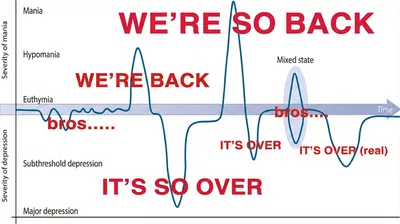
This week’s market update highlights three intersecting themes: regulation moving closer to clarity, liquidity and capital flows shifting, and institutional appetite cooling. U.S. lawmakers say crypto market-structure rules are close, while Bitcoin has slipped amid persistent ETF outflows and softer institutional demand. Market voices diverge on the catalyst for the next leg up: Arthur Hayes points to central bank balance-sheet expansion, whereas others watch metals and stablecoin flows for signals.
Bitcoin Faces Institutional Headwinds as ETF Outflows Continue
Bitcoin’s recent rally has lost momentum as ETF outflows persist and institutional demand appears to cool, leaving upside attempts vulnerable without fresh large-scale inflows. Bitfinex analysts explicitly described a fragile standoff in which price advances may fail in the absence of renewed ETF support, a view echoed in market commentary. For more on current ETF flow dynamics and price context, see Bitcoin near $90K and related ETF coverage.
Arthur Hayes Links Next Bull Run to Central Bank Liquidity Expansion
Arthur Hayes argues that Bitcoin’s next major move depends on expansion of central bank balance sheets, shifting the focus from traditional cycle narratives to macro liquidity conditions. He and other veteran traders emphasize factors such as the Federal Reserve’s balance sheet, cross‑market bond conditions, and currency dynamics as primary drivers of a new bull leg. This macro framing suggests market direction may await broader liquidity changes rather than purely crypto‑specific triggers.
Tom Lee Predicts Gold and Silver Rotation Into Crypto Markets
Fundstrat’s Tom Lee says gold and silver are absorbing short‑term leverage and could be setting up a later rotation into digital assets once risk appetite returns. Lee’s view is that metals often act as a temporary capital parking spot before funds move back into higher‑beta assets like crypto. Market commentary also notes that precious metals rallies can coincide with preparation for renewed crypto flows.
Stablecoins Pose a Major Threat to Traditional Banking Liquidity
Analysts at Standard Chartered warn that rapid stablecoin adoption risks pulling deposits and liquidity out of U.S. banks, with the analyst framing the potential shift as roughly a $500 billion headwind for the banking system if adoption does not slow. Similar concerns have been flagged elsewhere in the financial sector, where on‑chain rails and digital dollars are described as a structural challenge to legacy deposit models. These dynamics underline why banks and regulators are paying close attention to stablecoin growth.
Davos Momentum Builds for Tokenization and Regulatory Clarity
Coinbase CEO Brian Armstrong said Davos discussions showed momentum toward tokenization and the CLARITY Act as a framework for exchange oversight and custody, signaling growing institutional interest in tokenized assets. Tokenization was repeatedly highlighted as a major narrative among regulators, banks, and corporations, which could reshape how assets are accessed and traded. The regulatory conversation is advancing alongside market developments, keeping compliance and custody topics central to industry planning; see further context in Crypto ETF 2026.
Why this matters
For miners, these threads matter because they shape market liquidity and sentiment that affect price and off‑take for mined coins. If ETF flows remain out of the market and institutional demand stays muted, selling pressure can keep prices under strain even if network fundamentals are steady. At the same time, a macro liquidity expansion—Hayes’ conditional—could lift broad risk assets, while stablecoin flows and tokenization debates influence where capital ultimately resides.
What to do?
If you run one or many rigs in Russia, prioritize actionable steps that reduce exposure to short‑term volatility and prepare you for different liquidity scenarios. Maintain technical and financial readiness so you can respond to both downside pressure and a potential liquidity‑driven rally.
- Monitor major flow indicators: ETF reports and institutional commentary to gauge demand trends.
- Keep operating costs low: optimize power usage and schedule maintenance during weak price periods.
- Manage coin inventory: set clear rules for when to sell mined coins versus hold for potential macro‑driven upside.
- Follow regulatory developments like the CLARITY Act and tokenization talks, as they can affect custody and exchange access.
Related reading
For background on current market positioning and leverage, the Bitfinex commentary on longs is relevant; read more in Bitfinex longs high. These pieces help explain why price moves may be sensitive to ETF inflows and macro liquidity shifts.