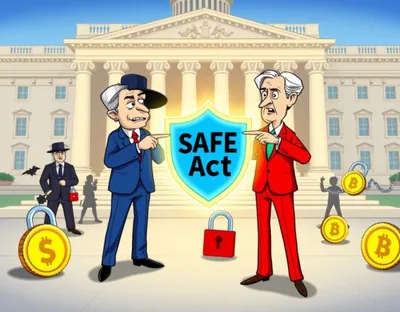
The Fox News advertisement is a 30-second spot that urges viewers to contact their U.S. Senators with a clear demand: pass the CLARITY Act but remove all clauses related to decentralized finance. The media buy includes a hotline and frames its message around innovation, while the campaign is funded by an organization called Investors For Transparency. The spot has prompted public responses from the crypto community, including criticism from Hayden Adams, founder of Uniswap, who voiced his objections on social media platform X. At the same time, the larger debate ties into broader concerns about bank deposits and regulatory clarity for digital assets.
Overview of the Fox News Ad Campaign
The advertisement directly targets DeFi provisions in the proposed Crypto Market Structure Bill, commonly referred to as the CLARITY Act, and asks viewers to pressure U.S. Senators to remove those sections. The campaign is financed by Investors For Transparency and uses a short message and hotline to encourage public outreach. By running on a major cable network, the media buy represents a concentrated effort to influence the bill’s legislative process through public pressure. Observers have noted the campaign highlights tensions between established financial interests and the DeFi sector.
The CLARITY Act and Its Provisions
The CLARITY Act is proposed legislation designed to create comprehensive rules for digital asset markets, including crypto and decentralized finance protocols. Its DeFi-related sections address how decentralized autonomous organizations, liquidity pools, and algorithmic protocols should be treated under securities and commodities laws. The bill has gone through multiple revisions and a complex path in Congress as lawmakers seek to balance competing interests. For more on legislative developments, see CLARITY Act progress, which outlines recent changes and debates.
Banking Sector Concerns
Banks have raised specific worries about DeFi offerings that provide interest or yield, especially stablecoin-based products, citing the potential for deposit outflows from traditional accounts. Federal Reserve data shows U.S. banks hold approximately $17 trillion in deposits, a figure frequently referenced in arguments about systemic risk and competitive effects. Opponents of broad DeFi inclusion argue that even modest shifts of customer funds could affect banks’ lending capacity and profitability. Those concerns are central to why some industry groups support removing DeFi provisions from the bill.
Response from the DeFi Community
The advertisement prompted immediate backlash from parts of the cryptocurrency community. Hayden Adams, founder of the decentralized exchange Uniswap, publicly criticized the campaign on X, describing it as an attack on DeFi and highlighting the opaque nature of the opposition. Many DeFi proponents have expressed frustration with lobbying efforts that they view as insufficiently transparent, arguing those efforts can shape policy without clear disclosure of interests or funding sources. For perspective on legal protections for developers, see DeFi developers' protection.
Global Regulatory Context
The United States is developing its approach while other jurisdictions have taken different paths. The EU has implemented MiCA regulations, the UK is pursuing principle-based rules, and Singapore is crafting nuanced, activity-specific frameworks for DeFi operations. These international models serve as comparisons as U.S. lawmakers debate how prescriptive or flexible rules should be. Policymakers and industry participants reference these approaches when arguing for either tighter safeguards or regulatory space for innovation.
Economic Implications and Market Reactions
The advertisement and the surrounding debate have correlated with notable market responses, including increased trading activity in some DeFi tokens after the spot aired, though analysts caution about drawing direct causal links. Venture capital flows into U.S. blockchain projects have shown sensitivity to regulatory signals, with PitchBook data cited for patterns of funding reacting to uncertainty. The debate therefore connects legislative choices to market sentiment and investment decisions without establishing a single cause-effect conclusion.
Why this matters
For a miner operating in Russia with anywhere from one to a thousand devices, the immediate effect of this ad campaign may be indirect, but it matters because it shapes legal clarity for DeFi services that interact with token markets. Removing DeFi provisions would, as noted in coverage, leave decentralized finance in a regulatory gray area, which can create uncertainty for developers and users alike. That uncertainty can influence availability of DeFi services and market sentiment, which in turn can affect token prices and liquidity—secondary factors relevant to miners who trade or hold mined coins. Following the debate helps you understand potential changes in how DeFi products are offered and regulated.
What to do?
- Monitor reliable news sources and official updates on the CLARITY Act to track changes that affect DeFi legal status.
- Keep holdings diversified and avoid concentrating operational revenue in a single token or platform that could be affected by regulatory shifts.
- Maintain backups of wallet keys, secure node configurations, and software updates to reduce operational risk regardless of policy outcomes.
- If you use DeFi yield products, review counterparty and protocol risks carefully and limit exposure proportional to your risk tolerance.
- Follow key industry voices and legislative summaries rather than social media hot takes to make informed decisions about equipment reinvestment and coin allocations.
Where to read more
For a deeper look at the bill’s progress and how specific clauses have changed during markup, consult the coverage linked earlier on the CLARITY Act. Staying informed about both U.S. and international regulatory approaches will help you adapt operations and financial strategies as the legal framework develops.