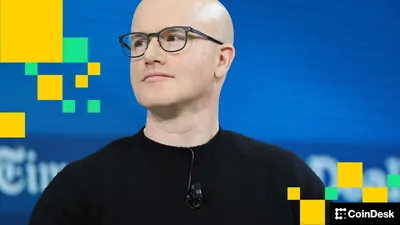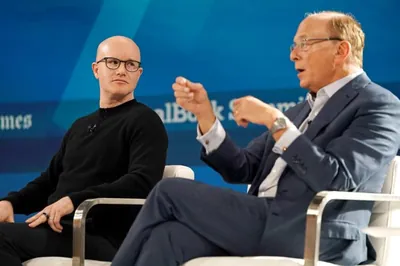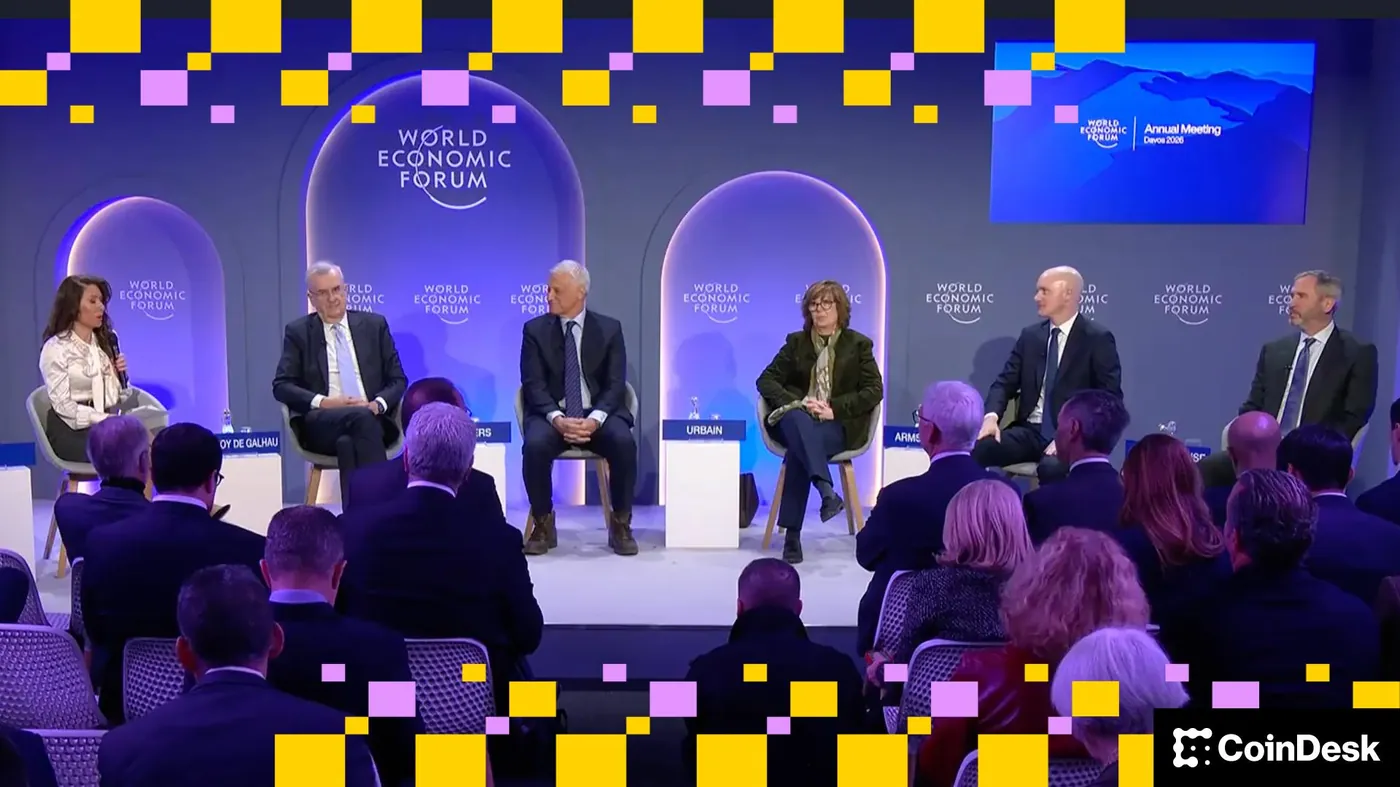
The panel billed "Is Tokenization the Future?" at the World Economic Forum in Davos shifted from technical plumbing to a pointed exchange between Coinbase CEO Brian Armstrong and Bank of France Governor François Villeroy de Galhau about stablecoin yields and bitcoin. Most of the discussion focused on whether fiat-pegged tokens should pay interest, the meaning of a possible "Bitcoin standard," and the state of U.S. legislative talks following Coinbase’s withdrawal of support for the CLARITY Act. The session included other industry figures and ended with an acknowledgment that regulation and innovation must find a way to coexist.
The Debate Over Stablecoin Yields
Brian Armstrong's argument for stablecoin yields
Armstrong said allowing stablecoins to pay interest serves consumer rights and competitiveness, arguing that "it puts more money in consumers’ pockets" and that people should be able to earn more on their money. He also cautioned that if regulated stablecoins cannot offer rewards, offshore alternatives will gain ground, noting competition from other jurisdictions and existing offshore tokens. His position framed yield as both a consumer benefit and a strategic issue for regulated markets.
François Villeroy de Galhau's opposition to interest-bearing stablecoins
Villeroy de Galhau pushed back strongly, viewing interest-bearing private tokens as a potential systemic risk to traditional banking and the broader financial system. When asked directly whether a digital euro should pay interest, he answered plainly: "The answer is no," and emphasized that public policy should preserve financial stability. For him, the public purpose of central-bank money constrains how a digital sovereign currency should behave.
Competition with other digital money forms
The panel noted a competitive landscape that includes central bank digital currencies and offshore stablecoins, with participants warning that differences in rules on yield could shift activity across borders. That dynamic was central to Armstrong’s competitiveness argument and to concerns about private money challenging sovereign frameworks. Readers can find more on how stablecoins interact with banking revenues in this related piece: stablecoins and banks.
The Role of Regulation and the CLARITY Act
Coinbase's withdrawal and legislative talks
The session touched on U.S. legislative efforts after Coinbase withdrew support from the CLARITY Act, a move that moderators said coincided with a pause in talks. Armstrong characterized the situation not as a stall but as an active round of negotiation and defended his company’s decision as pushing back against perceived attempts by banking interests to limit competition. He argued the goal is to ensure U.S. crypto rules do not ban competition or entrench incumbents.
Calls for a level playing field
Other panelists urged fairness in regulation, with Ripple’s Brad Garlinghouse emphasizing that a level playing field matters both ways — that crypto firms should meet standards banks face and vice versa. The exchange underscored industry frustration with legislative uncertainty and a shared desire among some participants for clearer, balanced rules. For more on Coinbase’s position regarding yields and legislative risk, see: Coinbase warning about yields.
The Bitcoin Standard vs. Democratic Sovereignty
Armstrong's vision of a "Bitcoin standard"
Armstrong provocatively suggested we may be seeing the emergence of a "Bitcoin standard" as an alternative monetary framework, describing it as a response to perceived devaluation of paper currency. He used the idea to argue for Bitcoin’s role as a hedge and as part of a broader conversation about money’s evolution. That framing pushed the debate beyond token mechanics into questions of monetary orders.
Villeroy de Galhau on democratic monetary policy
Villeroy de Galhau rejected the premise that policy could be separated from democratic sovereignty, stating that "Monetary policy and money is part of sovereignty" and expressing greater trust in central banks with democratic mandates than in private issuers. When the Governor characterized central banks as guarantors of trust, Armstrong corrected a misunderstanding about Bitcoin’s structure, saying, "Bitcoin is a decentralized protocol. There’s actually no issuer of it." That correction underscored a key factual point in the exchange about decentralization.
The debate about Bitcoin’s role and about who controls money highlighted contrasting views: one sees decentralization as an advantage, the other stresses accountability tied to democratic institutions. The discussion linked back to concerns that private tokenized money, if left unregulated, could affect sovereignty and trust in some jurisdictions. For context on how Bitcoin influences monetary status, readers can consult this related article: Bitcoin and the dollar.
Key Takeaways from the Davos Panel
- Stablecoin yield was the central flashpoint: Armstrong defended yields for consumer and competitive reasons, while Villeroy saw interest-bearing private tokens as a systemic risk.
- The U.S. legislative process was in focus after Coinbase withdrew its support for the CLARITY Act, with participants urging clear, fair rules rather than protectionism.
- The Bitcoin exchange highlighted fundamental disagreements about decentralization and monetary sovereignty, with panelists broadly agreeing that regulation and innovation must coexist.
Почему это важно
For a miner in Russia running between a single rig and a small farm, the Davos debate matters mainly as a signal about regulatory direction and market incentives. If regulated stablecoins in large jurisdictions are allowed to offer yields, that can shift where liquidity and trading activity concentrate, which indirectly affects on‑ramps, off‑ramps, and local exchange activity.
At the same time, arguments about the "Bitcoin standard" and sovereignty are largely about larger policy choices rather than immediate operational changes for miners. Still, the discussion indicates continued scrutiny from central banks and policymakers, which could influence rules that touch custody, exchange flows, and how digital assets are treated in different jurisdictions.
Что делать?
- Monitor regulation: follow official statements and local rules that may affect exchanges, custodians, and the legality of tokenized assets in Russia and counterparties abroad.
- Protect access to liquidity: diversify where you sell or swap mined coins and keep an eye on platforms that offer yield or staking options, understanding their terms and counterparty risks.
- Keep operational resilience: maintain backups, firmware updates, and basic security practices for your rigs so regulatory noise doesn't compound avoidable downtime or losses.