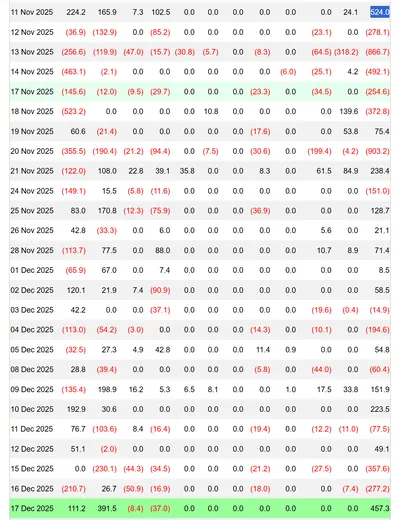
The eleven U.S.-listed spot Bitcoin exchange-traded funds have seen a net inflow of $1.2 billion so far this month, reversing redemptions recorded in December, according to data from SoSoValue. That headline figure masks a shift in how large investors are positioning themselves: flows and futures activity point away from short-term arbitrage and toward more directional, longer-term bets.
Bitcoin ETF Inflows Reach $1.2 Billion in January 2026
The $1.2 billion net inflow highlights renewed appetite for direct spot exposure through ETFs rather than purely technical trades. This movement is documented by SoSoValue and matches other market signals showing a change in investor intent; for related coverage, see Bitcoin ETFs in 2026.
Shift from Arbitrage to Long-Term Bets
For a period, large investors profited from a "cash-and-carry" arbitrage: buying spot exposure and shorting futures to lock in small spreads. That trade has lost appeal because the price gap between futures and spot — the basis — has narrowed to levels that barely cover transaction and funding costs, reducing implied carry to near zero. As a result, many institutions appear to be taking more straightforward long positions in spot ETFs rather than engaging in carry strategies.
Market Microstructure Changes
Market internals reflect the tactical shift. The total number of open or active standard and micro Bitcoin futures contracts on the CME rose by 33% to 55,947 contracts, while the basis between CME futures and spot ETFs tightened. At the same time, implied volatility eased: Volmex's BVIV index for 30-day annualized implied volatility fell to 40%, a three-month low.
Institutional Investors and 'Sticky' Bets
Analysts and exchange data characterize the new flows as more "sticky" — investors adding longer-term exposure rather than seeking quick arbitrage profits. Open interest held by non-commercial traders on CME Bitcoin futures climbed to over 22,000 contracts, consistent with increased speculative bullish positioning and broader institutional participation. For context on recent inflow patterns, also see ETF inflows in early 2026.
Speculators Driving Market Trends
The expansion in open interest appears driven more by speculative buyers than by a revival of basis trades: large speculators have been increasing bullish exposure, while leveraged funds that traditionally short futures as part of carry strategies have pared short positions. This change in who is active in the futures market influences both liquidity and the risk profile of price moves.
Why this matters
For a miner operating in Russia with between one and a thousand devices, these developments matter because they change market dynamics without directly altering mining operations. Institutional inflows and higher futures activity can support steadier demand for Bitcoin, while lower implied volatility usually means fewer sharp short-term swings that can disrupt revenue planning.
At the same time, the fading profitability of cash-and-carry arbitrage chiefly affects market makers and traders, not the physical process of mining. Nevertheless, shifts in who holds Bitcoin — more "sticky" institutional holders versus short-term arbitrageurs — can influence how quickly price moves translate into lasting market trends, which matters for decisions on when to sell mined coins.
What to do?
- Monitor flows and open interest: track ETF inflows, CME open interest, and BVIV to gauge whether volatility and speculative pressure are changing.
- Review your sell strategy: if volatility is lower, consider adjusting short-term sell thresholds or dollar-cost averaging schedules rather than reacting to intraday swings.
- Keep liquidity plans ready: maintain enough fiat or stablecoin buffer to cover operating costs in case market conditions change.
- Keep operational costs under control: optimize power use and equipment utilization, since market structure shifts do not eliminate the need to manage on-the-ground expenses.
- Follow reliable market data: use authoritative sources for ETF flows and CME data rather than headlines alone when making decisions.