Luke Gromen, a global macro analyst and founder of FFTT (Forest For The Trees), keeps the core debasement thesis but is more cautious on Bitcoin in the near term. He frames this as a tactical trimming of Bitcoin exposure while still believing that high-debt regimes favor assets that are hard to create, such as gold and sometimes Bitcoin. Gromen points to three specific warning signs that make Bitcoin a less attractive near-term vehicle for the debasement trade.
Luke Gromen’s Debasement Thesis
Gromen’s debasement idea is straightforward: when a country carries heavy debt, one way to reduce the real burden is to allow inflation and currency weakness, so nominal debt buys less over time. In that environment, some investors seek stores of value that cannot be endlessly printed, with gold and, historically, Bitcoin serving as such assets for many investors. Gromen treats debasement as a long-term regime rather than a short, timed trade, so pullbacks do not necessarily invalidate the broader thesis.
Why Gromen Is Cautious on Bitcoin
Gromen lists three signals that have him trimming Bitcoin risk: poor relative performance versus gold, technical trend damage, and a growing quantum‑risk narrative weighing on sentiment. He argues that when Bitcoin fails to make new highs against gold it weakens the case that BTC is the primary hard‑asset hedge at the moment, and this relative measure adds important context beyond dollar‑priced moves.
1) Bitcoin lagging gold
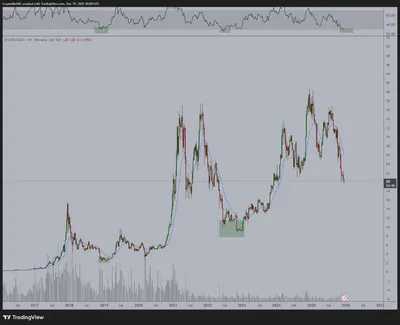
The first warning is the BTC‑to‑gold relationship: if Bitcoin is not leading gold, it is hard to call BTC the dominant debasement hedge. This relative underperformance is why Gromen sees gold and some equities as expressing the debasement theme more clearly today. For related coverage of his outlook on Bitcoin levels, see Gromen predicts $40,000 and broader comparisons in Gold vs Bitcoin 2025.
2) Trend damage on moving averages
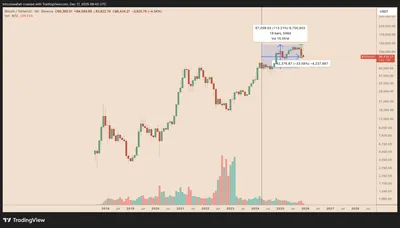
The second signal is technical: breaks below key moving averages make the risk‑reward less attractive for heavy exposure. Gromen recommends a rules‑based view of trend health so decisions are not made emotionally on volatile days, and he cites moving averages as a simple filter to define when a trend is damaged. This is presented as a practical tool rather than a definitive forecast about Bitcoin’s long‑term role.
3) Quantum‑risk narratives
The third factor is growing discussion about quantum risk, which Gromen says weighs on sentiment as a near‑term narrative. Quantum risk is treated both as a real long‑term security issue and as a market story that can prompt investors to reduce risk now. Relevant technical work has progressed in standards bodies: the National Institute of Standards and Technology finalized initial post‑quantum cryptography standards in August 2024, and discussions about migration paths for Bitcoin are ongoing in developer forums.
Tracking Gromen’s Signals
Gromen’s suggested process is deliberately simple: track relative performance, trend health, and flows on a regular cadence. The goal is to make mechanical checks that inform sizing decisions instead of copying another person’s trades, so you can adjust exposure when multiple signals point the same way.
- BTC‑to‑gold ratio as a store‑of‑value test — track whether Bitcoin leads or lags gold over time.
- Trend filter (for example, the 200‑day simple moving average) — use a predefined rule to mark trend damage.
- ETF flows as confirmation — persistent outflows alongside relative weakness and broken trends add weight to a trimming decision.
Why this matters
If you run mining rigs, Gromen’s point matters because it separates the macro regime from the vehicle you use to express it. Debasement, in his view, could still be the dominant macro theme, but Bitcoin’s short‑term setup may not be the clearest expression of that theme right now. That means your long‑term belief in hard assets need not force large, immediate Bitcoin reallocations when technical and flow signals are unfavorable.
What to do?
For a miner in Russia with between 1 and 1,000 devices, practical steps are: keep a core holding you expect to hold across cycles and treat any additional exposure as tactical, reduce tactical size if the BTC‑to‑gold ratio keeps falling or price stays below your chosen moving average, and check ETF flows weekly as a sentiment gauge. When rebalancing, factor in your electricity costs and transaction friction so you avoid overtrading; use wider bands and fewer forced moves in volatile markets.
Gromen’s final takeaway is process‑driven: follow the BTC‑to‑gold ratio, a simple trend filter and ETF flows rather than copying trades. This approach aims to keep your decisions systematic and aligned with both the debasement thesis and short‑term market signals.