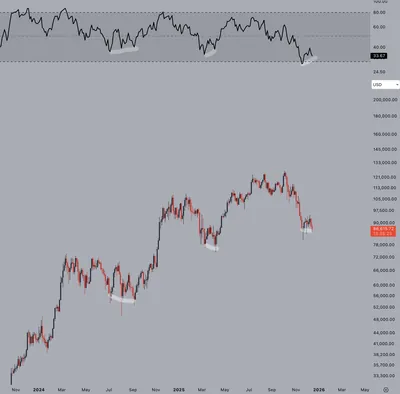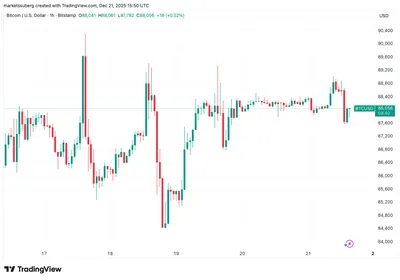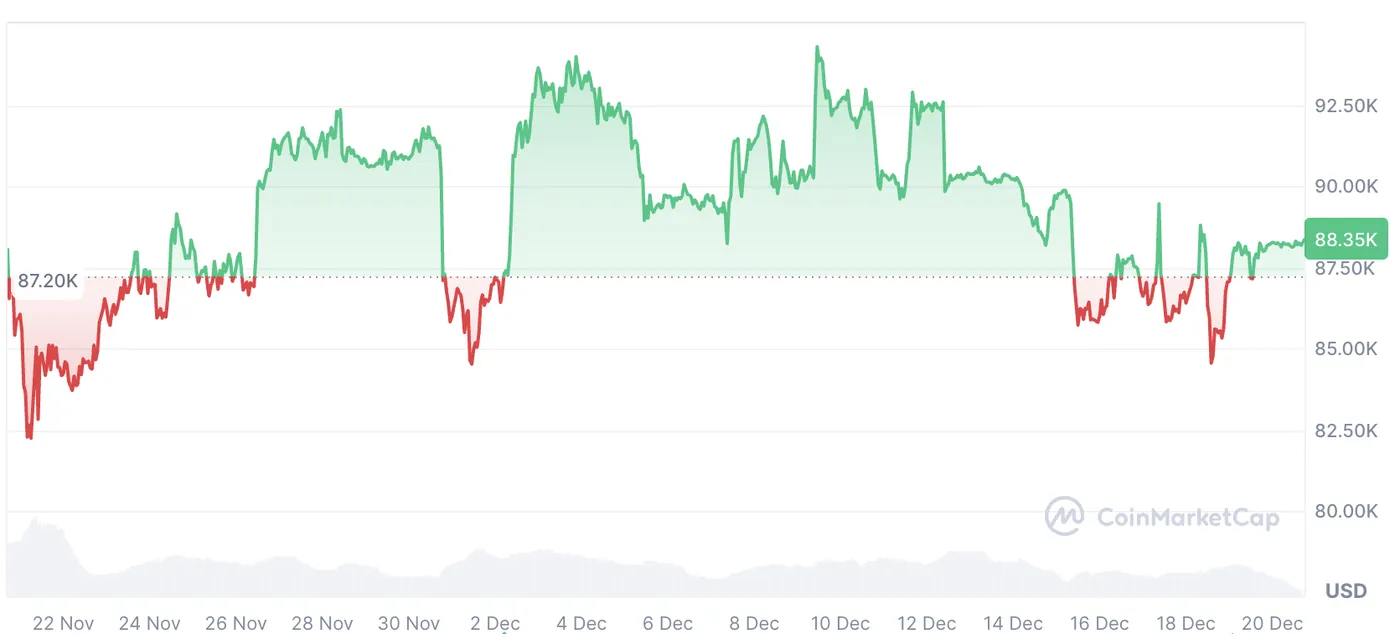
Santiment and its founder Maksim Balashevich warn that public sentiment on social media does not yet appear sufficiently fearful to confidently declare a market bottom. Balashevich notes that excessive optimism among retail traders increases the likelihood of further price declines. According to CoinMarketCap, Bitcoin’s current price is $88,350, and a drop to $75,000 would represent approximately a 14.77% pullback.
Analysis of Cryptocurrency Market Sentiment
Maksim Balashevich explains his skepticism by pointing to the optimism observed in channels dominated by retail investors and cites a Santiment report stating, “The crowd isn't scared enough for a bottom.” He adds that such claims of an imminent reversal do not align with the typical signs that accompany a true market bottom. According to Balashevich, some communities discuss macroeconomic factors as reasons for rapid growth, which heightens his caution.
Bitcoin Price Forecasts
Among scenarios discussed by analysts is a possible price decline to $75,000, roughly a 14.77% decrease from the current $88,350 level. Jurrien Timmer, Fidelity’s director of global macro research, suggested Bitcoin might take a “year off” in 2026 with a price near $65,000, while Bitwise chief investment officer Matt Hougan expects a more favorable year. For a more detailed breakdown of scenarios, see the Bitcoin price forecast article, which discusses alternative scenarios and risks.
Impact of Macroeconomic Factors
The article notes that the Bank of Japan’s decision to raise its rate to 0.75%—a 30-year high—is viewed as one of the macro factors previously linked to significant Bitcoin corrections. Balashevich points out that such events can increase volatility and create conditions for pullbacks, though he also sees a potential “good setup” for traders in declines to these levels. These connections emphasize that macroeconomics remain an important backdrop for cryptocurrency movements.
Cryptocurrency Market Indicators
Despite Santiment’s doubts, several indicators currently point to pessimism: the Crypto Fear & Greed Index registered an “Extreme Fear” state with a score of 20, reflecting market participants’ sentiment. The Altcoin Season Index also showed a “Bitcoin Season” reading of 17 out of 100, indicating altcoins are lagging behind BTC. These data points are useful to compare with analytical reviews, including forecasts that consider possible retests of levels and volatility in a potential $80,000 retest.
Why This Matters
If you mine in Russia with a small number of devices or manage a farm, market sentiment and indicators influence when it’s more profitable to sell mined BTC or hold it awaiting recovery. Volatility, driven by shifts in sentiment and macro factors, directly affects mining profitability when selling coins on exchanges. Even if forecasts point to possible pullbacks, this does not negate the technical and operational risks miners face daily.
What to Do?
- Regularly monitor key sentiment indicators: Crypto Fear & Greed Index and Altcoin Season Index to understand the overall market picture.
- Consider a partial selling strategy: lock in profits at local peaks and keep a reserve to average down during pullbacks.
- Plan operational expenses and maintain liquidity reserves to avoid forced sales under unfavorable conditions.
- Keep track of macro factors mentioned in reviews and correlate them with your mining income behavior, but avoid making decisions based on a single metric.
Quick Reminder
Don’t rely solely on optimistic social media discussions—Santiment warns this can be misleading. Use sentiment indicators and simple position management rules to reduce the impact of short-term volatility on your mining income. For a detailed analysis of scenarios and risks, see the related forecast material.