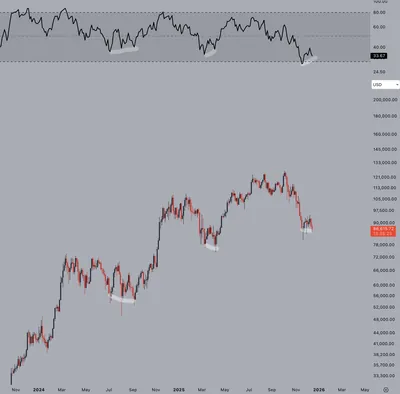
The crypto market has fallen 13% year-to-date, a pullback that many analysts describe as a normal consolidation rather than the start of a prolonged bear market. That framing matters because it changes how investors interpret short-term volatility and choose tactical responses. This article explains the difference between a healthy correction and a true bear market, summarizes why some experts see strength behind the pullback, and gives practical next steps for market participants.
What is a healthy crypto market correction?
A healthy crypto market correction is a temporary pause inside a larger upward trend, not the start of a structural decline. According to Bloomberg Senior ETF Analyst Eric Balchunas, Bitcoin has surged 468% over the past two years, delivering an annualized return of 138%, a performance that outpaces U.S. stocks by eight times; the current pullback represents only a small portion of those gains. Framing the move as a breather helps keep short-term losses in context and reduces the likelihood of emotional decision-making.
Why analysts view the current correction as a sign of strength
Several commentators point to fundamentals and market behaviour that support the consolidation interpretation. Futures trader Toni highlights four key elements that underpin continued optimism and notes that rebounds often start when traders are exhausted rather than when sentiment is upbeat. Institutional interest and ongoing developments across blockchain ecosystems are cited as stabilizing forces, and many observers see current flows as consistent with accumulation rather than wholesale capitulation. For more on how recoveries develop and what investors watch, see our market recovery guide.
Correction vs. bear market: technical and fundamental differences
Technicians generally separate corrections and bear markets by magnitude and market internals: corrections are defined as declines of 10–20% from recent highs, while drops exceeding 20% typically signal bear market territory. Beyond percentages, a bear market usually shows broken support levels, persistent selling pressure, and deteriorating fundamentals; a correction, by contrast, often stabilizes around support with falling selling volume. Watching volume, support tests and momentum divergences helps distinguish a transient pullback from a deeper trend change.
How investors can navigate the current volatility
Experienced investors approach corrections with a plan rather than reacting to headlines. Common, non-prescriptive measures include dollar-cost averaging when adding to positions, increasing exposure only if your original investment thesis still holds, and using allocation limits to manage downside risk. Avoid panic selling purely because of short-term moves, and prioritize checking whether core fundamentals or your personal goals have changed before making big decisions. If you want perspectives on buying opportunities, our piece on buying spot crypto discusses tactical considerations.
Why this matters for miners in Russia
For a miner running from a single device to a larger rig, a healthy correction mainly affects planning and cash flow rather than daily operations. Price dips can tighten margins, but they also create chances to dollar-cost average or to defer expansion decisions until conditions improve. Institutional accumulation during corrections can help establish support levels over time, which is relevant if you factor resale or mining profitability into longer-term planning. Keep tracking market signals and power costs, and avoid urgent operational changes based only on short-term price swings.
Conclusion: positioning for the next market phase
Current evidence and analyst commentary point toward a consolidation that follows large prior gains rather than a structural market collapse. Maintaining a long-term view, monitoring institutional flows and technical support levels, and sticking to a pre-defined risk plan are reasonable ways to navigate the uncertainty. Remember that market behaviour can change, so revisit your thesis periodically and act only when your analysis supports a move. For context on broader market links between crypto and equities, see our note on US market impact.
FAQ
How long do crypto market corrections typically last? Most corrections last between three weeks and three months, though durations vary by cycle and asset.
Should I sell my cryptocurrencies during a correction? Selling solely because of a correction often locks in losses; many investors avoid selling unless their underlying investment thesis has changed and some choose to add gradually via dollar-cost averaging.
What percentage decline defines a correction versus a bear market? Market technicians generally define corrections as declines of 10–20% from recent highs; drops exceeding 20% typically signal bear market territory.
How can I identify when a correction is ending? Look for declining selling volume, stabilization at key support levels, and positive divergences in momentum indicators; improving fundamentals and increased institutional accumulation can also precede recoveries.
Do all cryptocurrencies behave the same during corrections? Major coins often lead market moves while smaller altcoins can be more volatile; the current correction affects most digital assets but with varying intensity.
What role do institutional investors play during corrections? Institutional investors often increase accumulation during corrections, which can help stabilise markets and establish new support levels.
Disclaimer: the information provided is not trading advice and Bitcoinworld.co.in holds no liability.