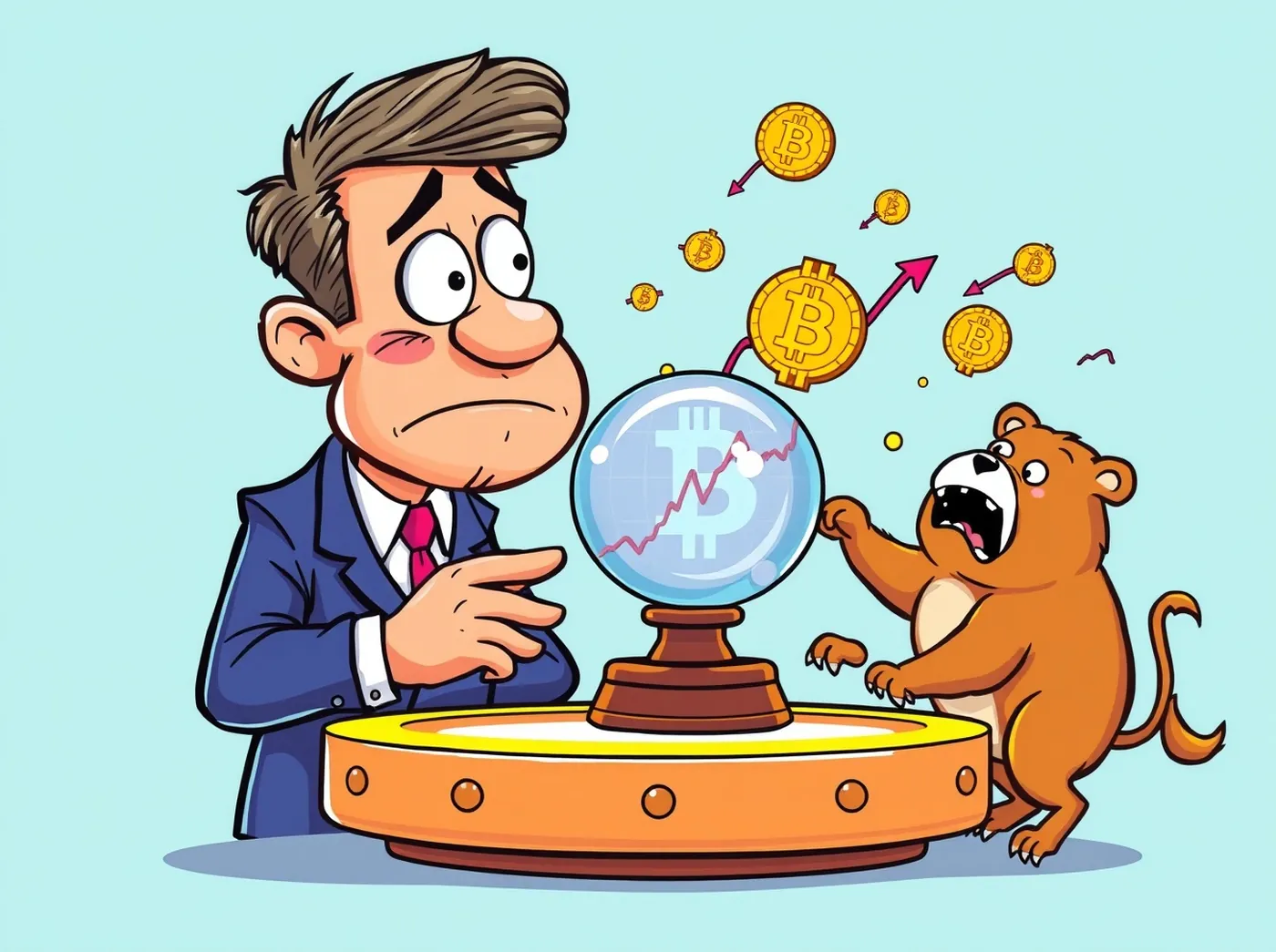
CryptoQuant CEO Ju Ki-young recently highlighted that Jim Cramer, the host of CNBC’s Mad Money, has forecasted a Bitcoin bear market. The mention quickly became a talking point not because everyone accepted the forecast, but because Cramer is often treated as a contrarian indicator by parts of the trading community. A bear market is commonly defined as a period of declining prices, typically a fall of 20% or more from recent highs, accompanied by broad pessimism. This article explains the prediction, why some traders read it as a reverse signal, and what miners and investors can do with that information.
Jim Cramer’s Bitcoin Bear Market Prediction
Jim Cramer publicly predicted a Bitcoin bear market, a call that drew attention when CryptoQuant’s CEO shared it with the crypto audience. The reaction in trading circles was not uniform: some treated the forecast as a straightforward warning, while others saw it through the lens of Cramer’s reputation. That mixed response is important because it shapes how market participants interpret the same statement.
The Contrarian Indicator Phenomenon
Cramer occupies a visible role in financial media, and his emphatic market calls often draw widespread attention. Ju Ki-young’s post on X noted that Cramer is "widely mocked" as a contrarian signal, meaning some traders intentionally consider taking the opposite position when he makes a loud prediction. This dynamic does not assert that Cramer’s analysis is wrong; rather, it highlights how public, emphatic forecasts can become a sentiment cue for others.
The Contrarian Indicator: How Traders Use It
The so-called "Cramer Effect" rests on timing and market psychology: by the time a mainstream commentator voices a strong view, that view may already be reflected in prices or in the positions of informed traders. When a well-known figure loudly predicts a market direction, a segment of market participants may interpret the statement as a contrarian signal and act accordingly. Understanding this phenomenon helps explain why the same prediction can trigger opposite responses in different groups.
Implications for the Bitcoin Market
CryptoQuant’s CEO bringing Cramer’s forecast into the on-chain analytics conversation directs the claim toward a data-focused audience. Because CryptoQuant is a leading on-chain analytics firm, the mention is read less as an endorsement and more as a pointer to sentiment worth noting. When evaluating such headlines, it helps to combine sentiment awareness with concrete data sources and analyses, including studies of how social media and prices interact.
Actionable Insights for Investors
Don’t make trading or operational decisions based only on one outspoken commentator’s prediction. Instead, use any high-profile forecast as a prompt to check on-chain indicators, risk exposure, and your investment thesis. Below are practical steps to incorporate contrarian signals responsibly.
- Cross-check the claim with on-chain data and multiple analytics providers, including CryptoQuant.
- Review your risk management: ensure position sizing, stop-losses, or operational buffers align with your risk tolerance.
- Avoid knee-jerk reactions; treat headline-driven moves as potential noise and validate them with independent research.
Navigating Market Noise
Public forecasts often amplify sentiment but do not replace systematic analysis, and loud opinions can create noise that obscures underlying trends. Sentiment indicators have a role, yet they should complement, not substitute for, technical, fundamental and on-chain checks. Maintaining a disciplined, data-informed approach reduces the chance of overreacting to transient public commentary.
Почему это важно
Если вы майните в России и управляете от одного до тысячи устройств, знание того, что обсуждается в публичном поле, помогает оценивать краткосрочные колебания спроса и настроений. Однако громкая критика или пессимизм в медиа не обязательно отражают фундаментальные изменения в сети или ваших операционных расходах. Используйте такие заявления как триггер для проверки собственных показателей, а не как повод для автоматического отключения оборудования.
Что делать?
- Проверьте свои ключевые показатели: доходность майнинга, себестоимость, и резерв наличности, прежде чем принимать решения на эмоциях.
- Следите за ончейн-данными и аналитикой от независимых провайдеров, включая CryptoQuant, чтобы получить более точную картину рынка.
- Поддерживайте дисциплину в управлении рисками и план действий на случай более длительной волатильности, вместо реакции на единичные публичные заявления.
Frequently Asked Questions
Q: What exactly did CryptoQuant’s CEO say about Jim Cramer? Ju Ki-young posted on X that Jim Cramer predicted a Bitcoin bear market and highlighted Cramer’s reputation in trading communities as a contrarian indicator. The post framed the forecast as notable primarily because of how some traders interpret Cramer’s public calls.
Q: Why is Jim Cramer considered a contrarian indicator? Traders have observed that Cramer’s most emphatic public calls often come at sentiment extremes, and a segment of investors uses such publicity as a cue to take the opposite position. That historical pattern is why his statements are sometimes read as reverse signals rather than direct trading advice.
Q: Should I buy or sell Bitcoin based on this news? No single public prediction should determine your strategy. Treat the news as a prompt to review broader data, on-chain analytics, and your own investment or operational plan rather than as an automatic buy or sell signal.
Q: What is a bear market? A bear market is a period of declining prices, typically marked by a fall of 20% or more from recent highs and widespread pessimism. The term is used to describe sustained downward trends rather than brief pullbacks.
Q: Is CryptoQuant endorsing Cramer’s view? CryptoQuant’s CEO shared the prediction; the mention served to highlight the forecast as a sentiment indicator and not as an endorsement. CryptoQuant is known as a leading on-chain analytics firm, and its sharing points readers toward considering sentiment alongside data.