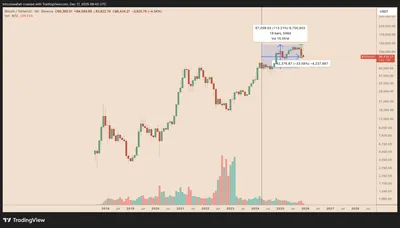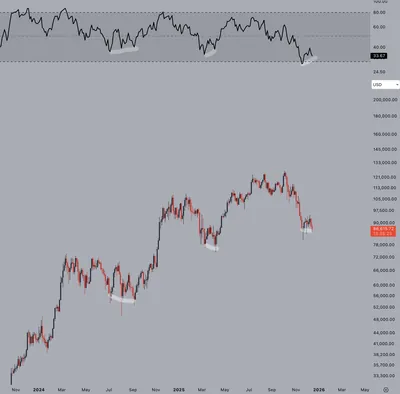
On‑chain analyst Willy Woo rejects the idea that Bitcoin’s four‑year cycle has already ended, arguing that recent price action does not prove the pattern is dead and that the traditional rhythm still fits the data through at least 2026. He compares social media misreads of market moves to mistaking a temporary change in heart rate for the disappearance of a heartbeat, saying short deviations do not erase an underlying pulse.
Willy Woo’s Defense of Bitcoin’s Four-Year Cycle
Woo maintains that the four‑year model remains the most accurate framework until price behaviour clearly departs from cyclicality well into 2026. To illustrate why small timing or intensity changes are not decisive, he uses a medical analogy: a transient dip in heart rate while sleeping does not mean a resting heartbeat no longer exists, and similarly short deviations in price should not be taken as proof the cycle has ended.
Criticism from Industry Experts
Several industry figures have argued the old cycle is weakening, pointing to large institutional inflows via spot ETFs and broader macro forces as the new dominant drivers of Bitcoin’s path. Bitwise CIO Matt Hougan and researcher Ryan Rasmussen specifically say the halving and past leverage‑fuelled busts are less influential today, producing slower, steadier market moves instead of the sharp boom‑and‑bust pattern seen previously.
Woo’s Response to Critics
Woo has pushed back on attacks to his credibility, denying that a hedge fund he ran collapsed in 2020 and explaining that his first fund, Crest, began in 2022 and remains operational; he also mentioned running institutional vehicles including SyzCrest in partnership with Syz Banking Group. Beyond fund details, Woo points to two core drivers that he believes continue to produce the four‑year rhythm: internal halving supply shocks and a four‑year global liquidity cycle that flips risk‑on and risk‑off.
Future of Bitcoin’s Market Cycle
The debate centers on whether Bitcoin has outgrown its halving‑driven DNA and moved toward a steadier path shaped by institutional adoption and macroeconomic forces. Some observers argue that federal injections of liquidity will eventually affect the risk curve and support future cyclical expansion, while others view ETF‑led flows as creating a fundamentally different, less explosive market regime.
Why this matters
For miners, the question of whether the four‑year cycle persists affects expectations around price volatility, planning for equipment upgrades, and cash‑flow timing. If the cycle remains intact, miners may still expect sharper upswings and downswings tied to halvings and liquidity shifts; if the market has shifted, price moves could be slower but more correlated with broader financial conditions.
What to do?
Practical steps for miners with between one and 1,000 devices focus on cash‑flow resilience and operational flexibility. Below are clear actions to consider that do not rely on any prediction about the cycle ending or continuing.
- Review operating costs and build a cash buffer to cover several weeks of expenses in case of sharp price drops.
- Stagger reinvestment in new hardware and prioritize efficiency improvements that reduce breakeven power costs.
- Monitor both on‑chain cycle signals and macro liquidity indicators to inform when to hold mined coins versus selling for operating needs.
- Keep firmware, cooling, and electrical maintenance up to date to avoid unexpected downtime during market swings.
For more background on recent discussions about the four‑year pattern, see the analysis of the 4‑year cycle in 2025 and the piece on policy and liquidity that places the cycle in a broader macro context.