In December 2025, inflation cooled and the stock market showed growth. However, Bitcoin's price remains almost unchanged, not responding with an increase to these macroeconomic signals. In this article, we gather key factors to help understand why Bitcoin is not following the market in the current situation.
Current Economic Situation
The decline in inflation combined with rising stocks creates a favorable backdrop for most risk assets, but different markets may react with varying speed and amplitude. Additionally, market participants closely watch expectations regarding Federal Reserve policy, which influences capital allocation across asset classes. For context, it is useful to review how previous CPI releases affected BTC price — see the analysis after CPI data, which examines recent market reactions.
Bitcoin Price Dynamics
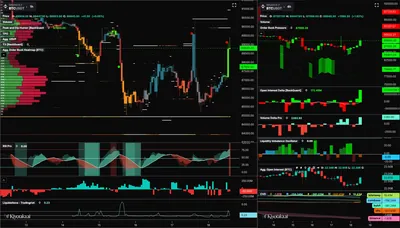
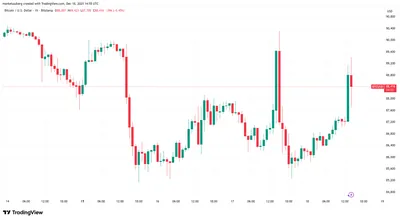
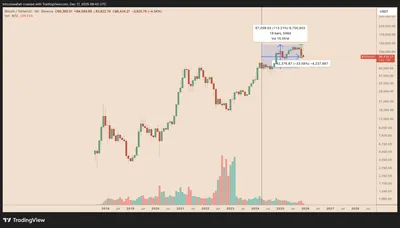
Despite positive macroeconomic indicators, Bitcoin's price currently remains stagnant and does not show significant growth. This behavior can be compared to previous market phases when BTC did not always synchronize with the stock market or macroeconomic news. A detailed review of the recent recovery and its weaknesses can be found in the article on the weakness of the recovery, which discusses typical signs of such behavior.
Factors Influencing Bitcoin Price
Macroeconomic Indicators
Inflation and stock market trends are important but not the only components determining demand for cryptocurrencies. Economic data set the overall tone for investors' risk appetite, but the crypto market's reaction can be delayed or limited due to other overlapping factors. As a result, even with improved macro statistics, BTC price may remain stable.
Regulatory Changes
The legal and regulatory environment directly affects institutional and private investors' willingness to invest in cryptocurrencies. Reports about possible regulatory changes or clarifications often increase uncertainty, which can limit demand and add noise to price movements. This is one reason why improved macro conditions do not always immediately reflect in BTC price.
Actions of Major Investors
The behavior of large players, including institutions and funds, can significantly smooth or amplify price movements. Large-scale purchases or sales are concentrated and depend on these participants' strategies, making the market's reaction to macroeconomic signals less predictable. The combination of volume and timing of major capital inflows often sets the short-term dynamics.
Forecasts and Expectations
Under these conditions, several development scenarios are discussed: from continued stagnation to renewed volatility when new demand drivers emerge. It is impossible to definitively state which scenario will materialize, so market participants should rely on their own risk and liquidity criteria. For additional insight into market assessments and positioning, you can refer to materials on predictive markets, which reflect various participants' views.
Why This Matters
Whether you mine with a single device or manage a farm of up to a thousand rigs, BTC price stagnation primarily affects your profitability when selling mined cryptocurrency: with an unchanged rate, you do not gain additional profit from positive macro news. Meanwhile, operational costs such as electricity and maintenance remain relevant, so profitability must be evaluated regularly and in line with the current price.
Even if news about lower inflation and rising stocks seems insignificant to you, understanding that Bitcoin's price may lag behind other markets will help you make timely decisions about holding, selling, or accumulating reserves. This is especially important when margins are tight and you need to plan expenses for electricity and equipment depreciation.
What To Do?
- Regularly review operational expenses: monitor electricity rates and plan peak equipment usage.
- Diversify income approaches: consider partial profit-taking and accumulating reserves in fiat currency.
- Monitor liquidity: keep part of your funds in easily exchangeable assets to quickly respond to market changes.
- Update security and equipment maintenance: preventive measures reduce downtime and unexpected costs.
- Subscribe to reliable news and analytics sources to avoid missing important changes in macro and regulatory environments.