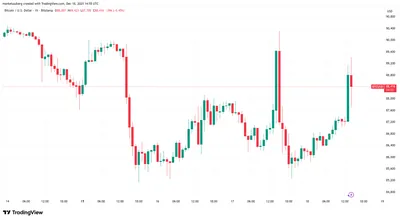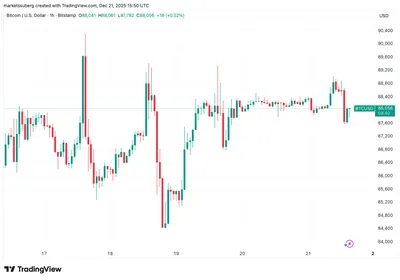
After the release of the November Consumer Price Index (CPI) report, Bitcoin briefly climbed to $90,000, but the subsequent rally failed to hold. November’s CPI came in at 2.7% year-over-year versus a 3.1% forecast, narrowing the gap to the Federal Reserve’s 2% target and temporarily boosting risk appetite in the markets.
Why Bitcoin Didn’t Hold $90,000 Despite US Inflation Decline
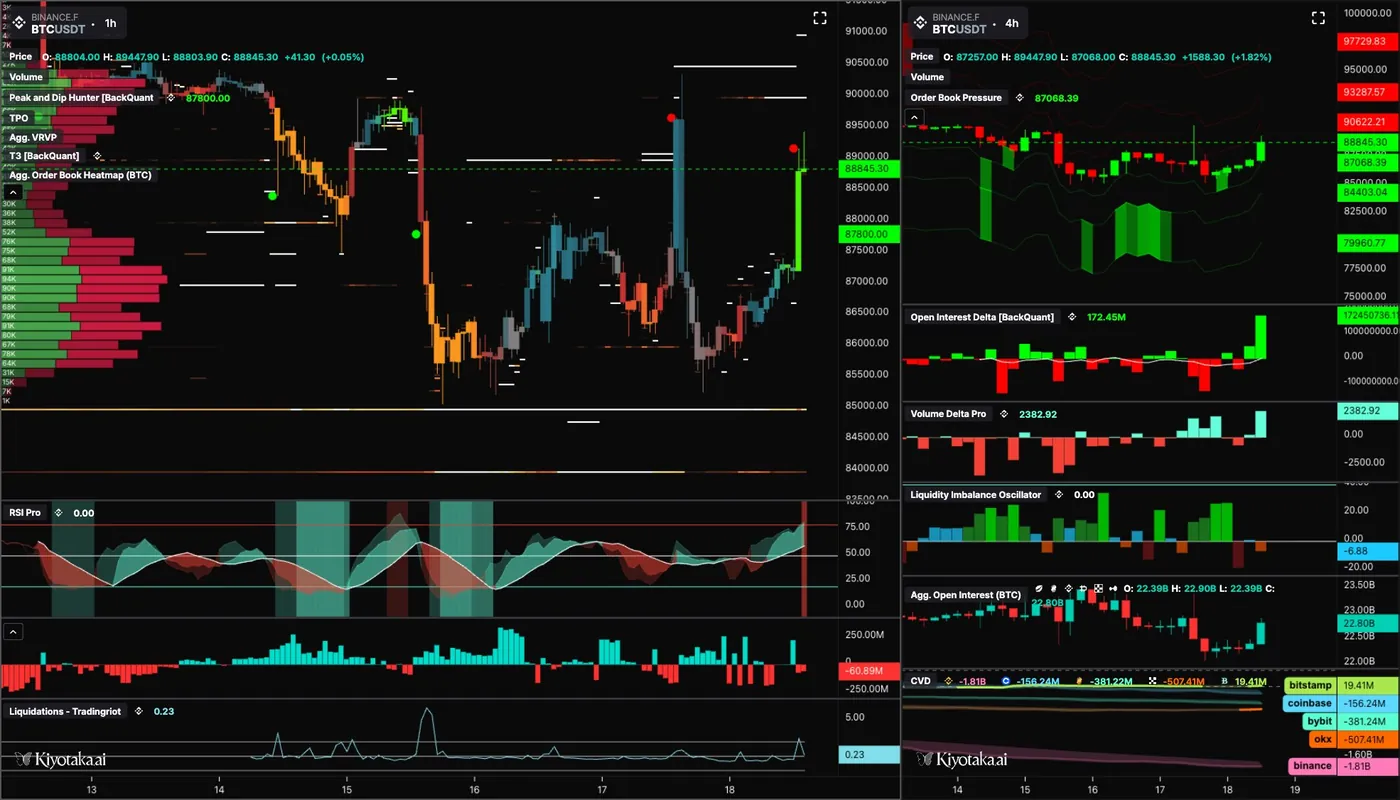
The drop in inflation sparked new long positions, and part of the move to $90,000 was driven by liquidity inflows rather than a guaranteed trend reversal. The rise was accompanied by increasing open interest, indicating fresh positions rather than just short covering.
Technically, the attempt to hold above $90,000 remains critical: confirming bullish momentum requires a daily close above $90,000 and a price return above the monthly VWAP. Without this, buyers risk a short-term correction and tests of levels below the current range.
On-Chain Data Analysis: Stabilization or Distribution?
On-chain metrics from CryptoQuant show Bitcoin entering a "repair" phase since October, where net unrealized losses have stopped deepening and SOPR hovers near breakeven. This suggests coin sales close to cost basis rather than mass capitulation.
Exchange deposit activity rises during price dips and fades during stabilization, reinforcing the idea of reactive rather than structural selling. Such data helps understand that the current dynamics represent position redistribution rather than a definitive market reversal.
Technical Analysis: What Bitcoin Needs to Grow
The key level to confirm continued growth is $90,000. A breakout and hold above this, especially with a daily candle close above the monthly VWAP, signal buyers’ readiness to take control. However, liquidity zones near $90,500–$92,000 may attract selling from market makers.
If the rally fails to hold, increased short positions and a bounce from these liquidity zones could push the price back toward around $83,800. Traders and miners should monitor price behavior relative to the monthly VWAP and volume levels to assess pullback risk.
Macroeconomic Factors Affecting Bitcoin
The low CPI eased inflationary pressure and brought the figure closer to the Fed’s 2% target, reducing some short-term uncertainty for risk assets. Nevertheless, the market remains sensitive to events impacting global liquidity.
One of the year’s last significant events is the Bank of Japan’s interest rate decision scheduled for December 19; its outcome could influence liquidity flows through yen funding markets and indirectly affect risk appetite. Additionally, volatility comparisons show that in 2025 Bitcoin’s volatility was lower than Nvidia’s stock, reflecting changes in investor composition and trading nature.
Why This Matters
For miners operating 1–1000 devices, understanding the reasons behind short-term fluctuations is crucial for managing profitability and risk. Price drops or pullbacks affect mining profitability, electricity costs, and decisions on selling mined coins.
Even if current events don’t alter long-term plans, the lack of confirmed breakout above $90,000 increases the likelihood of short-term corrections. In such conditions, it’s important to avoid rushed mass sell-offs and to consider on-chain stabilization signals when making decisions.
What To Do?
For miners in Russia, it’s useful to follow a clear strategy for managing sales, expenses, and power reserves. Below are practical steps to reduce risks and preserve margins.
- Divide mining coin sales into portions and take profits incrementally to avoid selling everything at one price point.
- Watch the $90,000 level and monthly VWAP: closing above these increases the chance of continued growth, but hold some reserves until confirmed.
- Optimize electricity costs and plan peak operations during higher price periods to improve profitability.
- Use on-chain metrics (NUPL, SOPR) to assess if others are selling in panic or simply rebalancing positions.
- Maintain a fiat reserve fund to cover operating expenses during sharp corrections without forced selling.
For a deeper dive into technical levels and scenarios, read our piece on the $87K level and possible breakout. For macroeconomic reasons behind declines, see the article on economic causes of Bitcoin drops. For a broader overview of scenarios, check out the Bitcoin price forecast.