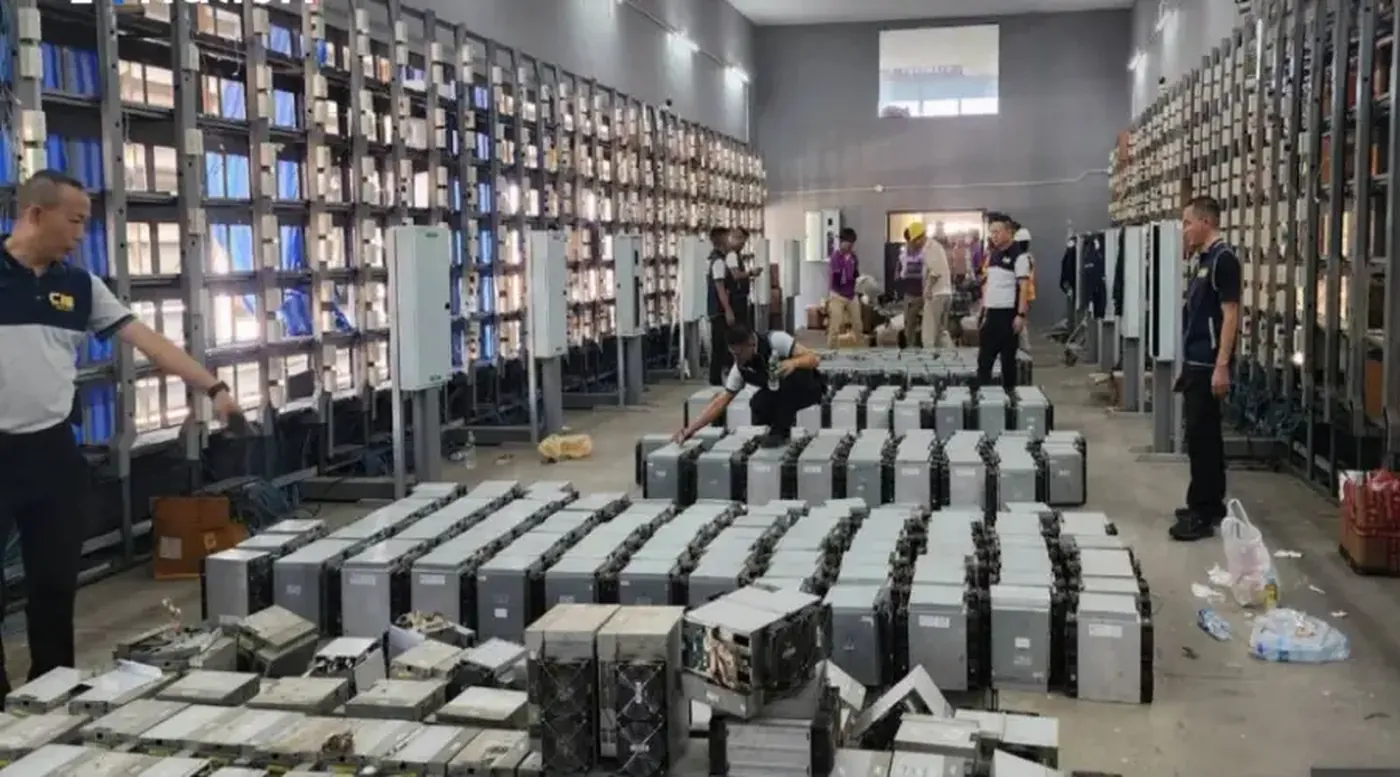
Authorities in Thailand have conducted a large-scale operation targeting criminal schemes involving Bitcoin mining. As a result, 3,642 cryptocurrency mining devices were confiscated. Most of the equipment was stored in specially equipped containers with enhanced soundproofing and water cooling systems, making detection more difficult.
Confiscation of Mining Equipment in Thailand
Investigators reported that the seized equipment was intended for industrial-scale Bitcoin mining. Special attention was paid to storage conditions: the devices were placed in containers equipped with soundproofing and water cooling modules. These measures enabled criminal groups to conceal their activities and minimize the noise generated by miners.
The Role of Mining in Criminal Schemes
Bitcoin mining has become a tool for Chinese criminal organizations, which used stolen electricity to generate income. Through cryptocurrency mining, illegally obtained funds were laundered and converted into virtual assets. This allowed participants to hide the origin of the money and complicated the work of law enforcement agencies. See also: Illegal Mining in Malaysia Causes Over $1 Billion in Losses in 5 Years
Criminal Groups and Investments in Infrastructure
In recent years, criminal organizations in Asia have not limited themselves to virtual schemes. They actively invest in the creation of fraudulent call centers, where forced labor is used, as well as in physical infrastructure—data centers and mining complexes. This approach ensures the sustainability and scalability of their operations.
Detention of a Suspect in Money Laundering
The Technology Crime Suppression Division (TCSD) of Thailand reported the detention of a South Korean national named Han. He is suspected of laundering $50 million through cryptocurrency transactions. This arrest is part of a broader campaign to crack down on criminal activity related to mining and the circulation of virtual assets.
Why This Matters
For Russian miners, this news demonstrates that authorities in various countries are tightening control over the mining industry, especially when it is linked to illegal activities. Increased measures to combat money laundering and the illegal use of electricity may lead to stricter regulations in other countries as well, which is important to consider when planning operations.
What Should You Do?
- Monitor changes in mining legislation and enforcement practices, especially in countries with active law enforcement.
- Avoid dubious schemes and carefully verify the legality of electricity sources and equipment.
- Ensure transparency in your operations and be prepared for possible inspections by regulatory authorities.