The US Department of Justice announced the sentencing of Chinese national Tsinglan Su for his role in an international crypto investment fraud. Authorities say the scheme produced losses exceeding $36.9M and affected 174 victims, and the court ordered Su to pay more than $26M in compensation. Su pleaded guilty to conspiracy to operate an illegal money-transmission business and was identified as part of an organized group that ran fraudulent centers in Cambodia.
Case Details
According to the federal case, Su and his co-conspirators recruited victims through social media, phone calls, messages and online dating services, building trust by presenting themselves as successful investors. After gaining confidence, they directed victims to counterfeit websites designed to look like professional trading platforms and urged them to invest in supposed crypto projects promising high returns. In reality, no trading took place and transferred funds fell under the control of the criminal network.
Financial Impact
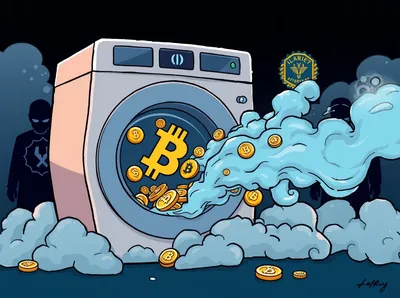
The scheme resulted in total reported losses of more than $36.9M across 174 identified victims, and the court ordered Su to pay over $26M in restitution. Investigators found that proceeds were routed through a bank account at Deltec Bank in the Bahamas, then converted into the USDT stablecoin and redistributed across digital wallets for further use by the group. The case illustrates how fraud proceeds moved from traditional banking into crypto instruments for distribution and reuse.
Fraud Methods
- Using social networks, telephone outreach and online dating services to establish contact and trust with targets;
- Directing victims to fake trading platforms styled to resemble legitimate services, then soliciting investments;
- Converting collected funds into USDT and dispersing them across wallets to support continued fraudulent operations.
Legal Actions
Eight of Su's associates have pleaded guilty in connection with the scheme, and several participants were previously sentenced to prison terms ranging from 36 to 51 months. Law enforcement agencies continue to investigate the network and have not ruled out identifying additional criminal episodes related to the case. This prosecution forms part of a broader set of cases addressing similar patterns of money movement and conversion, including related work on an arrest in a $6M case and investigations into crypto laundering schemes.
Why this matters
For individual miners in Russia, the ruling does not change how mining hardware or pools operate, but it highlights the persistent use of social engineering and fake investment platforms to target people who transfer funds into crypto-related services. The case also demonstrates how criminals move money from bank accounts into stablecoins and digital wallets, a pathway that can make tracing and recovery more difficult for victims. Awareness of these tactics helps separate operational mining activity from the risks of investment offers and outreach from unknown parties.
What to do?
- Be cautious with unsolicited contact: avoid investment offers that arrive via social media, calls or dating apps and verify the sender independently before sending funds.
- Verify platforms and services: check domain details, reviews and regulatory status of any trading platform; perform a small test transfer rather than moving large amounts at once.
- Prefer reputable on-ramps and custodial services when exchanging between fiat and crypto, and keep detailed records of transactions and communications in case of fraud.
- Do not share private keys or authentication details, and segregate mining operations from any investment accounts to limit exposure.
- If you suspect fraud, preserve transaction records and contact local authorities and the platform involved to report the incident promptly.