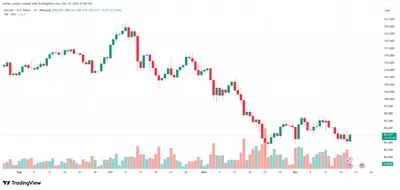
The total crypto market capitalization fell to $2.93 trillion in late trading, its lowest level since April, effectively erasing gains made earlier this year. This drop puts the market roughly 33% below its all-time high of about $4.4 trillion in early October and almost 14% down since the start of the year. Analysts described the move as part of a short-term bearish phase, while some observers flagged potential buying opportunities in fundamentally strong projects.
Crypto Market Cap Hits 8-Month Low
The headline figure — a total market cap of $2.93 trillion — marks the lowest reading since April and returns the market to the middle of a range it has traded in since March 2024. Market participants note that the current level follows a significant drawdown from the October all-time high of approximately $4.4 trillion and has wiped out year-to-date gains. Earlier in the year the market reached a 2025 low of $2.5 trillion before recovering to its peak, illustrating the volatility that has persisted through the period.
Analysts Predict Further Declines
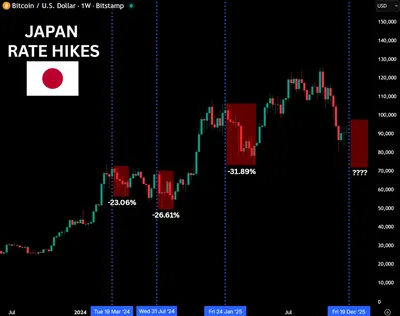
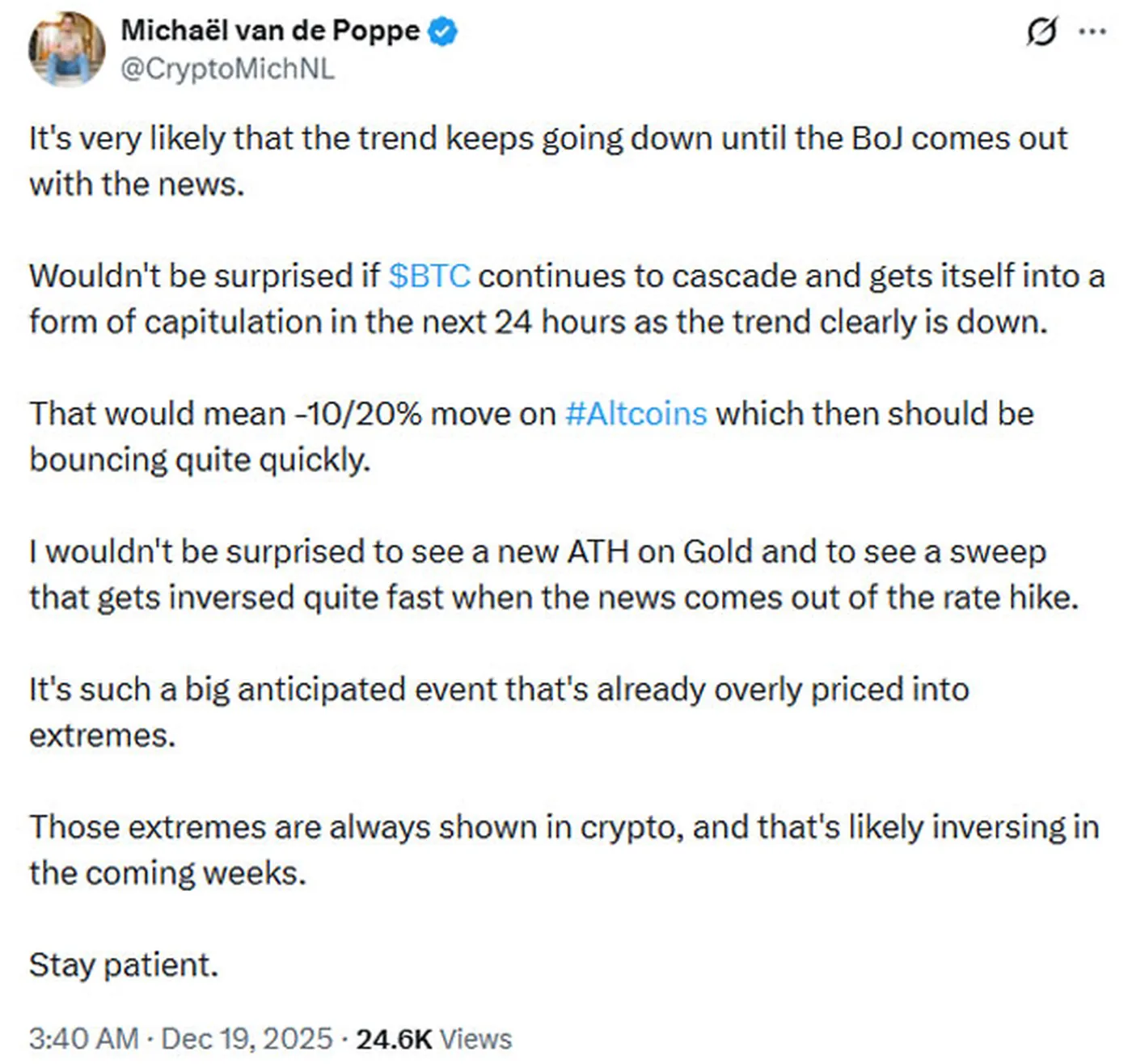
Michaël van de Poppe of MN Fund warned of more short-term pain and expected the downward trend to continue until clarity around the Bank of Japan’s interest-rate decision. Japan’s central bank raised its policy rate to 0.75% on Friday morning, and despite some commentary that the move could be negative for risk assets, Bitcoin climbed by 2.3% after the hike. Van de Poppe suggested the market could experience further capitulation in the near term, a view that underpins the cautious tone among traders and analysts.
Market Sentiment and Investor Behavior
On-chain analytics and sentiment services reported a return to fear-driven narratives, with social-media commentary turning predominantly bearish after recent short-lived rallies. Santiment highlighted a classic retail-driven bearish narrative following a small pump-and-dump episode, noting that Bitcoin briefly bounced and then retraced, and that broader commentary remains fearful. The Crypto Fear & Greed Index sits at 16 — classified as "extreme fear" — and has remained below 30 since the beginning of November, underscoring weak retail sentiment across the space.
Potential Buying Opportunities
Some market participants see the pullback as a chance to accumulate select projects. Nick Ruck of LVRG Research described the decline in market capitalization as a correction tied to macro pressures and reduced risk appetite, while also pointing to ongoing institutional interest in the sector. For traders and longer-term investors alike, these conditions are being framed by some as selective accumulation moments rather than a universal buy signal.
Why this matters
If you run mining equipment in Russia, a falling market cap primarily affects sentiment and tradable liquidity rather than the technical process of mining itself. Lower market valuations can reduce secondary-market demand for mined coins and may increase selling pressure from holders, which can influence short-term coin prices and your immediate revenues if you sell into the market. At the same time, institutional flows and pockets of demand referenced by analysts mean that volatility may present both challenges and intermittent windows to convert mined coins at preferable levels.
Bank-rate moves and macro commentary — such as the Bank of Japan raising rates to 0.75% — can produce sharp, short-lived price reactions, as seen when Bitcoin climbed 2.3% after that announcement. Sentiment indicators like the Fear & Greed Index sitting at 16 reflect retail caution, which often translates to quicker price swings around pumps and dumps and can affect planning for when to hold versus sell mined rewards. If you rely on regular coin sales to cover electricity and equipment costs, these swings matter for cash-flow timing even when your hash rate and operational costs remain unchanged.
What to do?
- Check cash-flow and reserves: ensure you have enough fiat or stablecoins to cover electricity and maintenance through periods of low prices and high volatility.
- Stagger sales: avoid selling all mined coins during momentary drops; consider using fixed schedules or price thresholds for converting coins to fiat.
- Monitor sentiment and liquidity: track metrics like the Fear & Greed Index and on-chain flows, and read market reports to time larger conversions or equipment purchases.
- Review operating efficiency: small efficiency gains in power or cooling can materially improve margins when prices fall, so audit consumption and maintenance routines.
- Keep informed on price dynamics: follow analyses of miner-relevant price moves and the broader market; for context on price action and miner implications see Bitcoin price and for reasons behind Bitcoin’s fall see Why Bitcoin is falling.
For broader market context, including trading-volume trends that affect liquidity, you can read further reporting on spot trading volumes, which helps explain where execution risk may be higher for larger coin sales.