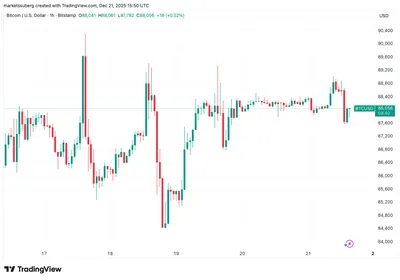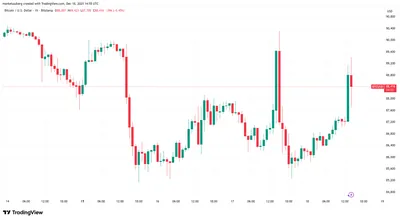
Global cryptocurrency markets shifted on March 13, 2025, when Bitcoin slipped below the $87,000 support level. According to real‑time monitoring, BTC traded at $86,986.83 on the Binance USDT pairing as trading activity intensified, signaling higher near‑term volatility.
Bitcoin Price Drops Below $87,000
The break below $87,000 marks a notable technical event: Bitcoin tested that level three times in the past 90 days before this breach. Trading volume on major exchanges increased by approximately 42% during the move, and the Binance USDT market recorded over $4.2 billion in BTC volume in the 24‑hour window around the decline. For readers tracking price levels, see the related Bitcoin price today coverage for a wider view of recent intraday ranges.
Technical Analysis and Market Indicators
Short‑term momentum indicators shifted alongside the price fall. On four‑hour charts the relative strength index (RSI) dipped to 38, moving toward oversold territory without hitting extreme readings. Derivatives positioning also changed: open interest in futures markets decreased by about 12%, suggesting some leverage was reduced rather than a cascade of liquidations. These signals together point to a period of adjustment as the market seeks fresh support levels.
Macroeconomic Factors Influencing the Market
Macro moves coincided with the price action: the U.S. Dollar Index (DXY) strengthened by 0.8% in the same session, which can create headwinds for dollar‑priced risk assets such as Bitcoin. While this single indicator does not explain the full move, its timing alongside higher trading volumes and positional shifts added pressure during the decline.
Market Sentiment and Investor Behavior
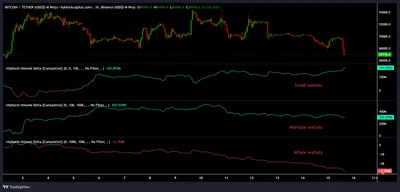
Sentiment cooled after the drop: the Crypto Fear & Greed Index fell from 68 (Greed) to 52 (Neutral), reflecting a shift toward caution among market participants. On‑chain and exchange flow data showed net outflows of roughly 8,400 BTC in the 24 hours before the decline, and the average transaction size rose by about 65%, a pattern consistent with larger, institutional‑sized transfers. Together these metrics suggest redistribution of holdings rather than purely retail panic.
Broader Cryptocurrency Market Impact
The wider market moved in step: total cryptocurrency market capitalization decreased by about 3.8% to near $3.2 trillion, while Bitcoin dominance remained steady at roughly 52.3%. These proportional changes indicate that the drop affected major tokens broadly rather than triggering a rotation of capital into markedly different segments. For deeper analysis of causes and immediate effects, consult our piece on reasons and market impact.
Long-Term Outlook and Key Takeaways
Short‑term price moves like this are part of Bitcoin’s ongoing volatility and do not by themselves rewrite longer‑term network fundamentals. Institutional flows, custody expansion and on‑chain activity continue to show engagement even during pullbacks. Market participants would do well to monitor the exchange flows and sentiment indicators that shifted during this event while avoiding overreaction to a single session’s decline.
Why this matters
For miners, the price drop is primarily relevant for operational planning and cashflow management rather than signaling a structural change in mining economics. Increased volatility can affect short‑term revenue if you sell mined BTC immediately, while higher institutional flows and exchange movement may influence when and how liquidity becomes available. Keeping an eye on support levels and exchange activity helps you time decisions without assuming long‑term change from a single decline.
What to do?
- Review your cash‑flow needs and decide whether to convert mined BTC now or hold; align sales with your operating budget rather than intraday price swings.
- Monitor exchange flows and order book liquidity near $86,500 and $85,000 to understand where buy support may appear.
- Secure large withdrawals: if you move BTC off exchanges, use hardware wallets and follow cold‑storage best practices to reduce custody risk.
- Adjust payout and reserve policies for periods of heightened volatility, and avoid increasing leverage or taking margin positions you cannot sustain.
- Track sentiment and on‑chain metrics (exchange flows, average transaction size, open interest) rather than reacting to headlines alone.