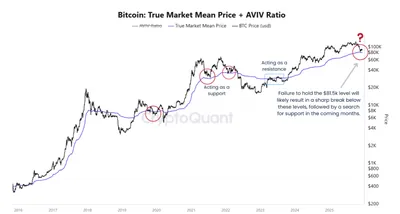
Bitcoin fell below the $88,000 level on March 13, 2025, marking a notable intraday retracement in global crypto markets. On the Binance USDT perpetual futures market, BTC is trading at $87,984.66, while technical metrics show a meaningful shift: trading volume rose about 15% versus the 24‑hour average and the Relative Strength Index (RSI) dropped from 65 to 48. Together, these readings indicate stronger conviction behind the move and a change in short-term momentum.
Bitcoin Price Dips Below Key Support Level
The breach of $88,000 represented a clear technical pullback after recent highs, accompanied by higher-than-normal activity on exchanges. On-chain data from Glassnode records a slight increase in exchange inflows, which suggests that some holders moved coins to trading platforms around the drop. These combined signals helped push BTC below the psychological support, prompting additional attention from traders and institutions.
Understanding Cryptocurrency Market Dynamics
Bitcoin’s price action typically influences the broader crypto market, and this episode was no exception: Ethereum (ETH) registered a 4.2% decrease following Bitcoin’s dip. Correlated moves like this are common because many altcoins carry higher beta to BTC, so a decline in the flagship asset often amplifies losses elsewhere. For broader context and detailed causes of this specific move, see additional coverage of the fall below $88,000 and related analysis.
Expert Analysis on Market Volatility
Market commentators point to volatility measures and institutional flows to explain the retracement. Dr. Elena Rodriguez notes that Bitcoin’s 30‑day annualized volatility sits at 55%, a figure she contrasts with longer-term averages to frame the move as within expected oscillations for this asset class. At the same time, CoinShares reports minor outflows of $42 million from digital asset investment products in the week before the drop, and institutional order books still show concentrated bids below certain price points.
That institutional pattern is highlighted by portfolio managers who see a thick bid ladder below $85,000 on professional venues, indicating underlying demand in that area. Such depth can provide a temporary floor during corrections, even when short-term metrics swing toward neutral. These dynamics—network health, institutional interest and modest outflows—together shape the immediate market response.
Historical Context and Future Implications
Viewed historically, Bitcoin has undergone numerous double‑digit drawdowns since the 2022 low, and shorter corrections are part of its typical price action during bull phases. The upcoming Bitcoin halving, scheduled for April 2024, is also cited in historical narratives as a catalyst in subsequent months, and market participants watch established support and resistance bands when assessing risk. Key technical levels mentioned by analysts include support near $85,000 and $82,000, with resistance observed closer to $90,000.
Why this matters (for miners in Russia)
For a miner operating between one and a thousand rigs in Russia, this correction primarily affects short‑term coin valuation rather than fundamental network conditions. On‑chain flows and institutional order books suggest some selling pressure, yet reported institutional bids below $85,000 may help prevent deeper, sustained declines. Miners who factor price volatility into cashflow planning can avoid forced sales during dips and better time discretionary coin liquidations.
What to do? Practical steps for miners
- Review payout timing: consider staggering transfers to exchanges to avoid selling into a single low point.
- Check operating costs: verify electricity contracts and pool fees to ensure breakeven thresholds remain realistic during price swings.
- Manage coin reserves: keep a buffer of BTC for operating expenses to avoid emergency sales when prices drop.
- Monitor order‑book depth: institutional bids below $85,000 may indicate where larger buyers are likely to step in.
- Stay informed: follow on‑chain inflows and volatility metrics to adapt holding versus selling choices.