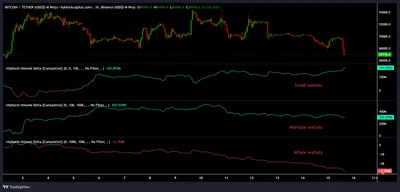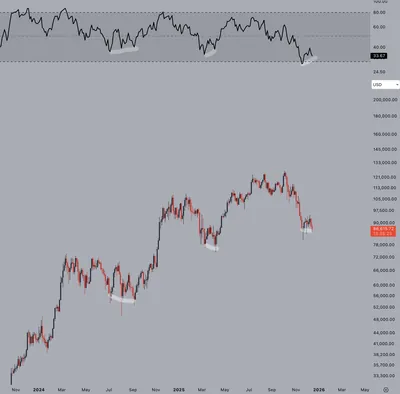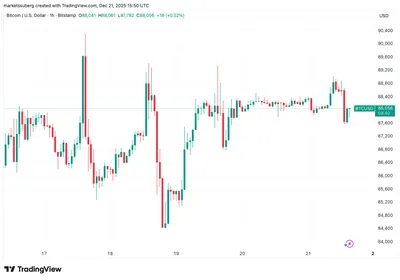
Bitcoin experienced a sharp pullback during the Asian market open, sliding from $95,300 to $91,800 — a 3.7% move that removed leveraged positions from the market. The fall coincided with roughly $233 million in long liquidations over 24 hours, while derivatives and onchain indicators showed a cooling of bullish sentiment rather than broad spot selling.
Bitcoin Price Drop Overview
The recent decline unfolded during the Asian session and trimmed price from $95,300 down to $91,800, representing a 3.7% drop. This move primarily flushed leverage while the underlying market structure held, so the fall looked like a reset of stretched bullish positioning rather than an immediate trend reversal.
Market Reaction and Sentiment
Liquidations in futures markets totalled about $233 million, and measures of market mood fell sharply: Bitcoin’s Advanced Sentiment Index dropped from 80% to 44.9%. At the same time, open interest declined back to roughly $28 billion, indicating that leveraged exposure was unwound instead of fresh aggressive shorting entering the market. For broader context on open interest dynamics, see the piece on open interest drop and how it has moved recently.
Technical Analysis and Future Outlook
Technically, daily price action still displays higher highs and higher lows, which keeps the short-term structure intact. The area between $92,000 and $93,000 lines up with a daily order block and the rolling monthly VWAP, making it a plausible support zone where buyers could step in. Hyblock Capital’s data also shows that around $250 million in net long positions were filled near $92,000 over the past day, consistent with dip demand rather than wholesale capitulation.
- Daily structure: higher highs and higher lows suggest the short-term uptrend remains intact.
- Key support: the $92,000–$93,000 band coincides with order-block demand and monthly VWAP support.
- Filled longs: about $250 million of net long positions were filled near $92,000, indicating buying interest on the dip.
Traders watching price behavior around that support band will get clearer signals for whether bulls can reassert control or if further unwinding occurs.
Why this matters
For miners operating in Russia with anywhere from a single rig to a thousand devices, these developments matter because market volatility affects revenue in both fiat and local-currency terms. A flush of leverage and a drop in sentiment can produce fast price swings that change short-term payout expectations and the timing of converting mined BTC to cash.
At the same time, the reported filling of net long positions near $92,000 and the intact daily structure mean this pullback can present a trading-range environment rather than a wholesale market breakdown. That reduces the chance of a prolonged price collapse driven by spot selling, although short-term volatility remains elevated.
What to do?
If you run mining equipment in Russia, consider a few practical steps to manage risk and take advantage of the situation. First, reassess your short-term cashflow needs and the timing of converting mined BTC to local currency to avoid selling into short-term dips.
- Monitor price around $92,000–$93,000 and set conversion or sell thresholds that match your operating costs and local tariff schedule.
- Use staggered conversion (dollar-cost averaging) rather than a single large sale to reduce the impact of volatility on revenue.
- Check your leverage exposure (if any) and avoid adding risk during episodes of flushed leverage and falling open interest.
- Keep spare capacity and maintenance plans ready in case short-term price moves make it preferable to pause rigs temporarily for cost savings.
For a broader view of possible price paths and key levels, you may find the Bitcoin price forecast article useful as supplementary reading.
This article summarizes recent price, liquidation, sentiment, and open interest data and does not constitute investment advice.