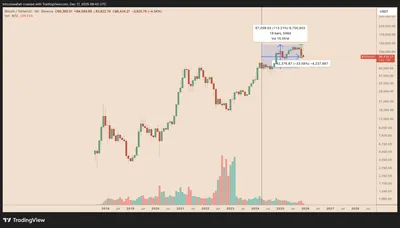
In 2025 bitcoin exchange reserves fell sharply, marking a clear shift toward long‑term custody by institutions and other large holders. Over the same period the market saw a historic price peak of approximately $126,000 before settling into the $80,000–$90,000 range, yet the most significant structural change was how supply moved off exchanges. Market data shows total reserves dropped from 2.93 million BTC to 2.48 million BTC between Jan. 1, 2025 and Jan. 7, 2026, a flow that persisted even during periods of downward price pressure. The correlation between exchange supply and price weakened after the Oct. 10 flash crash, calling into question the old reliance on exchange balances as a leading indicator.
The Shift in Bitcoin Exchange Reserves
Throughout 2025 the market narrative moved away from rapid trading churn toward longer holding horizons, driven largely by institutional behavior. The passage of the GENIUS Act and the adoption of a Strategy “playbook” in the United States helped establish bitcoin as a corporate treasury option, and that institutional demand translated into sizable flows to cold storage. At the same time, exchange‑traded funds matured into more sophisticated instruments, reducing the need for on‑exchange supply to facilitate institutional allocations.
Reasons Behind the Decline in Exchange Reserves
A major driver of falling exchange reserves was the transfer of coins into long‑term custody by institutions, including ETFs and corporate treasuries, which removed liquidity from public order books. This behavior represented a shift from the old pattern of panic selling toward deliberate, long‑term holdings, and it persisted even during price drawdowns. As ETFs and treasuries used off‑exchange custody, available exchange inventory became a less complete picture of real market liquidity; for more on ETF flows and liquidity, see Bitcoin ETFs in 2025.
Expert Opinions on the Changing Metrics
Many industry voices now argue that tracking simple exchange balances is insufficient for assessing market health. Martins Benkitis, co‑founder and CEO of Gravity Team, suggests that traditional exchange balance tracking is becoming obsolete and that liquidity measures tied to off‑exchange custody and custodian arrangements matter more for price impact. Benkitis notes that custodians working with exchanges can let off‑exchange assets be used as collateral, which complicates the picture offered by raw exchange balances.
Iva Wisher on market maturity
Iva Wisher, founder and CEO of MIDL, describes the shift as institutional "growing pains" and emphasizes that a larger share of supply is settling into long‑term ownership. For Wisher, the key signal is behavioral: when engagement and holdings persist even under stress, it indicates maturation rather than transient speculative flows. Both experts agree that thinner exchange liquidity can make price moves sharper, but those moves may reflect genuine demand rather than low‑conviction trading.
Impact on Bitcoin Price Trends and Volatility
The historical link between exchange supply and price broke down after the Oct. 10 flash crash, producing a period when balances and price moved down together—an outcome that confounded the old model. As exchange inventories continued to decline afterward, thinner order books increased the potential for larger price swings from relatively small flows, a phenomenon experts describe as greater upside convexity. For readers interested in how on‑chain flows and macro factors interact with price, consult this price forecast coverage.
Why this matters
If you run from one to a thousand mining devices in Russia, the changing supply dynamics affect how markets react to your sell orders and to broader demand shocks. Thinner exchange liquidity means the same amount of BTC offered for sale can move the market more than before, increasing short‑term price impact and execution risk. At the same time, a larger proportion of supply in long‑term custody can reduce extreme churn, so price moves that do occur are more tied to underlying demand than to fleeting sentiment.
What to do?
Practical steps for miners depend on scale, cost base and access to custody options, but a few consistent actions can reduce risk and preserve returns. First, plan sell schedules to avoid hitting thin order books at once, and use limit orders or OTC channels where available to reduce market impact. Second, diversify where you sell: split flows across exchanges and trusted OTC desks, and track liquidity metrics rather than relying solely on reported exchange balances.
- Stagger withdrawals and sales to smooth price impact and avoid concentrated spikes.
- Use OTC or custodial liquidity when possible to execute larger sales off order books.
- Monitor liquidity indicators (order‑book depth, bid‑ask spreads) in addition to exchange reserve totals.
FAQ
What changed for bitcoin in 2025? In 2025 bitcoin shifted toward long‑term institutional custody and began to function more as a corporate treasury asset, a change reinforced by U.S. policy and strategy developments. This reduced on‑exchange supply and altered traditional market dynamics.
Why are exchange reserves falling? Institutions, ETFs and corporate treasuries moved substantial amounts of BTC into cold storage for long‑term custody, removing coins from exchange inventories and lowering visible supply.
Does this affect price signals? Experts say that exchange balances alone are no longer a reliable predictor of price; liquidity measures and off‑exchange custody arrangements now play a larger role in determining how price reacts to flows.
How is volatility evolving? With thinner order books, price moves can become faster and larger, but experts argue those moves increasingly reflect real demand rather than diluted, low‑conviction trading.