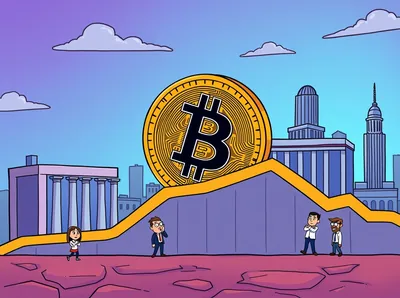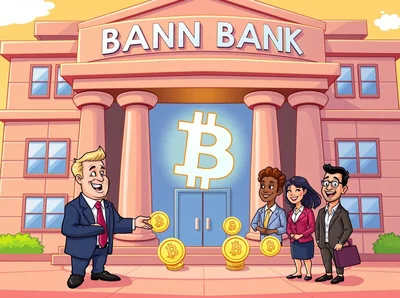
Binance founder Changpeng “CZ” Zhao pointed to a clear 2025 divergence in market behavior: several major U.S. banks are steadily accumulating Bitcoin while many retail investors are selling in panic. The report cites Wells Fargo’s reported $383 million Bitcoin purchase as a notable illustration of that institutional activity. This contrast between measured institutional allocation and emotional retail reactions frames the current market narrative without asserting short-term outcomes.
The Divergence: US Banks vs Retail Investors
CZ’s observation frames a split in market roles: banks are building positions methodically, whereas a sizable share of retail participants reacts to price swings with quick selling. The Wells Fargo purchase is highlighted in the coverage as an example of how traditional financial institutions now participate in Bitcoin allocation. This pattern reflects differing objectives and processes between institutions and individual traders, rather than a single, uniform market movement.
For additional context on the institutional perspective and CZ’s broader view, see Биткоин как глобальный резервный актив — взгляд CZ, and for on-chain analysis related to large buyers, consult an analysis showing whales buying in 2025 at Биткоин: киты массово покупают в 2025 — анализ CryptoQuant.
Why Are US Banks Accumulating Bitcoin?
The reporting and CZ’s comments point to several drivers behind institutional accumulation. Bitcoin’s fixed supply and decentralized attributes are cited as contrasts to expansive monetary policies, creating an argument for allocation in certain institutional strategies.
Other motivating factors mentioned include growing client demand for crypto exposure and a maturing regulatory environment that gives banks clearer compliance frameworks. Institutions also tend to build positions during periods of consolidation or decline, executing purchases over time to avoid market impact and align with long-term allocation plans.
The Psychology of Retail Panic Selling
Retail panic selling is described as a behavior rooted in fear, uncertainty, and doubt, which media and social sentiment often amplify. Many retail participants, especially those who entered during bull markets, may lack the risk tolerance or institutional processes that support patient accumulation.
That emotional response can trigger automated sell orders and margin liquidations, intensifying downward pressure and supplying liquidity to buyers who are building positions discreetly. The result is a behavioral gap that sophisticated buyers can exploit without implying any guaranteed market outcome.
Historical Context and Market Evolution
The piece places the 2025 divergence in a longer evolution of institutional engagement: from early exploration to infrastructure development and now strategic allocation. The approval of regulated products and improved custody solutions is presented as part of the environment enabling banks to participate at scale.
As institutions accumulate, the buyer profile in the market shifts, which has implications for market structure and participant behavior. These developments are framed as changes in how capital enters and is stored within the ecosystem, not as deterministic predictions about prices.
Expert Insights and Evidence
The article notes that on-chain data and public filings align with the accumulation narrative, with analytics showing increased holdings in institutional-associated wallets and exchange outflows during declines. It also highlights that bank purchases are often executed gradually, consistent with dollar-cost averaging approaches used to limit market impact.
Taken together, the reporting and CZ’s statement form a case for a structural difference in approach between banks and retail traders, grounded in custody, compliance, and client-driven allocation decisions.
Почему это важно
Для майнера в России эта информация прежде всего меняет понимание спроса: появление банков-покупателей означает, что часть спроса формируется долгосрочными держателями, а не только краткосрочными трейдерами. Это влияет на ликвидность и профиль спроса, хотя напрямую не меняет эксплуатацию оборудования или электрические тарифы.
Кроме того, вера крупных институций в цифровые активы усиливает роль безопасного хранения и прозрачной отчётности, что важно при выставлении и хранении добытых монет. Тем не менее повседневная рентабельность майнинга определяется другими факторами и остаётся в зоне ответственности самого майнера.
Что делать?
- Обеспечьте надёжное хранение: используйте проверенную холодную или кастодиальную инфраструктуру для резервных сумм и части дохода.
- Следите за потоками и объемом оттоков: простая проверка on-chain и обменных отчетов поможет оценивать, куда уходят монеты и меняется ли ликвидность.
- Дробите продажи по потребностям: вместо панической фиксации убытков планируйте продажи, исходя из операционных расходов и краткосрочных обязательств.
- Документируйте позиции: храните записи о поступлениях и перемещениях монет для налоговой и управления рисками.
- Не полагайтесь только на новостный фон: принимайте решения исходя из собственных целей по доходности и обслуживанию ферм.