The P.A. Stolypin Institute for Growth Economics considers that illegal cryptocurrency mining causes significant damage to the Russian economy. According to the institute's estimates, losses in the energy sector exceed 10 billion rubles, while tax evasion adds up to 9.6 billion rubles in additional losses. The institute's executive director, Anton Sviridenko, emphasizes the need for decisive measures to bring the industry out of the "gray" zone.
Damage from Illegal Mining
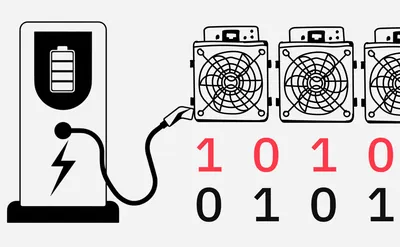
According to the study, the main financial burden falls on the energy sector: losses from unaccounted consumption are estimated at more than 10 billion rubles. Additionally, the institute cites further losses in the form of tax arrears—up to 9.6 billion rubles—intensifying the pressure on the budget. These figures are presented in the institute's statement and commented on by its leadership.
The report's authors note that the development of mining requires clear regulations and integration with the energy complex to reduce illegal practices. The study emphasizes a combination of regulation and technical measures that will help reduce losses in networks and increase industry transparency.
Measures to Counter Gray Mining
To reduce energy losses, the institute proposes several concrete measures that can be implemented gradually and across different regions. The focus is on combining technical control tools and economic incentives, enabling both detection and prevention of unaccounted consumption.
- Strengthening consumption control through automated monitoring systems.
- Differentiated tariffs in regions with low rates to eliminate consumption arbitrage.
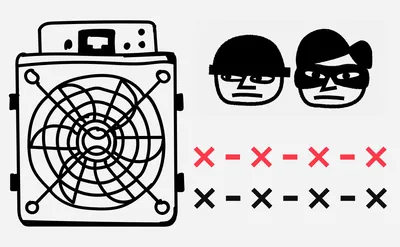
- Developing a penalty system including equipment confiscation and network disconnection for violations.
Russia's Mining Potential
The institute points out that Russia has advantages for legal mining development: a developed energy sector, cold climate, and unused capacities. As an example, it cites a project based at the Kalinin Nuclear Power Plant, where 50 MW of capacity will be created for mining with plans to expand to 240 MW, illustrating the potential to use excess generation in industrial projects. For more on energy resource distribution and mining's impact on the grid, see materials on electricity shortages in the context of mining.
Cooperation with Rosatom
The report also mentions a partnership with Rosatom and mining companies Intelion Mining and BitCluster, which, according to the institute's estimates, could bring up to $100 million annually by 2030. This cooperation is viewed as a way to legalize part of the capacities and create transparent channels for paid energy use in mining. Additional data on consumption and restrictions are detailed in the analysis of electricity consumption by mining.
Why This Matters
If you mine at home or manage a farm with several devices, increased control and differentiated tariffs may affect your expenses. At the same time, the risk of fines and equipment confiscation, noted in the institute's proposals, means that illegal use of cheap tariffs becomes less safe. Meanwhile, legal projects based on the energy sector can open new opportunities for those willing to operate within regulatory frameworks.
What to Do?
- Check tariffs and connection rules in your region and recalculate the cost of energy for mining.
- Organize consumption accounting: install meters and, if possible, monitoring systems to avoid suspicions of unaccounted consumption.
- Consider tax obligations and document income and expenses to reduce the risk of evasion claims.
- Assess risks of disconnection or equipment confiscation and be prepared for increased control by network and regulatory bodies.
- Follow the development of legal projects and partnerships with energy companies that may offer official options for capacity placement.