Two key factors are in focus: the Bank of Japan raised its interest rate to the highest level in three decades, and softer inflation data was released in the US. Together, these events improved investor sentiment toward risk assets and supported market recovery.
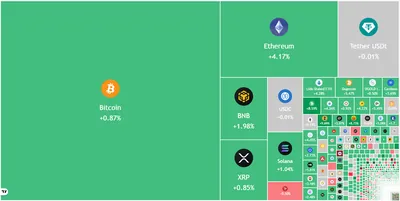
As a result, Bitcoin surpassed $87,000 during Asian trading, and Ether also showed gains amid the overall market strengthening. The CoinDesk 20 index rose about 2%, while several major altcoins increased roughly 3%.
Summary: What Happened
The Bank of Japan raised its benchmark rate to a level unseen in three decades, causing Japan's 10-year government bond yields to briefly reach 2% for the first time since 2006. Alongside softer US inflation data, this adjusted investor expectations and revived demand for risk assets.
Following these developments, Asian stocks rose, the yen weakened, and US index futures continued their recovery. For the crypto market, this translated into gains for Bitcoin, Ether, and several altcoins.
Bank of Japan Decision and Market Reaction
The central bank's rate hike was accompanied by hawkish signals from Governor Kazuo Ueda observed in recent weeks. This expected move temporarily pushed up Japanese bond yields and altered local monetary conditions.
The market response was calm: the yen weakened, and the MSCI Asia Pacific index rose about 0.7%, largely supported by technology stocks. These movements boosted risk appetite in Asian markets and encouraged capital inflows into more volatile assets.
US Inflation Data and Impact on Risk Assets
Softer US inflation figures adjusted expectations regarding Federal Reserve policy and strengthened the recovery of US index futures. The S&P 500 gained around 0.8%, while the Nasdaq 100 increased approximately 1.5%.
Optimistic guidance from Micron Technology also eased concerns about AI-related spending and helped reduce pressure on tech sector valuations, further supporting risk assets.
Cryptocurrency Movements: Key Figures
During Asian trading, Bitcoin rose above $87,000, and Ether showed gains amid the broader market strengthening. Simultaneously, several altcoins saw notable increases, reflecting a wider inflow of funds into the sector.
- Cardano (ADA)
- Solana (SOL)
- Dogecoin (DOGE)
- Binance Coin (BNB)
- Ripple (XRP)
Each of these assets rose about 3%, while the CoinDesk 20 index overall increased by 2%. Following this volatile session, there was a mass closing of positions: according to CoinGlass, over $576 million were liquidated within 24 hours, mostly long positions.
For a detailed analysis of the recent drop and its impact on price, see the article Bitcoin drop to $87,000, which examines price dynamics and market reactions.
Supply and Demand Analytics
K33 Research data indicates that long-term Bitcoin holders are nearing the end of an extended selling phase, with about 20% of supply returning to the market over the past two years. This shifts supply distribution but does not eliminate market sensitivity to news.
The growth is mainly linked to improved macroeconomic conditions rather than a sustained recovery in investor confidence. In this environment, high leverage and low liquidity increase the likelihood of sharp pullbacks.
If you're interested in the mechanisms behind altcoin growth and supporting factors, check out our article on altcoin growth, which discusses key conditions and drivers.
Risks and What Investors Should Monitor
The market remains vulnerable due to active use of leverage by investors and reduced liquidity, especially toward year-end. This raises the risk of sharp price moves and further liquidations in response to any shocks.
Main triggers for pullbacks include changes in rate and inflation expectations, as well as new waves of liquidations of large leveraged positions. Monitoring liquidation data and the behavior of major holders can help respond more quickly to changes.
Why This Matters
For miners, even short-term price increases in Bitcoin and Ether mean potential revenue growth when selling mined coins. However, high volatility and mass liquidations can quickly erase profits if the market reverses.
Additionally, rising financial instability or declining liquidity can widen spreads and affect mining profitability in ruble terms. Therefore, it’s important to assess not only price but also the sustainability of market momentum.
What to Do?
Recommendations for miners with 1–1000 devices are simple and pragmatic: reduce risk by managing the share of coins held on balance and be cautious with leverage. If you hold part of your mined coins, consider partially locking in profits when prices rise.
- Monitor liquidations and overall leverage levels (source: CoinGlass) and avoid large leveraged positions during high volatility periods.
- Control the ratio of sales to holdings: take profits in parts to avoid losing everything in a pullback.
- Track holder data (K33 Research) and key macro indicators affecting the market to adjust strategy when trends shift.
These measures will help preserve mining profitability during short-term spikes and reduce the risk of losses during sudden corrections.