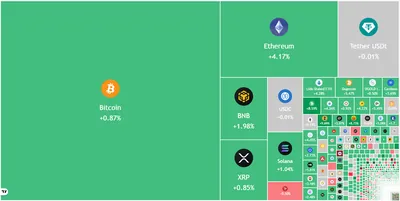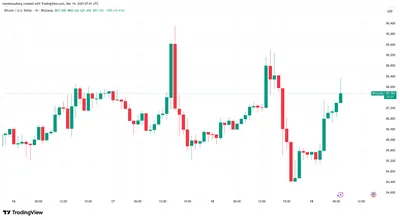
Bitcoin traded near $88,800 on Monday as global markets showed a slight return to risk appetite following gold's record surge and gains in Asian stocks. Other cryptocurrencies also demonstrated recovery: Ether once again surpassed $3,000, while XRP, Solana, and Dogecoin saw modest increases after recent volatility. The market tone appeared calmer amid inflows into gold and support from Asian equities, although certain factors keep markets vulnerable.
Bitcoin Stable Around $89,000
Current Price and Recent Trends
At the start of trading, Bitcoin hovered around $88,800, reflecting relative stability after significant price swings. Simultaneously, signs of renewed interest in risk assets helped support the cryptocurrency's price. Traders note year-end liquidity thinness and ongoing leverage use as constraints on a sustained rally.
Comparison with Other Cryptocurrencies
Ether returned above the $3,000 mark, while XRP, Solana, and Dogecoin recorded slight gains following a volatile period. These movements confirm that the crypto market moves in tandem with overall market sentiment, though individual assets may react differently. Volatility remains present, and short-term price spikes are still possible.
Volatility and Its Drivers
The market appeared calmer amid inflows into gold and a rebound in Asian equities, but experts highlight thin liquidity and leverage use as factors limiting a sustained rally. Additionally, data indicates institutional buyers have increased demand for Bitcoin, shifting the market's supply-demand balance. This dynamic keeps short-term movements sensitive to external shocks.
Gold Hits Record and Its Impact on Bitcoin
Gold's Record Above $4,380
Gold rose to a historic high above $4,380 per ounce, driven by expectations that the Federal Reserve may cut rates in 2026. The metal shows strong year-to-date performance, supported by central bank purchases and inflows into gold ETFs. This focus on gold reflects investor demand for safe-haven assets amid influential macro factors.
Correlation Between Gold and Bitcoin
Gold’s rise partially fuels interest in safe-haven assets, influencing demand for Bitcoin as an alternative asset class. However, Bitcoin remains linked to risk assets, so its correlation with gold is not always direct and may vary depending on investor sentiment. For additional context on the precious metal’s record, see the article on gold prices.
Rise in Asian Stocks and Other Global Factors
Asian Markets and MSCI Asia Pacific
The MSCI Asia Pacific index rose more than 1%, led by technology stocks, supported by a rebound in U.S. equity markets late last week. Gains in Asian equities bolstered overall market risk sentiment and partially aligned cryptocurrency behavior with capital flows. Japan remained in focus following regulatory moves on interest rate policy.
Role of the Bank of Japan
Recent tightening by the Bank of Japan pushed government bond yields to multi-year highs, drawing attention to currency and debt markets. The yen strengthened after officials warned against excessive currency moves, while rising yields confirmed a policy shift after a prolonged period of easing. For details on crypto and market reactions to the Bank of Japan’s actions, see the article on the Bank of Japan’s move.
Institutional Buyers and Bitcoin Supply
Institutional Demand Outpaces Mining Supply
Data shows institutional buyers are absorbing Bitcoin faster than miners are producing it, altering the supply-demand balance in the crypto market. Corporate treasuries and ETFs have increased purchases even after prices dropped more than 30% from October highs. These shifts in large players’ behavior affect coin availability and short-term liquidity.
Long-Term Holders and Selling Dynamics
K33 Research data indicates long-term holders are nearing the end of a prolonged selling phase, which may change the market’s supply profile. Combined with institutional demand, this creates a different balance compared to periods dominated by retail activity. For related discussion on the post-CPI drop and its impact on Bitcoin price, see the analysis of the CPI-driven decline.
Why This Matters
If you mine in Russia and manage between one and a thousand devices, this news provides a snapshot of the current market backdrop: Bitcoin’s price is relatively stable, but the market remains sensitive to liquidity and macro factors. Institutional demand reduces coin availability on the spot market, affecting the ability to quickly sell mined Bitcoin without slippage. Additionally, high gold prices and rising Asian stocks indicate capital reallocation between asset classes, which is useful to consider when planning operations.
What to Do?
Practical steps for miners with small to medium-sized equipment fleets:
- Hold part of your mined Bitcoin as a reserve to avoid selling during periods of low liquidity and high slippage.
- Set limit orders and price alerts to avoid sales during thin year-end liquidity.
- Monitor institutional flows and yield rates, as they influence coin availability and overall risk sentiment.
- Optimize energy consumption and schedule equipment maintenance during periods with more favorable prices and electricity availability.
These simple measures help reduce operational and market risks without needing to make price forecasts. Watch key indicators and plan sales according to a well-thought-out strategy.