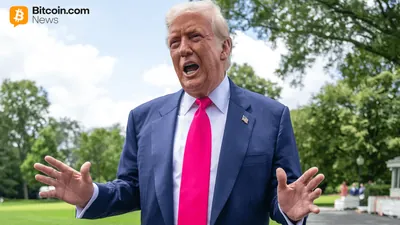
President Donald Trump announced the cancellation of tariffs that were scheduled to take effect on February 1, 2025, linking the decision to a new diplomatic framework on Greenland established with NATO Secretary General Mark Rutte. The report first appeared from Walter Bloomberg in Washington, D.C., on January 31, 2025, and framed the move as part of a broader diplomatic outcome rather than a standalone trade reversal.
Trump Cancels Tariffs Amid Greenland NATO Deal
The administration said the planned February levies will not take effect after a meeting that produced a "framework for a future agreement" on Greenland. Officials explicitly tied the tariff cancellation to progress in that diplomatic framework, presenting the step as a trade-off for broader cooperation. Businesses facing the original deadline received immediate relief, and the decision reversed weeks of planning around the announced measures; for related legal and policy context see tariff case coverage.
Details of the Greenland Framework Agreement
According to officials, the framework sets out principles for enhanced U.S.-Denmark cooperation regarding Greenland and is described as the foundation for a future, more detailed arrangement. The announced framework is reported to cover several potential areas of cooperation that both sides may pursue alongside diplomatic assurances. These areas were identified as follows:
- Investment in Greenlandic infrastructure and economy
- Security arrangements and strategic access
- Scientific research and joint projects
The framework highlights Greenland's strategic value because of its Arctic location and natural resources, including rare earth mineral deposits. Earlier U.S. interest in Greenland is part of the backdrop: a 2019 U.S. purchase offer was rejected by Denmark, and the new framework positions cooperation within a NATO-enabled diplomatic channel.
Expert Analysis on Tariff Cancellation
Observers pointed out that the administration has used tariffs as bargaining tools in broader negotiations, a pattern captured in the comment by Dr. Elena Vance: "The administration has consistently treated tariffs not just as trade tools, but as bargaining chips in broader negotiations." That view frames the cancellation as an instance of trade policy serving diplomatic aims rather than purely economic goals.
Economists cited in reports estimate the cancelled tariffs would have applied to about $50 billion in annual imports, with affected goods including certain machinery, electronics and industrial components. The removal of those levies immediately eased cost pressure for importers in those sectors and removed a point of friction with trading partners.
Immediate Reactions and Market Impact
Governments and markets reacted quickly to the announcement: Danish and Greenlandic officials publicly welcomed the development with caution, stressing that any final deal must respect Greenland's self-governance and benefit its people. NATO allies generally received the news positively as a step toward a coordinated Arctic approach, while some trade analysts warned about policy volatility and the disruption to business planning.
Financial market responses were modest: related industrial and shipping stocks showed gains and the Danish krone strengthened slightly versus the dollar. For more on market and crypto reactions, see markets and crypto coverage.
Why this matters
If you run a mining operation in Russia with anywhere from a single device to several hundred, the immediate practical effects may be limited unless you import equipment or components covered by these tariffs. The cancelled levies applied to goods like machinery, electronics and industrial components, so suppliers and importers dealing in those categories could see direct changes to pricing or delivery terms.
Beyond equipment costs, the announcement signals a diplomatic emphasis on Arctic cooperation that could affect how international partnerships and investments around Greenland develop. For most small domestic miners who do not rely on imported machinery, daily operations are unlikely to change overnight; for import-dependent operations, the change removes one potential near-term cost increase.
What to do?
- Check open orders and invoices with your suppliers to confirm whether any pricing or shipment terms are being revised after the tariff cancellation.
- Inventory current spare parts and consumables so you can avoid rushed purchases at potentially higher prices if suppliers adjust offers.
- Contact key vendors and shipping partners to clarify delivery schedules and whether the cancellation affects lead times or customs handling.
- Monitor supplier communications and market coverage for any further policy updates tied to the Greenland framework, and be ready to adjust procurement timing.
- Keep bookkeeping notes of any cost changes linked to this decision to simplify later accounting and supplier negotiations.
FAQ
What tariffs did President Trump cancel?
The administration cancelled a set of tariffs on specific industrial and consumer goods that were scheduled to take effect on February 1, 2025. These levies were originally announced in December 2024 and would have applied across several product categories.
What is the "Greenland agreement framework"?
The framework is a set of principles agreed with NATO Secretary General Mark Rutte that outlines the path toward a future formal agreement on U.S.-Denmark cooperation in Greenland. It is described as potentially covering investment, security and scientific cooperation.
Why is Greenland strategically important?
Greenland's Arctic location gives it strategic value for shipping routes and natural resources; the island also holds rare earth mineral deposits important for modern technology. These factors underpin interest in cooperation and investment.
How did markets react to the news?
Markets reacted positively but cautiously. Stocks in sectors that would have been affected by the tariffs recorded gains and the Danish krone strengthened slightly, reflecting relief over the removed trade measures.
Does this mean the U.S. is buying Greenland?
No. A 2019 U.S. offer to purchase Greenland was rejected by Denmark. The current framework is framed as cooperative, aiming to establish partnership terms while respecting Greenland's existing autonomous status within the Kingdom of Denmark.