The top crypto asset opened the week on the back foot, sliding 2.5% against the U.S. dollar since Sunday evening while still holding roughly a 1.5% gain over the past seven days. Market moves followed a mix of renewed tariff rhetoric from U.S. President Donald Trump and fresh uncertainty around U.S. crypto legislation, both of which shook investor appetite for riskier assets. At press time, bitcoin was trading at $92,998 per coin, a level reached at 2:45 p.m. Eastern, as trading activity picked up after thin weekend liquidity.
Bitcoin Price Decline Overview
Bitcoin spent Sunday afternoon close to $95,000 before slipping in the evening to below $92,000, a move that helped produce the 2.5% decline versus the dollar. Despite that intraday drop, the token still shows a modest gain over the prior seven days, reflecting mixed short-term momentum across markets. For more on how bitcoin had been moving near prior levels, see consolidates around $95,000 for additional context on recent price behavior.
Impact of Trump's Tariff Threats
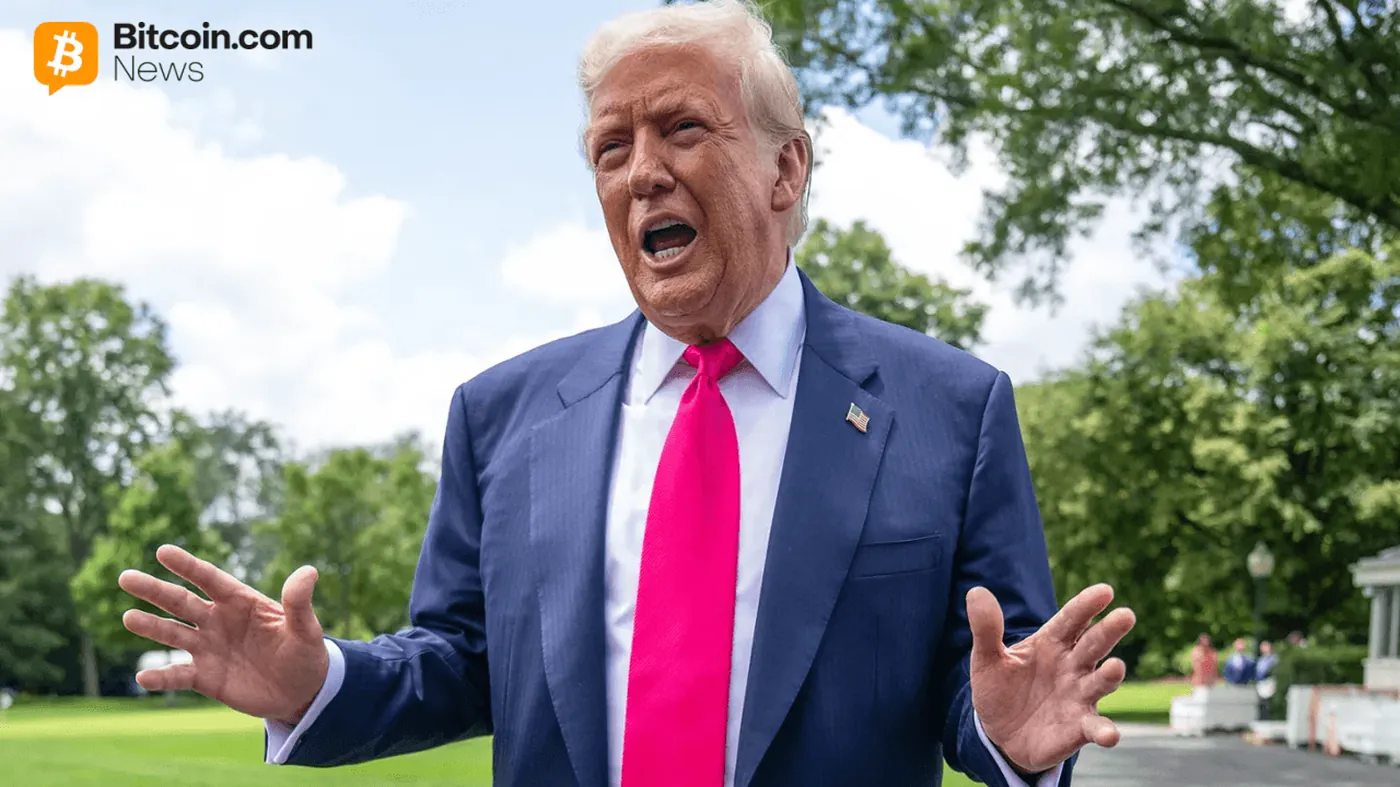
U.S. President Donald Trump revived tariff threats aimed at several European countries, explicitly mentioning Denmark and saying on Truth Social that the U.S. had "subsidized Denmark, and all of the Countries of the European Union" by not charging tariffs. That rhetoric contributed to capital flows toward perceived safe havens and fed a broader "Sell America" trade that weighed on the dollar and other risk assets. Reuters reported that EU leaders plan to discuss options at an emergency summit in Brussels, and Danish Foreign Minister Lars Lokke Rasmussen noted that the U.S. system includes checks and balances beyond the president, adding a diplomatic dimension to the episode; related coverage looking at market responses is available at awaiting tariff decision.
Market Reactions and Safe Havens
Trump’s comments sent money toward traditional safe havens, with gold and silver catching bids as investors trimmed exposure to risk. The renewed trade tensions and policy uncertainty combined to sap appetite for some risk assets and pressured the U.S. dollar, creating a defensive tone across markets. This risk-off mood helps explain part of the short-term pullback in bitcoin alongside other drivers.
Role of the CLARITY Act
Regulatory developments also played a part: the CLARITY Act has been effectively put on ice, which added uncertainty for market participants. Simon Peters, a crypto analyst at eToro, attributed part of bitcoin’s slide to that delay, noting disputes over allowing yield on stablecoins and the resulting withdrawal of support from some industry players. The legislative impasse over stablecoin yield was reported to be a central point of disagreement between banks and crypto firms, adding another layer of uncertainty for traders.
Trading Volume and Options Data
Trading activity picked up as weekend-thin liquidity faded, with bitcoin volume at $44.66 billion at the time of reporting. Options data pointed to a cautiously constructive bias: calls represented about 56.9% of total open interest versus 43.1% for puts, indicating longer-dated bets modestly favored higher prices. Short-term action was more evenly split, with calls accounting for roughly 50.7% of daily volume as traders hedged and tested both sides.
Почему это важно
Если вы майните с любого количества устройств, эта новость объясняет, почему в короткой перспективе вы можете видеть повышенную волатильность стоимости добываемых монет. Одновременно регуляторная неопределённость и внешнеполитическая риторика влияют на ликвидность и готовность трейдеров держать крупные позиции, что отражается на внутридневных колебаниях цены.
Что делать?
Проверьте свою экспозицию: пересмотрите расчёт себестоимости и возможные точки выхода при краткосрочных просадках, чтобы не принимать поспешных решений в пике волатильности. Следите за новостями по тарифам и законодательству, контролируйте электрические и операционные расходы, и при необходимости распределите риски — например, через последовательные продажи части добычи или временное уменьшение нагрузки, если это соответствует вашей стратегии.