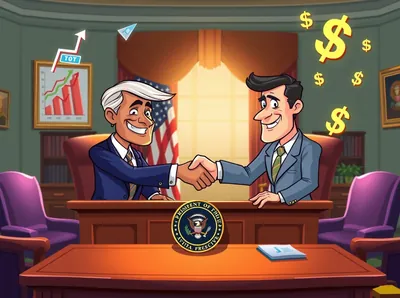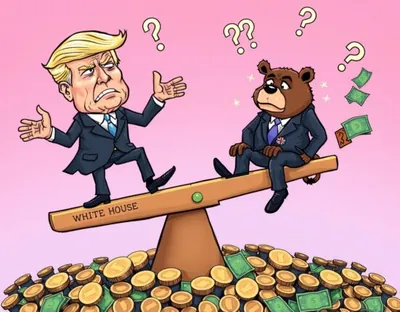
Former President Donald Trump announced he will replace Federal Reserve Chair Jerome Powell, saying Powell "would be gone shortly" and calling him an "idiot." He delivered the comment during a speech at the Detroit Economic Club on Tuesday, October 26, 2024, a statement that immediately drew market attention. Traders reacted with volatility as investors reassessed the possibility of a more politically aligned approach to monetary policy. Powell’s current term as Fed Chair is set to expire in 2026, which makes an early change legally and procedurally complex.
Trump’s Announcement and Immediate Market Reaction
The announcement at the Detroit Economic Club was direct and personal, explicitly criticizing Chair Powell’s leadership. Markets showed an immediate response: the U.S. Dollar Index (DXY) dipped and Treasury yields became more volatile as participants priced in increased uncertainty. Equity futures also wobbled in the hours after the speech, reflecting traders’ reassessment of near-term policy risk. For additional reporting on related personnel developments, see Trump interviews candidates for context on succession coverage.
Historical Context of Presidential and Fed Relations
Tensions between presidents and Federal Reserve chairs have occurred before, and norms have typically favored operational independence for the central bank. The Federal Reserve was established with a mandate to promote maximum employment, stable prices, and moderate long-term interest rates, goals intended to be pursued without direct political interference. Past episodes of political pressure on monetary policy are often cited when assessing the significance of public criticisms by a president. That history frames why a direct public threat to a sitting chair is viewed as notable by markets and observers.
Expert Analysis on Market and Policy Implications
Observers warned that explicit threats to remove or replace a sitting Fed chair risk politicizing monetary decisions and could undermine the central bank’s credibility. The short-term market reaction—dips in the DXY and volatile Treasury yields—illustrates how quickly investors incorporate political risk into asset prices. Beyond immediate moves, analysts highlight that perceived political influence can complicate the Fed’s task of managing inflation expectations and long-term interest rates. These concerns explain why such announcements reverberate through both U.S. and international financial markets.
Legal and Procedural Pathways for Replacing a Fed Chair
>The Federal Reserve Act permits the President to remove a board member "for cause," language that has not been litigated in the context of removing a Fed chair. Most legal scholars interpret "for cause" as requiring malfeasance or neglect of duty rather than disagreements over monetary policy, which creates legal ambiguity around any attempt to force an early removal. Practically, a change before Powell’s term ends would most plausibly occur through voluntary resignation, though a forced removal would almost certainly prompt legal challenges and extended uncertainty. That procedural uncertainty is part of what markets priced in immediately after the announcement.Potential Successors and Shifts in Monetary Policy
The announcement prompted speculation about who might succeed Powell and whether a successor would pursue materially different policy priorities. A chair perceived as more aligned with political leadership could signal a shift in emphasis between growth and inflation control, a change that markets treat as meaningful for rates and risk assets. Readers interested in how individual candidacies affect perceptions of Fed independence can consult reporting on specific contenders, for example Kevin Hasset chances. Any personnel choice would send a strong signal about the likely stance of monetary policy going forward.
Why this matters (for miners in Russia)
For miners operating in Russia with anywhere from a single rig to a large pool of machines, political shocks that raise market volatility can affect exchange rates and liquidity conditions relevant when converting crypto rewards to local currency. Movements in the U.S. dollar and broader risk sentiment influence crypto markets and the timing of selling or converting holdings, even if monetary policy changes do not directly target mining. To understand broader market consequences for digital assets, see the crypto outlook 2026 coverage.
What to do? (practical steps for miners)
- Monitor official announcements and reliable news feeds: keep an eye on statements from the Fed and major market moves rather than headlines alone, so you can better time conversions or liquidity moves.
- Review payout and conversion plans: if you regularly convert crypto to rubles, consider how short-term volatility might affect the rate you receive and whether to stagger conversions.
- Preserve operational resilience: ensure backups for mining equipment and maintain cash reserves for power and maintenance costs, so short-term market swings don’t force distress sales.
- Avoid speculative repositioning based solely on political statements: policy uncertainty can persist, and abrupt trading moves carry risk; prioritize operational continuity and documented decision rules.