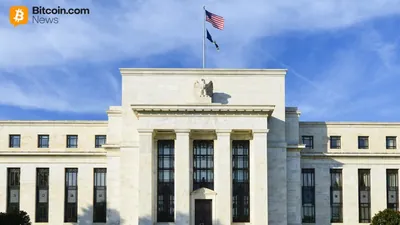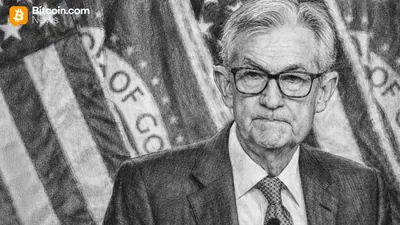
In March 2025 the U.S. Treasury issued a direct warning to the White House: Treasury Secretary Scott Bessent cautioned President Donald Trump that launching a probe into Federal Reserve Chair Jerome Powell could spark significant market volatility and erode investor confidence. The notice framed the issue as one of institutional trust — markets depend on predictable, independent central banking, and political investigations into the Fed raise immediate questions about future policy decisions.
Treasury's Warning to Trump on Federal Reserve Investigation
Secretary Bessent’s message centers on the heightened uncertainty a formal investigation would create for investors and policymakers. The Treasury argued that probing the Fed’s leadership risks signaling political interference with monetary policy, which in turn could undermine confidence in interest-rate decisions and other policy tools. This intervention reflects concern about preserving the institutional boundaries that markets use to form expectations, and it comes amid related discussions inside the administration such as Trump's Fed candidates and leadership choices.
Impact on Financial Markets
The Treasury framed market impact as both immediate and structural: immediate because uncertainty can prompt rapid repricing, and structural because sustained doubts about Fed independence would weaken core market anchors. Investors often treat central-bank credibility as a baseline assumption when setting risk premiums and valuing assets, so challenging that credibility can widen spreads and raise volatility across asset classes. The Treasury warned these effects could extend beyond domestic markets to international confidence in U.S. institutions.
Historical Context and Expert Perspectives
The warning draws on historical precedents where political clashes with central banks led to market sell-offs and capital flight in other economies. Economists point to long-run correlations showing that central bank independence tends to be associated with lower inflation and more stable growth, a relationship the Treasury highlighted in its caution. As Dr. Evelyn Reed of Georgetown University put it, “The firewall between monetary policy and day-to-day politics exists for a very practical reason,” stressing that when that firewall erodes, risk premiums rise across assets.
Potential Market Reactions and Long-term Effects
Should a probe proceed, the Treasury identified several market areas likely to face immediate scrutiny. Market participants would reassess political risk and the implications for policy effectiveness, potentially forcing the Fed to take different—or more aggressive—actions to achieve its mandates.
- Treasury bond market: the deepest benchmark for risk-free rates and debt issuance; perceptions of political risk could raise yields.
- Equity markets: especially financial stocks, which are sensitive to policy and regulatory uncertainty.
- Foreign exchange: the U.S. dollar’s standing depends on institutional trust and could face increased volatility.
Beyond these immediate reactions, the Treasury warned of longer-term damage to the Fed’s credibility, which underpins its ability to act as a lender of last resort and to coordinate internationally during crises. That erosion could complicate debt management and cross-border financial cooperation.
Why this matters
For market participants, the central point is simple: predictable, independent monetary policy reduces uncertainty about interest rates and financial conditions. When that predictability is called into question, investors may demand higher compensation for risk, which can push up borrowing costs and increase volatility in portfolios. The Treasury’s warning highlights the systemic importance of preserving the institutional separation between politics and monetary policy.
What to do?
If you operate mining equipment in Russia—whether a single rig or up to a thousand units—focus on concrete, low-friction steps to manage short-term market risk and operational continuity. First, monitor safe-haven indicators and major market moves rather than reacting to headlines alone; pay attention to how bond yields and the dollar behave, since these signal broader risk sentiment. Second, avoid hasty long-term financial decisions based solely on political developments; use this period to review your liquidity and contingency plans.
- Keep a cash buffer for at least a few weeks of expenses to ride out temporary market swings.
- Review payouts and exchange timing for mined coins to avoid selling at short-term local lows during volatility.
- Ensure hardware and software maintenance schedules are up to date to prevent operational downtime when markets move.
- Follow reputable market updates and link analyses rather than social media rumors; related reporting such as FOMC December 2025 can provide additional institutional context.
- Consider modest risk-reduction measures (diversifying fiat conversion timing or trimming margin exposure) rather than large structural changes to your mining setup.
Staying informed and avoiding impulsive reactions helps preserve capital through periods of heightened political scrutiny. For readers tracking how policy debates affect crypto markets specifically, ongoing coverage — including pieces on the Fed probe’s market implications — will be useful context; see also reporting on Powell probe and Bitcoin.