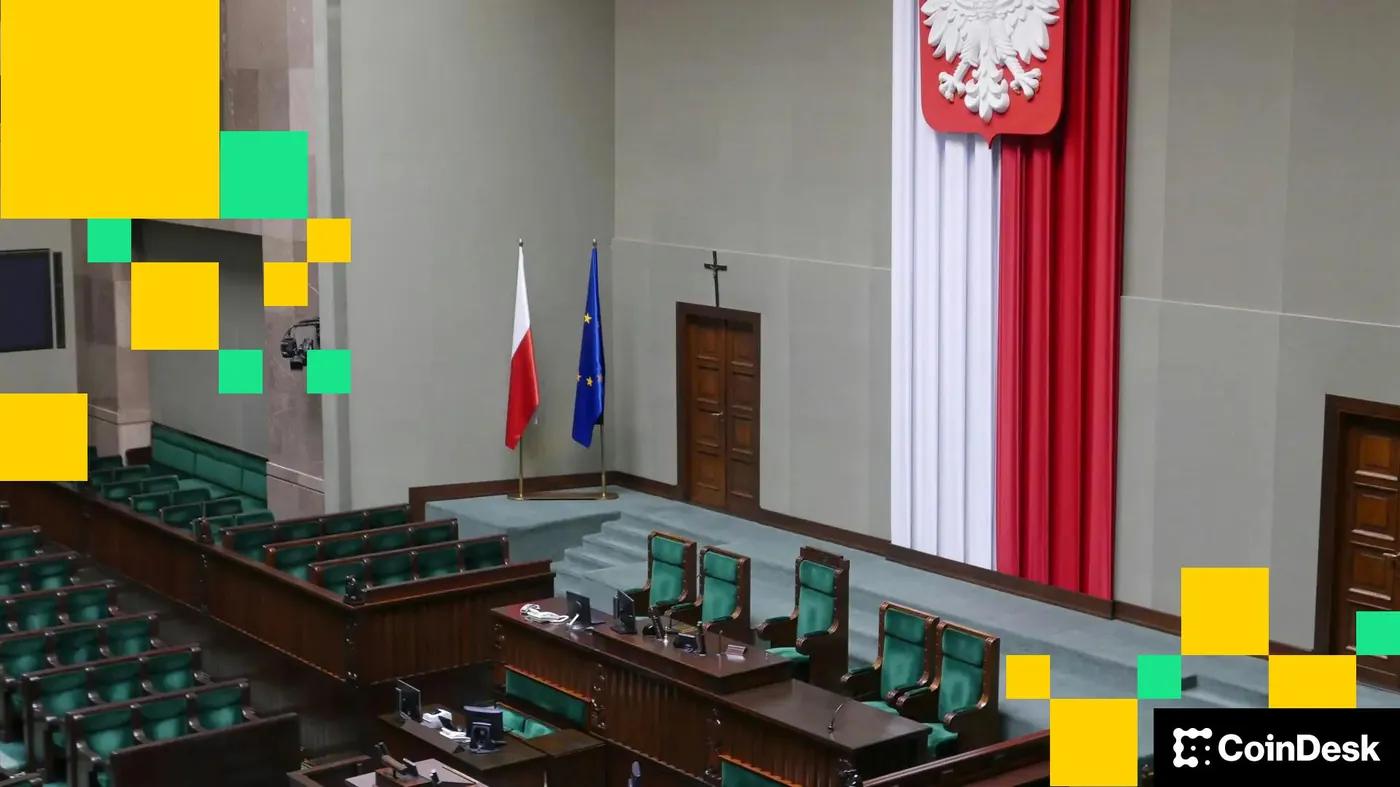
Poland’s lower house of parliament, the Sejm, approved the Crypto-Asset Market Act and forwarded the unchanged bill to the Senate for further debate. The measure passed with the support of 241 lawmakers and revives legislation that had been vetoed earlier by President Karol Nawrocki. The bill is presented as a way to bring Polish rules in line with the European Union’s Markets in Crypto-Assets (MiCA) framework, while critics say it exceeds those standards. With the Senate now set to review the text, the next procedural steps will determine whether it goes to the president again.
What the Sejm voted on
The bill, titled the Crypto-Asset Market Act, is intended to regulate the crypto industry and to align elements of Polish law with the EU’s MiCA regulation. Lawmakers approved the unchanged version of the bill, casting 241 votes in favour, and the Sejm’s press office told CoinDesk the text remains the same as the one vetoed previously. The legislation runs over 100 pages, a length that has drawn criticism for complexity compared with implementations elsewhere in the region. After the Sejm vote the bill was formally sent to the Senate for debate and decision.
Official statement on the procedure
On the process, a Sejm spokesperson explained: “The bill went through readings by the members of parliament on Thursday and it has been voted and approved by them and sent to the Senate, where they will debate and if they approve it goes to the president, if not, if they reject it, it comes back to the Sejm.” This description sets out the straightforward path the bill must follow: Sejm → Senate → president, with the possibility of return to the Sejm if the Senate rejects it. If the Senate approves the bill, it will proceed to the president, who retains the authority to issue another veto.
Reasons for the initial presidential veto
President Karol Nawrocki’s office previously vetoed the law, citing several concerns that led to the rejection of the earlier text. The veto notice highlighted ambiguity in the draft, perceived regulatory overreach and potentially high compliance costs, especially for smaller market participants. Officials also warned that some provisions could enable rapid domain shutdowns, a measure described in the veto as a form of “one-click” domain blocking that could harm smaller firms. These objections remain central to the debate as the unchanged bill returns to the parliamentary process.
Key provisions and criticisms
Supporters frame the bill as a means to establish national oversight of crypto markets and to implement MiCA-aligned rules domestically, but critics — including the president and industry stakeholders — argue the law goes beyond EU requirements. A notable element of the text is the broad enforcement authority granted to the Polish Financial Supervision Authority (KNF), which includes powers such as website blocking and the ability to impose multimillion-zloty fines. The bill’s length and level of detail, exceeding 100 pages, has been criticised as excessive and more complex than many regional counterparts implementing MiCA.
Political context and next steps
Prime Minister Donald Tusk’s government reintroduced the law without making revisions, framing passage as important for national oversight of crypto. With the Sejm having sent the unchanged bill to the Senate, senators will debate and then vote; an approval would send the bill to the president, while a rejection would return it to the Sejm for further action. Because the president already vetoed the previous text, another veto remains a possible outcome if the bill reaches his desk again.
Implications for the crypto industry
The combination of broader-than-MiCA rules and strong enforcement tools raises concerns for businesses operating in the Polish market, particularly smaller firms facing higher compliance costs. Provisions that enable website-blocking and steep fines could increase operational risk and require changes to legal and technical setups for firms that serve Polish customers. For context on different regulatory approaches and implementation choices in other countries, see MiCA implementations and the example of a digital security law enacted elsewhere.
Why this matters
For a miner in Russia running between one and a thousand devices, the immediate legal effect is limited while the bill remains in parliamentary review and the president can still veto it. Nevertheless, the proposed rules show a trend toward stricter national oversight in some EU countries, which can affect cross-border platforms, payment flows and service availability. Even if your setup is physically in Russia, changes in Poland could influence exchanges, custodians or service providers that operate in the region and interact with miners.
What to do?
Stay informed about the bill’s progress through the Senate and any presidential actions, because regulatory changes can affect access to Polish-based services and counterparties. If you use platforms, custodians or service providers with ties to Poland, check their compliance notices and terms of service; consider having contingency plans for service disruptions. For small operators, document your setups and costs so you can assess potential compliance impacts quickly if providers adjust operations in response to the law.