Ondo Finance announced the launch of tokenized BitGo stock on November 15, 2024, creating an immediate post-IPO tokenization that connects traditional equity ownership with blockchain-based trading. The company issues tokenized versions of BitGo shares across three blockchains, while keeping legal share custody off-chain so token holders retain the same economic rights as traditional shareholders.
Introduction to Ondo Finance's Tokenized BitGo Stock
The announcement presents a formalized structure for representing public company shares as digital tokens on blockchains. Ondo Finance pairs each token with underlying shares held in custody, which preserves shareholder economic rights and corporate benefits while enabling transfers on-chain.
Multi-Chain Tokenization Approach
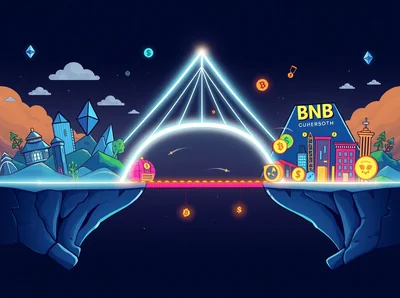
Ondo Finance issues tokenized BitGo shares on Ethereum, Solana, and BNB Chain to provide broader access and compatibility with different blockchain ecosystems. This multi-chain distribution is intended to offer flexibility for investors and to leverage the operational characteristics of each network.
- Ethereum: chosen for its wide adoption and established infrastructure for digital securities.
- Solana: included to offer an alternative with different transaction characteristics and ecosystem integrations; see the discussion of a Solana ETF bridge for related developments.
- BNB Chain: added to increase accessibility within one of the larger cryptocurrency ecosystems.
Regulatory Compliance and Security Measures
Ondo Finance emphasizes compliance by implementing KYC/AML checks, investor accreditation processes, and automated regulatory reporting tied to its custody arrangements. The company also relies on secure custody solutions so that tokens on-chain correspond directly to traditional shares held off-chain.
Market Impact and Industry Implications
The launch highlights a closer integration between traditional markets and blockchain platforms, potentially widening the investor base and enabling continuous trading outside conventional market hours. Institutional activity in digital assets increased notably in 2024: digital asset management by institutions grew 47% year-over-year, a trend Ondo positions its offering within.
Broader tokenization can affect liquidity and market access without changing the underlying legal rights of shareholders, and similar initiatives on Solana have already gained market traction, as covered in pieces on Solana tokenized stocks.
Future Developments and Industry Trajectory
This tokenization sets a formal example for issuing public-equity tokens immediately after an IPO, illustrating a practical model for combining custody of traditional shares with on-chain transferability. The approach may serve as a reference for other market participants considering compliant tokenized equity offerings.
Why this matters (for a miner in Russia with 1–1000 devices)
For most miners, this announcement does not change hardware requirements or mining protocols and therefore should not directly affect day-to-day mining operations. At the same time, tokenized shares on major chains may influence transaction volumes and demand for block space, which can alter network fees and short-term transaction dynamics on those chains.
In practice, miners should treat this as market infrastructure news rather than an operational change: it impacts how equities are traded and settled, not the fundamentals of mining specific algorithms or devices.
What to do? (practical steps)
Monitor on-chain fee levels on the networks you interact with and adjust transaction timing if fees spike; changes in trading activity can make some periods more expensive. Keep node and wallet software up to date and follow security best practices, since increased token activity can attract phishing or fraud attempts.
Follow trusted sources on tokenization developments and, if you run any service that interacts with tokenized assets, ensure you understand required compliance steps like KYC/AML and custody responsibilities. For most individual miners, the simplest action is to stay informed and avoid assuming immediate impact on mining revenue.
FAQ
What are tokenized stocks? Tokenized stocks are digital tokens issued on blockchain networks that represent underlying traditional company shares held in custody, while preserving equivalent economic rights and corporate benefits for token holders.
On which blockchains are BitGo tokens issued? Ondo Finance issues tokenized BitGo shares on Ethereum, Solana, and BNB Chain.
How does Ondo Finance ensure regulatory compliance? The company uses KYC/AML procedures, investor accreditation processes, automated regulatory reporting, and secure custody solutions to align the token structure with existing securities regulations.
Does this change shareholder rights? No. Each token corresponds to traditional shares held in custody, so token holders maintain equivalent economic rights and corporate benefits to regular shareholders.