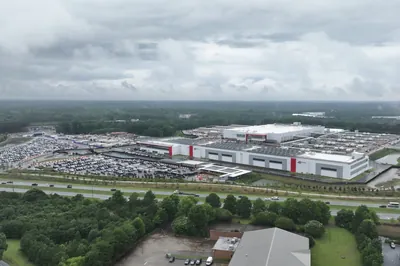
In early 2025 the Kingsport, Tennessee city council voted to approve a zoning ordinance that formally allows cryptocurrency mining operations and data centers within designated industrial areas. The measure establishes regulatory requirements but still requires one final procedural vote before it becomes fully codified into the municipal code. The decision follows months of committee review and public commentary and aims to attract investment while managing community impacts.
Overview of Kingsport’s Crypto Mining Zoning Ordinance
The council’s approval creates a clear municipal framework for facilities that perform high-density computing, including blockchain validation and data-center workloads. By defining where such operations may locate and what standards they must meet, the ordinance reduces prior uncertainty for developers and residents. At the same time, the city kept a procedural safeguard: the ordinance requires one final procedural vote for full implementation, which is expected within the current council cycle.
Key Provisions of the Ordinance
The ordinance addresses several operational and site-development issues that commonly concern communities and regulators. It pairs location rules with specific operational disclosures so the city can assess impacts before permitting.
- Noise and visual controls — standards to limit acoustic disturbance from cooling equipment and to preserve neighborhood aesthetics.
- Energy disclosures and sourcing plans — operators must detail power usage and how they source electricity for their facilities.
- Physical security requirements — protocols to protect on-site hardware and restrict unauthorized access.
- Designation of industrial zones — crypto mining and data centers are directed to specified industrial areas with appropriate infrastructure.
Economic and Community Impact
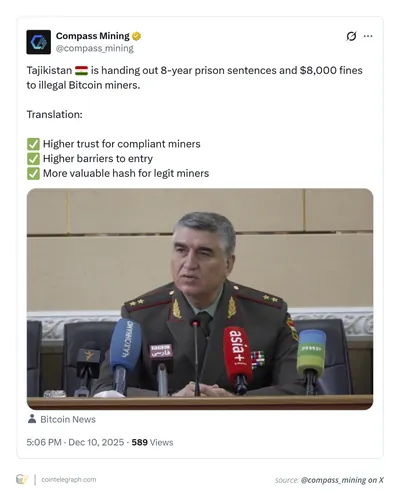
Kingsport’s ordinance explicitly aims to capture local economic benefits while proactively managing community impacts. The city expects clearer rules to help attract investment and make permitting more predictable for firms and residents alike. For context on regional and domestic regulatory developments, the move sits alongside varied approaches across the United States and other jurisdictions; readers can compare this with recent changes and penalties elsewhere, including domestic regulatory developments like Russian mining fines and operations in conflict-affected areas such as mining at Zaporizhzhia NPP.
National Context and Comparison
Kingsport’s decision occurs amid a mixed national landscape where some states have pursued welcoming policies and others have imposed restrictions or moratoriums. The city’s structured, zoning-based approach contrasts with outright bans and with places that have no specific rules, positioning Kingsport as an example of municipal-level regulation that balances development and community protection. Observers may look to this ordinance as a municipal model for integrating digital infrastructure within local land-use planning, alongside international examples such as legalization steps in other countries.
Next Steps and Future Outlook
The ordinance still needs a final reading under Kingsport’s standard procedural rules; that second vote allows for formal review and any last legal edits before codification. Barring unexpected amendments at that reading, final approval is anticipated within the current council cycle, and the city notes that formal permitting and site development could proceed thereafter. If adopted, companies would follow normal permitting channels with the planning department, and physical development could begin within the timeline mentioned by city materials.
Why this matters
For miners outside the United States, including operators in Russia, this ordinance is not a direct operational change but it signals how municipalities frame crypto mining as part of industrial planning. Cities creating explicit rules reduces local uncertainty for operators and can influence where investment flows, even if those effects are indirect for remote operators. At minimum, the Kingsport case is a concrete example of a municipal path that pairs economic intent with requirements on noise, energy disclosure, and security.
What to do?
If you run or plan to run mining equipment (from a single rig to hundreds), treat this news as a prompt to tighten documentation and compliance practices. Keep clear records of your power consumption and the sources of that power, because the trend toward mandatory energy disclosures shows regulators value that information when assessing facilities.
- Document energy use: keep logs of daily/weekly consumption and any contracts or certificates for energy sourcing.
- Prepare noise mitigation: review your ventilation and placement to reduce acoustic impact, and consider sound-damping measures if needed.
- Check legal risks at home: monitor local rules and penalties affecting mining in Russia, including existing or proposed fines and enforcement policies, before changing scale or location of operations.
- Watch municipal processes: if you have expansion plans abroad, follow city council readings and permit requirements in target jurisdictions to avoid surprises in permitting timelines.