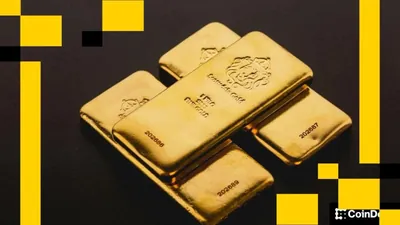
Veteran macro strategist Jim Rickards says the recent gold rally reflects deliberate policy shifts rather than investor panic. On the Julia La Roche Show he argued that central banks and governments are reallocating reserves in response to sanctions risk and changing confidence in sovereign assets, producing steady, structural demand for bullion.
Gold’s Rally: Policy Over Panic
Rickards frames gold’s ascent as the outcome of long-term policy choices, not a fleeting speculative wave. He points to methodical reallocations by official institutions that have accumulated over years, arguing that this steady demand reshapes market dynamics independent of short-term market fear.
Debunking the Debasement Trade Narrative
Rickards rejects the popular Wall Street storyline that links gold’s rise to an inevitable collapse in fiat currencies, calling that 'debasement trade' thesis nonsense. He notes that Treasury ownership data show stability rather than wholesale liquidation, which undercuts claims that foreign governments are dumping U.S. Treasurys en masse.
Central Banks’ Shift to Gold
According to Rickards, a clear structural change has occurred since around 2010: many central banks moved from being net sellers of gold to persistent net buyers. With global mine supply largely flat while official demand increased, basic economics implies upward price pressure, and central banks’ patient buying can act like an informal price floor.
Geopolitical Factors and Gold
Geopolitical events have reinforced the shift toward gold as a reserve asset. Rickards highlighted the freezing of Russian reserve assets after the Ukraine invasion as a watershed moment that signaled sovereign reserves can be politicized, prompting some countries to prefer gold because it cannot be frozen electronically.
Gold in Inflation and Deflation
Rickards disputes the notion that gold only benefits from inflation. He emphasizes gold’s monetary role and notes that historically it has also performed during deflationary stress, when investors seek assets without counterparty risk — an observation he illustrates with past episodes when gold rose even as consumer prices fell.
Gold’s Trajectory and Bitcoin’s Role
Looking further out, Rickards said gold’s long-term path remains intact and suggested it could reach $10,000 as a reflection of currency devaluation rather than speculative excess. He treats bitcoin as a separate system: institutions choose gold for durability and neutrality, while bitcoin operates on different mechanics and liquidity channels that Rickards views as reliant on stablecoins.
For more on the price outlook see the gold $10,000 forecast, and for context on crypto dynamics consult our gold vs bitcoin review.
Why this matters
If you run mining hardware in Russia, the core takeaway is practical: the forces lifting gold are structural and driven by policy, so the move does not necessarily reflect immediate changes in crypto markets. Even when gold rallies for geopolitical or reserve reasons, that shift mainly affects institutional reserve management and may only indirectly influence mining revenue or local fiat liquidity.
What to do?
Keep operational focus on your mining setup and costs while monitoring macro signals that affect currency value and payment rails. Consider these concrete steps:
- Review electricity and maintenance expenses to ensure margins can absorb short-term price swings.
- Maintain liquidity in accessible assets to cover operating costs if fiat flows become volatile.
- Stay informed about reserve-asset shifts and sanctions risk that could influence local banking and cross-border settlements.
Quick FAQ
Why is gold rising now? Rickards says steady central-bank buying while supply remains largely flat is the main driver.
Is gold moving because of inflation fears? He argues gold has historically done well in both inflationary and deflationary environments, so inflation fears are not the sole explanation.
Are countries abandoning U.S. Treasurys? Rickards dismisses the idea of mass Treasury sell-offs and points to data that show ownership stability rather than liquidation.
How does bitcoin fit in? Rickards treats bitcoin as a separate system with different mechanics and liquidity channels, not as a replacement for gold.