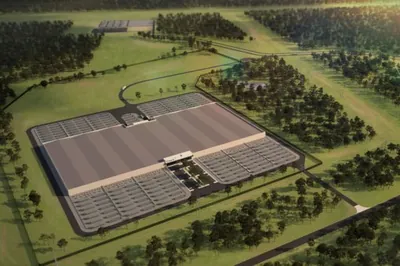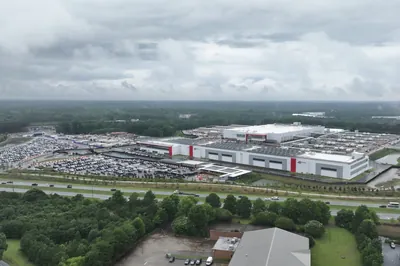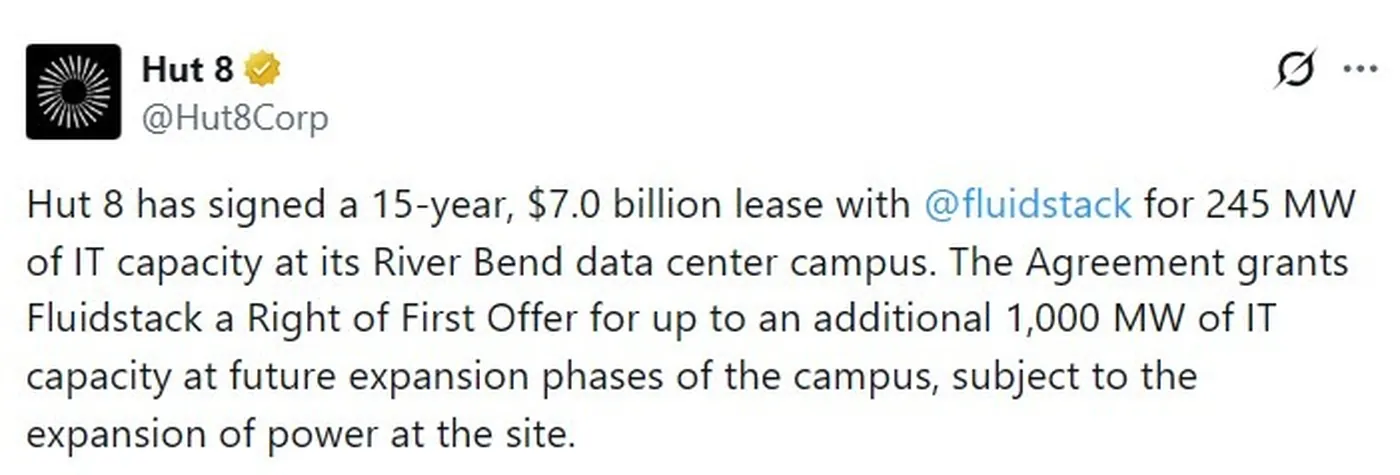
Bitcoin mining company Hut 8 has entered a significant 15-year lease agreement valued at $7 billion to provide 245 megawatts of artificial intelligence data center capacity at its River Bend campus in Louisiana. This deal marks one of the largest infrastructure agreements between a crypto-native company and the growing hyperscale AI market. The capacity will be leased to infrastructure provider Fluidstack, while Google will act as a financial backstop, guaranteeing lease payments and related obligations throughout the lease term.
Overview of Hut 8's $7 Billion AI Data Center Lease
The lease agreement secures a long-term commitment for AI data center capacity at the River Bend site in Louisiana. Fluidstack will be the lessee responsible for utilizing the capacity, while Google’s financial backing reduces the risk associated with lease payments. This partnership highlights Hut 8’s strategic shift toward AI infrastructure, leveraging its power-first development model validated by leading industry partners.
Details of the River Bend Project and Timeline
Construction at the River Bend campus is already underway as of December 2025. The first data hall is planned to be completed and commissioned by the second quarter of 2027, with additional data halls expected to come online over the following year. Financing for the project involves loans tied directly to the data center, with major banks covering most construction costs to minimize Hut 8’s upfront capital investment.
Strategic Importance and Financial Structure
Google’s role as a financial backstop is a key feature of the deal, providing coverage for lease payments and other obligations if Fluidstack is unable to meet them. Hut 8 and Fluidstack are also expected to establish an operations services agreement for ongoing data center management, supported by further payment guarantees from Google. This structure reduces financial risk and demonstrates institutional discipline, as noted by Noah Wintroub, global chairman of investment banking at JPMorgan Chase.
Hut 8's Expansion into the AI Sector
Since 2024, Hut 8 has been expanding its presence in the AI infrastructure market. In September 2024, the company launched a GPU-as-a-Service offering through its subsidiary Highrise AI, deploying over 1,000 Nvidia H100 GPUs to support cloud-based AI compute services. This move represents a pivot from traditional Bitcoin mining toward long-duration AI infrastructure revenue streams, positioning Hut 8 among hyperscalers seeking power-first compute capacity.
Context: Other Crypto-Native AI Infrastructure Deals
The Hut 8 agreement is part of a broader trend of crypto-native firms entering the AI infrastructure space. For instance, Core Scientific announced a $3.5 billion, 12-year lease with AI cloud provider CoreWeave earlier in 2025. Additionally, Galaxy Digital secured a $1.4 billion loan to expand its Helios AI data center in Texas, while CoreWeave signed a 15-year lease with Galaxy Digital to support AI and high-performance computing operations. These developments illustrate growing crypto sector involvement in AI infrastructure.
Why This Matters
For miners operating from one to a thousand devices in Russia, Hut 8’s $7 billion AI data center lease signals a notable shift in the crypto industry’s focus toward AI infrastructure. The involvement of Google as a financial backstop reduces risks associated with large-scale infrastructure projects, potentially stabilizing investment flows in this sector. Additionally, Hut 8’s pivot to GPU-based AI services demonstrates how crypto companies are diversifying revenue streams beyond traditional mining, which may influence market dynamics and technology adoption.
What Should Miners Do?
Miners should monitor developments in AI infrastructure as opportunities may arise for collaboration or diversification. Understanding the financial structures, such as Google’s backstop role, can provide insights into risk management strategies for large-scale projects. Additionally, keeping an eye on GPU deployment trends, like Hut 8’s Highrise AI initiative, could inform decisions about hardware investments and potential shifts in mining or compute workloads.