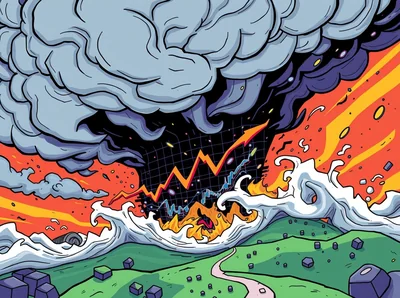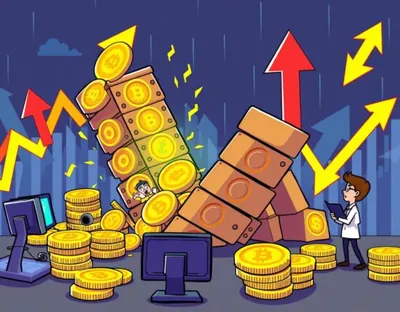
On March 21, 2025, major exchanges reported a spike in derivatives volatility that saw $105 million worth of crypto futures liquidated within a single hour. That hourly surge was part of a broader 24-hour tally that exceeded $372 million, signalling concentrated unwinds across derivatives markets. Below we unpack what happened, how futures liquidations work, and what miners and traders should take away from the event.
Overview of the March 21, 2025, Liquidation Event
The $105 million figure represents a large, simultaneous closing of leveraged positions within a short timeframe, reflecting rapid price swings in major assets such as Bitcoin and Ethereum. Over the full day, liquidations across platforms surpassed $372 million, a level that attracted immediate attention from market observers and traders tracking leverage concentrations. For additional context on the 24‑hour totals and related flows, see this 24-hour liquidations report.
Although significant, the event sits within the spectrum of volatility seen in past cycles and is considered a localized volatility episode rather than a systemic market crash. Comparisons with other sizable events earlier in 2025 help place the scale of this spike in context; see the 2025 liquidation report for related incidents.
Mechanics of Crypto Futures Liquidations
Futures liquidations occur automatically when a position’s losses consume the trader’s posted initial margin and reach the maintenance threshold, prompting the exchange to close the position to prevent negative balances. Exchanges execute these forced closures and use remaining margin, insurance funds, or mechanisms like auto-deleveraging when necessary to cover shortfalls. Platforms such as Binance, Bybit and OKX are common sources for the liquidation data that feeds aggregate tallies.
When many positions unwind at once, the market can experience cascading effects: forced selling adds directional pressure, which can trigger further liquidations and amplify price moves. Clusters of long or short liquidations are watched closely because they often mark exhausted trends or sudden reversals.
Causes and Catalysts of the Liquidation Event
Several types of triggers commonly precipitate clustered liquidations; analysts typically look for combinations rather than a single cause. Below are the usual catalysts that can compound into an event like the March 21 spike:
- Unexpected macroeconomic or regulatory announcements that move prices sharply.
- Large singular trades or “whale” movements that stress order books.
- Technical breakouts or breakdowns that activate automated strategies and stop orders.
Expert Insights on Risk Management
Experienced derivatives traders and risk teams view liquidation events as a reminder of the hazards of high leverage and concentrated positions. Market participants often stress that rapid unwinds transfer risk away from over-levered accounts to more cautious traders and to exchange risk mechanisms.
Common, actionable risk controls recommended by market professionals include:
- Use conservative leverage ratios and keep margin buffers above minimums.
- Set stop-loss orders and diversify position exposure to avoid concentration risk.
- Maintain clear position-sizing rules and monitor funding rates and order-book depth.
Impact on Spot Markets and Sentiment
Large futures liquidations do not happen in isolation: forced selling from closed long positions can add immediate sell pressure to spot markets, creating temporary dislocations between derivatives and spot prices. Arbitrage activity typically works to close those gaps, but the process can be abrupt and costly for participants caught on the wrong side of the move.
Sentiment indicators commonly shift toward caution after events of this magnitude; the Fear & Greed Index and similar measures often trend into "fear" or "extreme fear" territory as retail and some institutional participants reassess risk exposure.
Historical Comparisons and Market Maturation
Past liquidation episodes in earlier cycles were sometimes larger in nominal terms and could cause more severe operational stress, including network congestion or exchange outages. The March 21 event, while material, did not exhibit those same systemic failures and is thus viewed within the industry as part of normal volatility dynamics.
Improvements in exchange infrastructure and risk management frameworks have helped markets handle large liquidation volumes more efficiently, which contributes to the assessment that this was a localized volatility episode rather than an existential market event.
Why this matters
If you mine with one to a thousand devices and hold or sell coins on exchanges, sharp liquidation-driven price swings can change the timing and fiat value of your payouts. Even if the event does not affect mining operations directly, it can increase short-term price volatility and make revenue planning more uncertain.
For miners who also trade derivatives or hold leveraged positions, clustered liquidations increase the risk of margin calls and forced exits. Monitoring market stress indicators and keeping some portion of rewards unleveraged can reduce exposure to sudden market moves.
What to do?
Practical steps for miners and small operators to reduce indirect risks from events like March 21:
- Keep a fiat cushion to cover variance in payout timing and short-term price drops.
- Avoid trading with high leverage; do not use leverage on mined rewards unless you fully accept margin risk.
- Use stop-losses and clear position-size rules if you trade derivatives, and monitor funding rates and liquidation clusters.
- Educate yourself on protective measures—see guidance on how to protect against liquidation risks.
FAQ
What causes a futures liquidation in crypto trading?
A futures liquidation is triggered automatically when losses reduce a leveraged position’s posted margin below the maintenance requirement; the exchange then closes the position to prevent a negative account balance.
Does a large liquidation event mean the market is crashing?
Not necessarily. Large liquidations indicate heightened volatility and the unwinding of leverage, and they can occur during sharp declines or rapid rallies. Such events signal a flush of leverage rather than an outright systemic collapse.
Who receives the funds from liquidated positions?
The exchange first uses the remaining margin from the closed position to cover losses; if that is insufficient, the exchange’s insurance mechanisms or procedures like auto-deleveraging may be used, which can affect other participants.
How can traders avoid being liquidated?
Traders can reduce liquidation risk by using lower leverage, setting stop-loss orders, maintaining margin buffers above minimums, and actively monitoring positions during volatile periods.
Are liquidation amounts like $105 million considered "normal"?
Scale is relative: while substantial in absolute terms, such amounts are part of active derivatives markets and reflect a clearing of leveraged positions rather than an uncommon market failure.