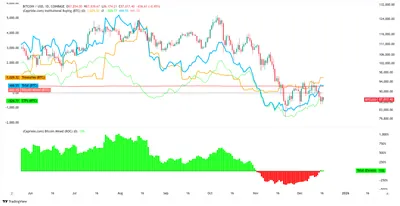
Corporate Bitcoin treasuries expanded by 260,000 BTC over a six‑month span, raising total corporate holdings to 1.11 million BTC. At current market prices this expansion is worth roughly $25 billion, reflecting a notable increase in balance‑sheet exposure to Bitcoin among public and private companies.
Corporate Bitcoin Treasury Growth
On‑chain data show corporate digital asset treasuries (DATs) added a net 260,000 BTC in six months, compared with about 82,000 BTC mined over the same period. In absolute terms, corporate holdings increased from roughly 854,000 BTC to 1.11 million BTC, a shift that concentrates a significant portion of supply on company balance sheets.
Strategy's Dominance in Bitcoin Holdings
Michael Saylor’s Strategy holds the largest corporate Bitcoin position, with 687,410 BTC — about 60% of all corporate holdings and worth around $65.5 billion at current prices. The firm resumed purchases in early January, reporting an additional 13,627 BTC acquired between January 5 and 11, 2026; details are available in coverage of Strategy's January purchase.
Other Major Corporate Bitcoin Holders
The second‑largest corporate holder is MARA Holdings, with 53,250 BTC, valued at about $5 billion. For broader context on which companies hold Bitcoin and their motivations, see the overview of corporate crypto reserves in the US, which outlines major corporate positions and reasons for holding BTC.
Impact of Bitcoin ETFs
Spot Bitcoin exchange‑traded funds contributed to institutional demand, with net inflows of almost $22 billion in 2025 and a net aggregate inflow of just over $500 million in early 2026. These ETF flows are cited alongside corporate buying as part of the broader demand picture for Bitcoin, though ETF activity has shown mixed movement at the start of 2026.
Why this matters
For individual miners, the shift of a large amount of BTC onto corporate balance sheets changes where supply is held, which can influence market liquidity and the pool of coins available to trade. Even if you operate a small setup in Russia with a handful of rigs, concentrated corporate holdings and ETF flows are part of the market forces that set price and liquidity, which affects the value of mined coins and timing of sales.
What to do?
If you run between 1 and 1,000 devices, prioritize clear, practical steps to manage mining revenue and operational risk. First, separate mined‑coin receipts from operating funds so you always cover power and maintenance without touching a held position. Second, set simple rules for converting BTC to cash — for example, fixed thresholds or scheduled withdrawals — to avoid reacting to short‑term price swings.
- Maintain a cash buffer to pay for electricity and repairs independent of your BTC holdings.
- Decide a predictable conversion plan for mined BTC (fixed amount or periodic sell schedule) to smooth income.
- Track major on‑chain trends and large corporate moves so you understand context when liquidity tightens.
These steps reduce operational stress and make your mining business sustainable regardless of whether corporate treasuries continue to grow.
FAQ
How much did corporate treasuries grow? Corporate treasuries added 260,000 BTC over six months, lifting total corporate holdings to 1.11 million BTC and representing about $25 billion at current prices.
How does this compare with mining supply? Bitcoin miners produced around 82,000 BTC in the same period, meaning corporate acquisitions outpaced new miner supply over those six months.
Who holds the most corporate BTC? Strategy holds 687,410 BTC — roughly 60% of corporate holdings — and added 13,627 BTC between January 5 and 11, 2026. MARA Holdings is second with 53,250 BTC.