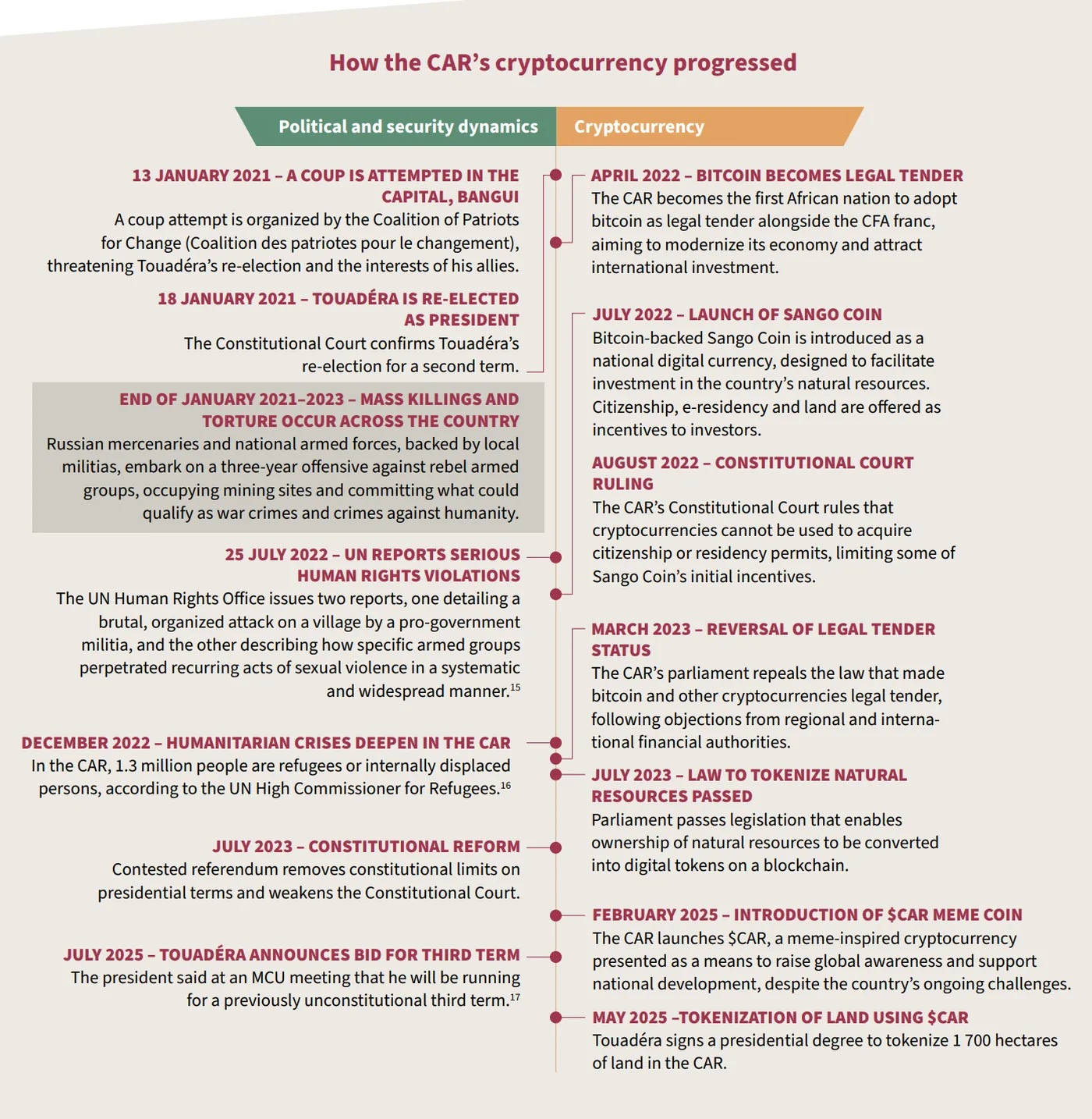
In April 2022, the Central African Republic (CAR) made Bitcoin legal tender, becoming the second country after El Salvador to do so. This move was part of a broader push into cryptocurrency, which also included launching projects like Sango Coin and the CAR memecoin. However, these initiatives unfolded in a country facing significant infrastructural challenges, with only 15.7% of the population connected to electricity and fewer than 40% holding mobile subscriptions, alongside a low GDP per capita of $467.
Overview of CAR's Cryptocurrency Initiatives
The adoption of Bitcoin as legal tender marked a bold step for CAR’s crypto ambitions. Alongside this, the government introduced Sango Coin, aimed at tokenizing national resources to attract crypto investment. In July 2023, a new law was passed allowing the tokenization of assets such as oil, gold, timber, and land, further expanding the scope of crypto ventures in the country.
Challenges and Criticisms
Despite these efforts, the initiatives faced criticism for being ill-suited to the country’s realities. Limited access to electricity and internet connectivity significantly hindered the population’s ability to engage with cryptocurrencies. Critics argued that the programs primarily served the interests of elites and foreign investors rather than addressing the needs of the wider population. The July 2023 law on resource tokenization also raised concerns about undermining national sovereignty.
Reversal of Bitcoin Legal Tender Status
In March 2023, less than a year after its adoption, CAR repealed the Bitcoin legal tender status. This decision came under pressure from the Economic and Monetary Community of Central Africa (CEMAC) and the International Monetary Fund (IMF). The limited infrastructure readiness, including low electricity access and mobile phone subscriptions, made the initiative unrealistic for the majority of citizens.
Impact on Governance and Criminal Networks
The report highlighted that President Faustin-Archange Touadéra’s inner circle includes crypto enthusiasts, pro-Russian businesspeople, and controversial figures linked to illegal timber trafficking and fraud. These connections suggest that the crypto initiatives may have deepened elite control and opened channels for foreign criminal organizations, potentially at the expense of the broader population.
Performance of CAR's Crypto Projects
The country’s crypto projects struggled to gain traction. Sango Coin sold less than 10% of its target supply, indicating limited investor interest. Meanwhile, the CAR memecoin experienced extreme volatility and technical issues, with its value dropping by more than 93% over the past year, trading around $0.004105 according to CoinGecko.
Why This Matters
For miners and crypto participants in CAR, these developments highlight the significant challenges of operating in an environment with limited infrastructure and regulatory instability. The reversal of Bitcoin’s legal tender status and the underperformance of national crypto projects signal a cautious approach to crypto adoption in fragile economies. Additionally, the involvement of elites and controversial figures raises concerns about transparency and the potential exploitation of crypto initiatives by criminal networks.
What Can Miners Do?
- Stay informed about regulatory changes and infrastructure developments in CAR to assess the viability of crypto activities.
- Exercise caution when engaging with national crypto projects, given their volatility and limited success so far.
- Consider the risks associated with elite and foreign influence in the local crypto space, which may affect market stability and legal protections.