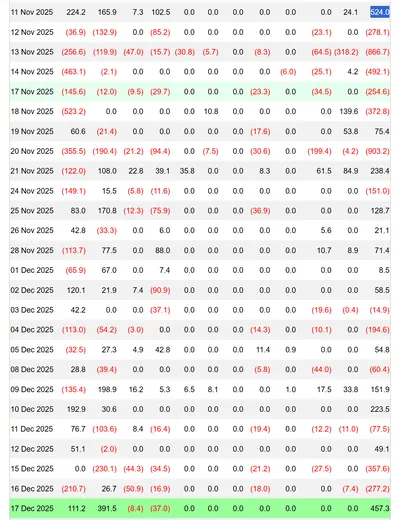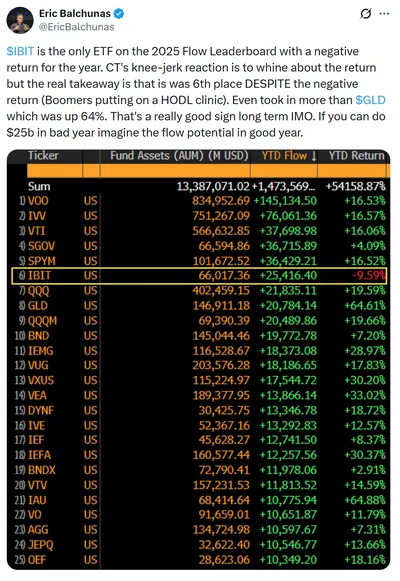
Blackrock’s iShares Bitcoin Trust (IBIT) closed 2025 with a dominant position in bitcoin, holding roughly 771K BTC as of Dec. 31, 2025. The disclosures show total holdings of about 770,791.55 BTC, with the position valued at approximately $67.49 billion. That scale confirmed IBIT as the largest spot bitcoin ETF globally and underlined Blackrock’s commitment to the asset class.
Blackrock's Dominance in Bitcoin Holdings
IBIT’s reported balance — roughly 771K BTC and total holdings of about 770,791.55 BTC — places the trust at the top among spot bitcoin ETFs worldwide. This concentrated holding established IBIT’s status as the largest spot bitcoin ETF and signaled substantial institutional allocation to a single exchange‑traded vehicle. For more on how IBIT fits into broader investment flows and Blackrock’s role in 2025, see IBIT role in 2025 in our related coverage.
Financial Details of IBIT
The fund’s year‑end disclosure put its bitcoin exposure at roughly $67.49 billion, with bitcoin constituting the primary asset in the vehicle’s portfolio. The filing also noted a small cash balance held for operational purposes alongside the bitcoin position, reflecting how the ETF is structured to track the underlying asset. IBIT’s scale and trading depth were cited as factors behind the product’s rapid adoption and revenue contribution to Blackrock.
Larry Fink's Perspective on Bitcoin
Blackrock CEO Larry Fink framed bitcoin as an “asset of fear,” describing it as a store used by some to protect against currency debasement, fiscal deficits, and political instability. He also sketched a scenario in which broader institutional allocations could translate into much larger nominal bitcoin valuations, mentioning figures up to $700,000 in that context. Beyond price, Fink emphasized that markets are “just at the beginning of the tokenization of all assets,” positioning digital assets and tokenized securities as a longer‑term market evolution.
Institutional Adoption and Market Impact
IBIT’s growth during a year of price challenges highlighted that institutional demand can be driven by structure, access, and portfolio considerations rather than short‑term returns alone. The trust’s scale has been presented as both proof and catalyst for wider institutional engagement with bitcoin, reinforcing liquidity and on‑exchange depth. For additional reporting on IBIT’s role among ETFs and inflows, see ETF inflows in 2025 and IBIT as Blackrock’s main theme.
Why this matters
For a miner operating in Russia with between one and a thousand devices, IBIT’s scale is primarily a market‑structure signal rather than an operational one. Larger institutional pools like IBIT can increase market liquidity and provide clearer on‑ramp options for large buyers and sellers, which may indirectly affect trading conditions you encounter when selling mined coins.
That said, the day‑to‑day realities of running mining equipment — power costs, cooling, and maintenance — are not changed by a single ETF’s holdings. What can matter is the broader legitimization of bitcoin: clearer institutional demand can shift who participates in secondary markets and where liquidity concentrates, but it does not alter how you run rigs or arrange local power and connectivity.
What to do?
Keep operating fundamentals tight: monitor hash‑rate and uptime, maintain firmware and cooling, and plan maintenance windows so production stays predictable. Stable production gives you flexibility when choosing how and when to convert mined bitcoin to fiat or other assets.
Stay informed about large fund disclosures and market liquidity because sizeable institutional flows can change execution costs for larger sales. Periodically review your exchange and custody options, and consider staggering larger conversions to avoid impacting local prices and slippage.