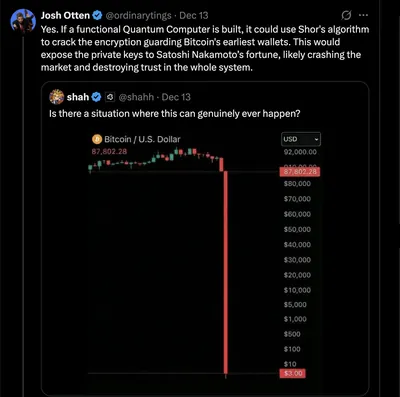
Quantum computing presents a looming threat to Bitcoin’s security and market value. Charles Edwards, founder of the quantitative Bitcoin fund Capriole, warns that if Bitcoin does not become quantum-resistant by 2028, its price could fall well below $50,000. This warning highlights the urgency for the Bitcoin community to address vulnerabilities before the arrival of powerful quantum computers capable of breaking current encryption methods.
Quantum Computing Threat to Bitcoin
Quantum computers have the potential to break widely used encryption algorithms, which underpin Bitcoin’s security. This capability could allow attackers to reveal private keys and access user funds, posing a serious risk to the cryptocurrency’s integrity. While the full realization of quantum computing is often considered years away, some experts estimate that the threat could materialize as soon as 2028, making timely action critical.
Expert Opinions on Quantum Threat
Charles Edwards emphasizes that Bitcoin is particularly vulnerable because banks and institutions are already transitioning to post-quantum encryption, leaving Bitcoin exposed as "first on the quantum chopping block." He stresses the need for a quantum-resistant patch rollout by 2026 to avoid what he predicts could be the largest Bitcoin bear market in history. In contrast, Bitcoin veteran Willy Woo suggests that holding Bitcoin in SegWit wallets for about seven years may provide temporary protection against quantum attacks. Meanwhile, Michael Saylor downplays the quantum threat, considering it a marketing tactic aimed at promoting quantum-branded tokens.
Implications for Bitcoin and Crypto Industry
The potential impact of quantum computing on Bitcoin extends beyond security to market stability. A failure to upgrade Bitcoin’s network could trigger a significant price decline and shake investor confidence. Compared to traditional banks, which are already adopting quantum-resistant measures, Bitcoin’s slower response increases its risk exposure. Delaying action on quantum resistance could therefore have severe consequences for the cryptocurrency’s future.
Strategies to Protect Bitcoin from Quantum Attacks
To safeguard Bitcoin against quantum threats, the development and implementation of quantum-resistant protocols are essential. The Bitcoin community and developers must collaborate on network upgrades that enhance security against emerging quantum capabilities. Additionally, users can take precautions by choosing wallet types, such as SegWit wallets, that offer better protection until comprehensive solutions are deployed.
Why This Matters
For miners operating in Russia with up to 1,000 devices, understanding the quantum threat is crucial despite its seemingly distant timeline. A major price drop triggered by quantum vulnerabilities could affect mining profitability and market dynamics. Moreover, as banks adopt quantum-resistant encryption, Bitcoin’s lag in this area could lead to competitive disadvantages and increased risks of theft or loss.
What Miners Should Do
- Stay informed about developments in quantum computing and Bitcoin’s network upgrades.
- Consider holding Bitcoin in SegWit wallets as a temporary safeguard against quantum attacks.
- Support and monitor community efforts aimed at implementing quantum-resistant protocols.
- Prepare for potential market volatility by managing mining operations and investments prudently.