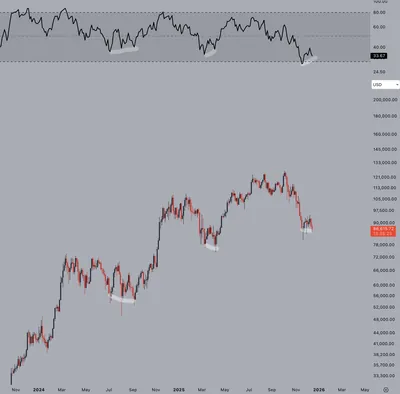
Bitcoin plunged roughly 7% to about $77,000 on Saturday, a move that wiped more than $2 billion from the crypto market in a short span. The asset is now roughly 38% below its all-time high of $126,100, reflecting a sizable retreat from recent peaks. Following the drop, analyst PlanC described the move as a possible "deepest pullback opportunity," pointing to $75,000–$80,000 as a likely low for this cycle.
Bitcoin's Sharp Decline to $77,000
The weekend sell-off pushed Bitcoin down to around $77,000 and triggered wide liquidation across exchanges, contributing to the multi-billion-dollar market loss. PlanC highlighted that the current downtrend resembles prior major capitulations and suggested the ultimate low may lie between $75,000 and $80,000. Traders should note that price action during volatile weekend sessions can be exaggerated and short-lived.
Historical Context and Analyst Predictions
PlanC placed the recent drop in the context of prior capitulation events and argued the current move could mark the deepest pullback of the ongoing cycle. Other market voices expect further downside: Jurrien Timmer estimated prices could fall to about $65,000 in 2026, while Peter Brandt forecasted a possible drop to $60,000 by the third quarter of 2026. Technical observers are parsing short-term signals to see whether the $77k area holds as support; see related analysis on technical signals and the piece on key support levels.
Expert Warnings About Market Volatility
Market commentators stressed the heightened volatility around weekends, with Rajat Soni explicitly warning: "Never trust a weekend pump OR dump." Such warnings underline that rapid moves over short time frames can mislead traders and miners if taken as trend confirmation. Some analysts also expect more rallies and retracements before any cycle low is reached, meaning price swings may continue for some time.
Why this matters
If you run mining equipment in Russia, the immediate consequence of the price drop is lower BTC revenue per coin mined, since each mined bitcoin is worth less on the market. Profitability depends on your electricity costs and operational efficiency, so a lower price narrows margins and may change breakeven timing for some rigs.
Volatility also affects liquidation risk and inventory decisions: quick weekend moves can tempt operators to sell at a loss or delay necessary maintenance. At the same time, announced analyst targets do not force immediate operational changes—your decisions should rest on costs, uptime and cash-flow needs rather than short-term headlines.
What to do?
- Recalculate your production breakeven using current BTC price and your electricity tariff; this clarifies which rigs remain profitable.
- Avoid reacting only to weekend moves—remember Rajat Soni's warning to not trust weekend pumps or dumps and wait for confirmed trends.
- Consider staged selling: set predefined sell rules instead of panic-selling during sharp dips to smooth realized prices over time.
- Keep monitoring positions and technical levels; refer to related coverage on the monthly close as one reference point for bigger time-frame decisions.
- Maintain hardware and manage operating costs so you can ride out volatility without forced exits from the market.