Paolo Ardoino, CEO of Tether, shared several assessments of risks and trends for the crypto industry in 2026 during an interview on the Bitcoin Capital podcast. He pointed to the possibility of an "AI bubble" that, if developments turn unfavorable, could impact Bitcoin, and noted the high correlation of BTC with capital markets. At the same time, Ardoino expressed optimism about real-world asset tokenization and a critical view of the state of crypto innovation in Europe.
Introduction
The interview aired on the Bitcoin Capital podcast, co-hosted by Bitfinex Securities and Blockstream. Ardoino connected several topics: the influence of AI sentiment on markets, risks to Bitcoin, tokenization prospects, and Europe's regulatory stance. These points set the tone for his 2026 forecasts and help understand which factors he considers most significant for the market.
Risks to Bitcoin in 2026
The main risk Ardoino highlighted is a potential "AI bubble," meaning increased speculative demand around companies involved in AI infrastructure and the related surge in investments in energy-intensive data centers. According to him, Bitcoin "still correlates too much" with capital markets, so shifts in stock market sentiment could affect BTC's price.
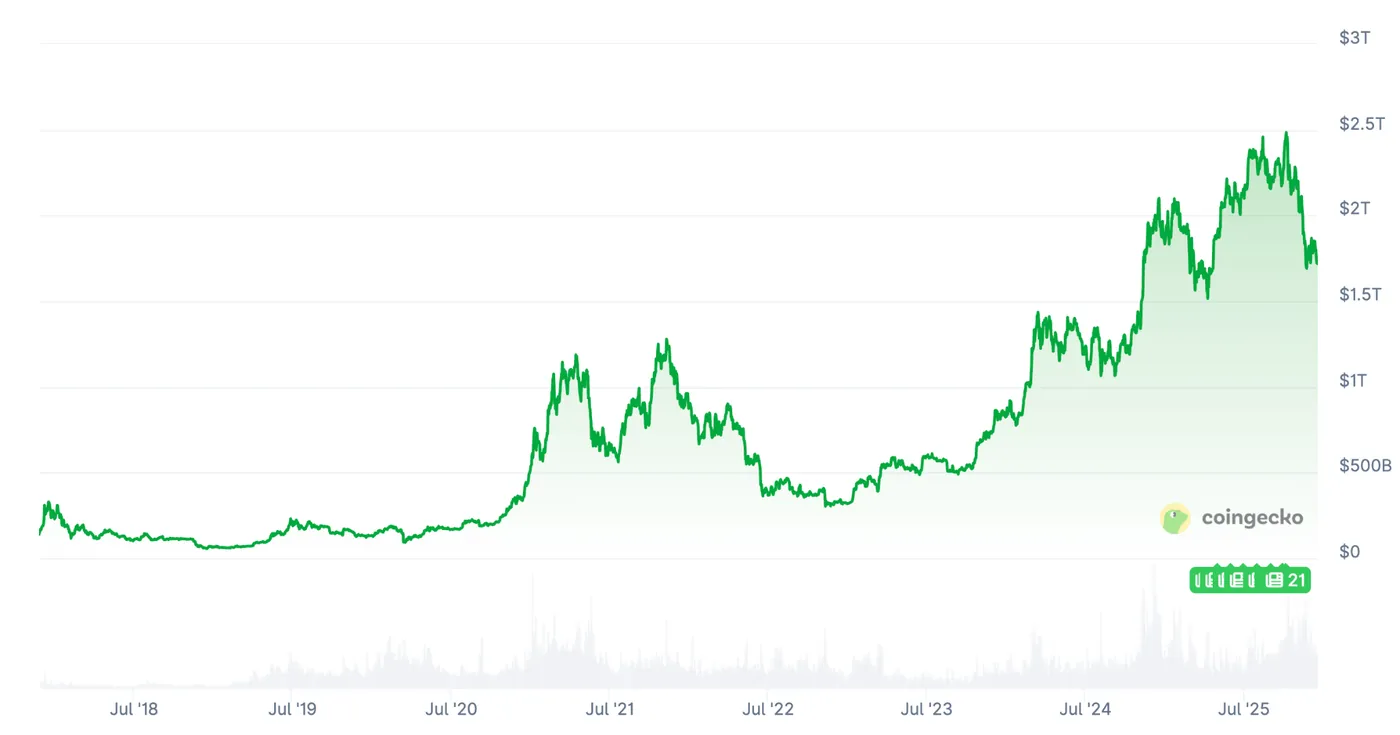
Nevertheless, Ardoino expects that major one-time market crashes, similar to the 80% corrections in 2022 or early 2018, "may no longer occur." He associates this assumption with the growing participation of pension funds and government players in cryptocurrencies. For additional context on corrections, you can refer to materials on recent market movements, including analysis of price dynamics and related risks in publications about the crypto market correction.
Asset Tokenization
Ardoino views the prospects for real-world asset (RWA) tokenization positively, noting that tokenized securities and commodities "will be massive." He sees significant potential in this direction for market development and expanding blockchain applications beyond purely speculative instruments. This vision emphasizes that part of the industry's growth may come from the real economy sector.
Cryptocurrency Regulation in Europe
In the interview, Ardoino admitted to a pessimistic outlook regarding crypto innovation in Europe, stating that the region lags in adopting and supporting new solutions. He also touched on the impact of regulatory initiatives, including discussions around MiCA, linking this to a general slowdown in innovation adoption in the region. This stance explains his caution about Europe's trajectory in developing crypto infrastructure.
Crypto Treasuries
Regarding digital asset treasuries (DATs), Ardoino expressed a critical view: he is "not very optimistic" about companies that are solely treasuries without a strong operational business. In his opinion, such structures should have a real operational focus, not just digital asset management. In the interview, he also mentioned the company Twenty One in the context of discussing treasury models.
Why This Matters
If you mine in Russia and operate between one and a thousand devices, the key takeaway is that external market shocks related to AI sentiment may temporarily affect Bitcoin's price due to its correlation with capital markets. At the same time, the lack of expectations for repeated 80% drops reduces the likelihood of dramatic scenarios but does not eliminate volatility. Additionally, long-term positive signals about tokenization could expand the ecosystem where various crypto tools and services will be in demand.
What to Do?
For practical risk management, maintain basic measures: control the share of BTC in your portfolio, plan actions for sharp price fluctuations, and do not rely on assumptions of full protection from corrections. Follow news about changing market sentiment and tokenization project implementations, but avoid making decisions based solely on isolated statements.
If you run a small or medium mining pool: keep a liquidity reserve to cover electricity and maintenance expenses, regularly check equipment performance, and consider diversifying income (for example, holding some funds in stablecoins if needed). It is also useful to monitor regional regulations and public statements from major industry players to assess potential operational risks.