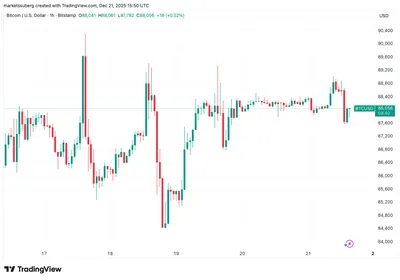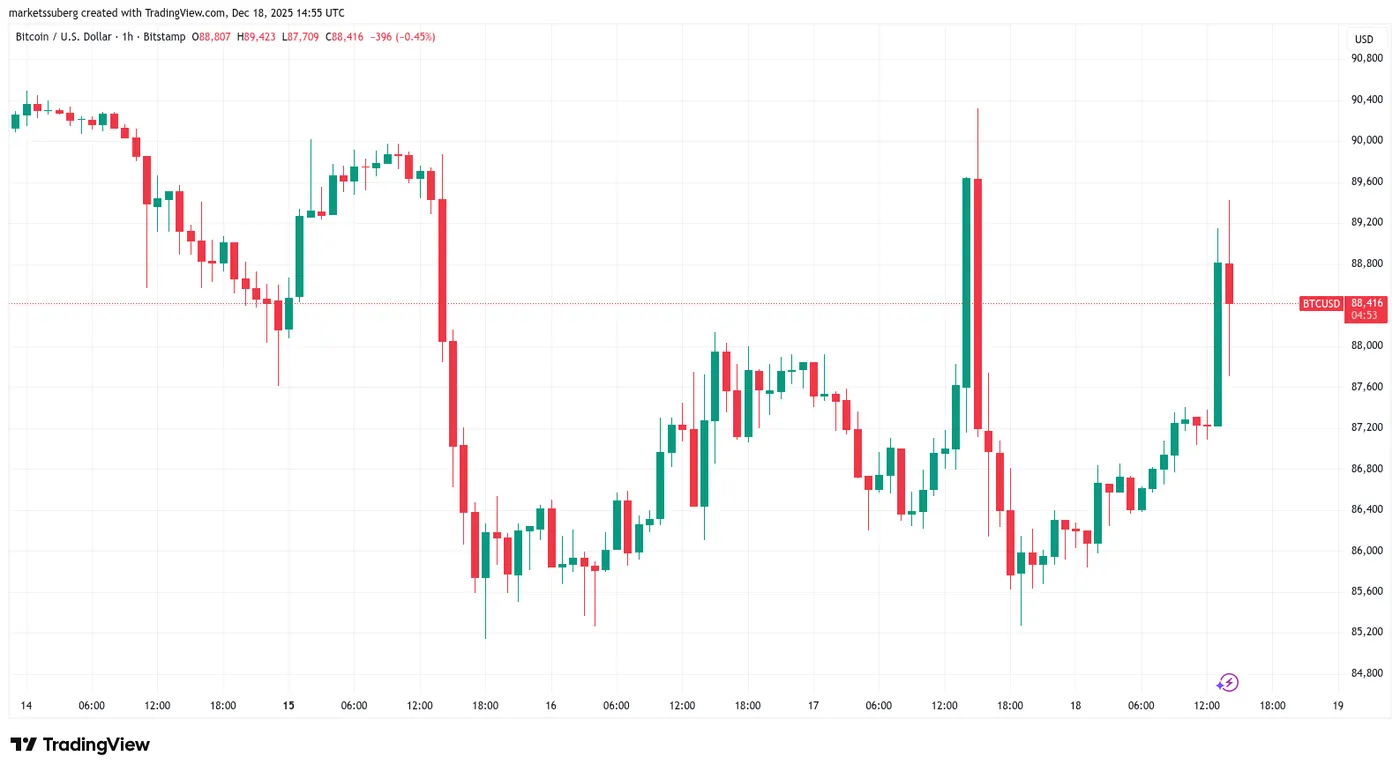
Following the unexpected drop in the US Consumer Price Index (CPI) to 2.7% over the annual period ending in November, Bitcoin’s price reacted sharply: it briefly reached $89,500 before pulling back. The release had a strong impact on market volatility, with over $630 million in liquidations recorded within 24 hours according to CoinGlass, highlighting the scale of these one-off moves.
Bitcoin Reacts to Unexpected CPI Inflation Drop
The CPI data showed one of the largest monthly declines since 2023, with the official BLS report confirming a 2.7% increase over the 12 months ending in November. In response, BTC traded around $89,000–$89,500 but failed to hold the peak and soon declined, which is typical for strong short-term market reactions.
Market Analysis and Participant Opinions
The market received various comments from specialized sources and traders: The Kobeissi Letter noted anti-inflationary signals in the data, while Daan Crypto Trades described the divergence from expectations as a "massive miss." Traders linked the rise in risk assets, including BTC, to a weakening dollar and falling bond yields, which boosted demand for crypto assets at the time of the data release.
Traders also point out frequent "fakeouts" during US sessions—rapid breakouts in both directions followed by sharp pullbacks and mass position closures. Such moves raise questions about liquidity and attempts to push prices through "order walls," adding uncertainty on short-term timeframes. In this context, it’s useful to review the analysis of the price drop after $90K in our article Why Bitcoin Failed to Hold $90,000, which discusses the mechanics behind rapid pullbacks.
Possible Future Scenarios for BTC
Some market participants note that the current price dynamics mirror the fractal from early 2025—a similar price structure that was followed by a search for a macro bottom. Traders and entrepreneurs, including Ted Pillows, continue discussing this analogy, sharing charts that suggest a possible repeat of early-year scenarios.
Meanwhile, data from CME Group’s FedWatch Tool shows a 26.6% probability of a Federal Reserve rate cut at the January 28, 2026 meeting, adding a fundamental variable influencing risk assessment and participant expectations. For a broader overview of scenarios and risks, see our article Bitcoin Price Forecast.
Current Market Conditions and Liquidations
Amid sharp moves, total crypto liquidations over 24 hours exceeded $630 million, indicating a high level of margin burn among leveraged participants. Complaints about "manipulations" and the presence of order walls, through which prices move seeking liquidity, are also observed; such situations increase the frequency of sharp "fakeouts" and complicate trend retention.
As a result of short-term uncertainty, holding positions during major economic data releases has become riskier, especially for highly leveraged participants. More details on price levels and resistance amid current dynamics can be found in the article on price reactions around $87–95K: Bitcoin Price Hits Resistance at $87K.
Why This Matters
If you mine from one to a thousand devices in Russia, such news primarily affects the price of the asset you receive as a reward and your ability to quickly liquidate coins. High volatility and large liquidations mean short-term price spikes can be quickly followed by pullbacks, impacting profitability when selling instantly.
Additionally, sharp market moves increase the likelihood of liquidity stress in exchanges and platforms where you sell BTC for rubles or dollars. Even if the technical mining parameters (equipment, consumption) remain unchanged, your sales and coin inventory management strategy must account for volatility spikes and the risk of consecutive price drops.
What to Do?
- Review your mining payout conversion plan: keep part of your rewards in BTC and part in fiat to cover current electricity and maintenance expenses.
- Avoid using leverage when trading received BTC; mass liquidations show how quickly positions can be lost during sharp moves.
- Set alerts for large liquidations and key economic releases (CPI, Fed meetings) to reduce exposure ahead of stressful moments.
- Check the reliability of exchanges and volumes on platforms where you sell coins to avoid issues during sudden liquidity outflows.
These steps will help mitigate the impact of sudden volatility on mining operational profitability and maintain the ability to cover ongoing costs during market instability periods.