Georgia state regulators unanimously approved a plan allowing Georgia Power to prepare nearly 10 gigawatts of new power plants and energy storage systems. The commission voted 5–0 to permit the purchase of about 9,900 megawatts of new resources after several months of reviewing the company's long-term plans. This approval grants the company the right to proceed with a mix of gas generators, batteries, solar installations with storage, and power purchase agreements.
Georgia Power Gets Approval to Expand Capacity
The commission's decision formally opens the roadmap for a major construction and contracting program for generation and storage. The company stated the expansion is necessary to cover "exceptional" load growth, mainly from large consumers such as data centers. The approved approach combines various sources and energy supply agreements, providing flexibility in project implementation.
Reasons for Capacity Expansion
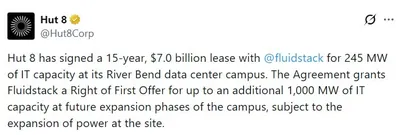
Georgia Power explains the large-scale initiative by rising demand from major corporate clients—primarily data centers. The company estimates about 80% of the new capacity will be directed to serve such facilities, including operators involved in mining and computational tasks like CleanSpark and Core Scientific. The emergence of significant demand from data centers is a key argument for rapid capacity scaling.
Financial Impact on Consumers
As part of the agreement with consumer advocates and commission staff, Georgia Power committed to returning some benefits from new customers to other consumers. The company pledged to provide at least $556 million in annual benefits, equivalent to approximately $8.50 per month for a typical residential customer using 1,000 kWh. Meanwhile, opponents of the plan highlighted substantial construction costs and labeled the initiative financially risky.
Political Context and Next Steps
The decision comes amid heightened political interest in electricity rates in Georgia: the article notes recent elections led to changes in commission members, with some new appointees opposing expansion. The company also stated its intention to continue providing quarterly reports to the commission on large load growth and demand forecasts, enabling regulators to monitor developments dynamically.
Why This Matters
If you mine in Russia with anywhere from one to a thousand devices, the direct impact of this approval in Georgia will be limited since it pertains to the U.S. power system. Nevertheless, the increasing electricity demand from large data centers reflects a broader trend: massive computational loads are reshaping generation requirements and electricity markets.
For miners, it is more important to understand that large projects are changing contract structures and cost allocation policies among suppliers: this can lead to new tariff products and creditworthiness requirements for large clients, which in turn affects the competitive landscape in energy.
What to Do?
- Monitor electricity tariffs and products from suppliers in your region; compare terms and seek options with fixed prices or night rates.
- Optimize equipment energy efficiency: tuning miners and cooling systems often yields noticeable savings in production costs.
- Prepare backup plans for potential changes in capacity availability or prices—especially important for farms with dozens or hundreds of devices.
- When planning expansion, consider financial guarantee requirements and contracts with large clients, as these may affect commercial site availability.
To understand the scale of data center growth and its impact on the power sector, you can compare this project with other large-scale data center construction initiatives and energy supply agreements; details on similar major projects are available in the article about multi-gigawatt data centers, and tariff regulation issues are discussed in the article on data center tariffs.