Former SEC Commissioner Paul Atkins declined to confirm media reports that Venezuela holds a $60 billion Bitcoin treasury, answering cautiously in a Fox Business interview. His noncommittal reply highlighted the gap between dramatic speculation and what public data can verify, and left open what, if any, U.S. action might follow.
Former SEC Commissioner Paul Atkins' Stance on Venezuela's Bitcoin Reserves
Atkins explicitly said he could not verify the reports about a massive Venezuelan crypto reserve, and he stopped short of predicting U.S. moves if such assets were located. This careful framing underscores the uncertainty around both the underlying claims and possible government responses, rather than endorsing the $60 billion figure.
Discrepancy Between Speculated and Verified Bitcoin Holdings
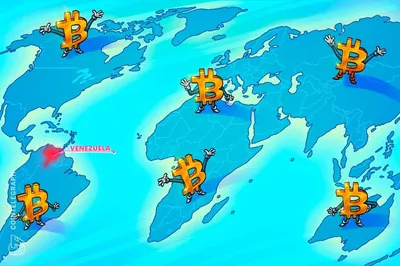
Public on-chain analysis identifies roughly 240 BTC in wallets linked to the Venezuelan state, a balance worth about $15 million as of April 2025. That on-chain total contrasts sharply with the $60 billion number circulating in some reports, and analysts point to several possible explanations for the gap, including obfuscated wallets, multiple custodians, or private ledgers that do not appear on public blockchains.
On-chain forensics are useful but imperfect: they reveal transactions visible on public ledgers while missing assets held off-chain or under complex custody arrangements. For more background on the theory of a hidden reserve, see this hidden reserve analysis, and for broader on-chain context consult this on-chain analysis.
U.S. Interest in Venezuela's Cryptocurrency
The speculation intensified after the U.S. Department of Justice indicted President Nicolás Maduro and other officials on charges that include narco-terrorism and money laundering. U.S. authorities view cryptocurrency as a possible vector for sanctions evasion, which helps explain why the question of state-held crypto drew attention from regulators and the media.
At the same time, major exchanges and blockchain analytics firms are active in tracking illicit flows, which complicates large-scale efforts to move or hide substantial sums on public networks. That tension — between potential use of crypto for sanctions relief and the visibility of on-chain activity — is central to current scrutiny.
Legal and Technical Challenges of Seizing Bitcoin
Seizing the cryptocurrency reserves of a recognized sovereign state would be a novel and legally fraught step. The U.S. has seized crypto from criminal groups and sanctioned individuals, but taking custody of a nation's official digital assets would raise unprecedented questions about international law and sovereignty.
Beyond legal hurdles, there are technical obstacles: possession of private keys is required to move Bitcoin, and keys for state-controlled wallets may be protected, distributed across custodians, or stored in ways that make remote seizure impractical. These combined obstacles help explain why Atkins avoided a definitive answer when asked about a possible seizure.
Why this matters
For individual miners, the immediate practical impact of the debate over Venezuela’s reserves is limited, because verified on-chain holdings are small compared with the sensational $60 billion claim. However, the discussion signals that governments now seriously consider state-held crypto in geopolitical and legal planning, which could shape future regulation and enforcement practices.
That evolving attention may affect larger participants first, but the eventual regulatory responses could influence exchanges, custody providers, and compliance requirements that all miners use. Staying informed helps you anticipate changes that might affect how you move, sell, or custody mined coins.
What to do?
If you run from one to a thousand mining devices in Russia, focus on practical precautions that do not depend on geopolitical outcomes. Secure your operations, document your flows, and prefer custody solutions that meet compliance and recovery standards.
- Harden key security: use hardware wallets or reputable custodians and keep backups in secure, offline locations.
- Maintain clear records: track incoming mining rewards, transfers, and timestamps to simplify any future compliance checks.
- Choose compliant platforms: prefer exchanges and services with robust KYC/AML policies to avoid unexpected freezes or delistings.
- Monitor official guidance: follow announcements from regulators and major service providers rather than social-media speculation.
- Limit concentration: avoid holding very large balances on a single hot wallet where possible, spreading exposure across trusted custody solutions.
These steps do not eliminate geopolitical risk, but they reduce operational exposure and make it easier to respond if regulations or enforcement practices change. For deeper technical and forensic context related to Venezuela, see the linked on-chain pieces above.