Crypto analysts say the chances of a sharp Bitcoin sell-off after the US strike on Venezuela are relatively slim. MN Trading Capital founder Michael van de Poppe wrote on X that he does not expect a widespread correction based on the attack. The US strikes reportedly took place at around 6:00 a.m. UTC on Saturday and lasted for around 30 minutes.
Bitcoin Price Stability After US Strike on Venezuela
Van de Poppe argued the event was a planned and coordinated attack that has already passed, and therefore is unlikely to trigger broad market negativity. His view is that the probability of additional market downside stemming directly from this strike is relatively low, a sentiment echoed by other market commentators. This assessment focuses on the immediate market reaction rather than long-term drivers.
Bitcoin’s Recent Price Performance
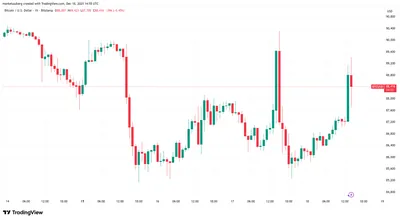
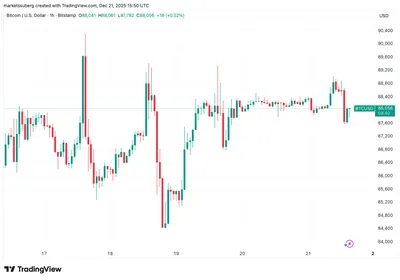
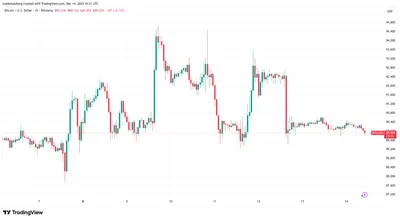
Over the last 24 hours Bitcoin’s price has stayed relatively stable, rising 1.66% to trade at $91,290, according to CoinMarketCap. During the same period CoinGlass data shows $60.04 million in Bitcoin leveraged positions were liquidated, with shorts accounting for $55.01 million, a reminder that leveraged positions can be volatile even when spot price movement is modest. The recent reclaiming of $90,000 has been noted in coverage of the move, for example in Bitcoin topped $91,000.
There have been prior cases when geopolitical escalation produced abrupt moves in BTC, demonstrating that short-term volatility can follow such events. For example, in June 2025 Bitcoin fell 2.8%, dropping from $106,042 to $103,053 within 90 minutes after explosions in Tehran. Those episodes show the market can react quickly to geopolitical shocks, even if such moves are short-lived.
Expert Opinions on Bitcoin’s Resilience
Tyler Hill suggested the market may not turn negative because the situation does not imply further escalation, and even proposed the strike could be viewed by some as a sign of strength, potentially supporting prices. Hill’s comment highlights that market sentiment after an event depends on participants’ interpretation of its implications rather than the event alone. This reading aligns with van de Poppe’s view that the immediate impact should be limited.
Crypto analyst Shagun Maki added that Bitcoin has proven it can "stay firm" despite "geopolitical noise," reinforcing confidence that it can remain above the $90,000 area. Taken together, these expert remarks emphasize resilience in the current market context and suggest traders are weighing the likelihood of further negative developments. For broader context on scenarios and risks, see a related Bitcoin price forecast.
Why it matters (for a miner in Russia)
If you operate mining hardware in Russia, the main takeaway is that analysts do not see a large, immediate BTC crash stemming from this strike. That reduces the chance of sudden, deep price-driven revenue losses in the very short term, though short-term volatility remains possible. Still, recent liquidations show leveraged trading can amplify moves, which can indirectly affect market sentiment and short-term price swings.
What to do? (practical steps for a Russian miner)
Focus on operational and financial risk management rather than reacting to headlines. Keep routine checks on your rigs, power agreements and payout settings, and avoid taking on additional leverage tied to your mined coins. The list below outlines clear actions you can take.
- Monitor price and liquidations: check BTC price feeds and liquidation metrics daily to spot sudden market stress.
- Manage cash flow: maintain a buffer for power and maintenance costs to ride out short-term volatility.
- Avoid adding leverage: do not increase margin or leverage on positions that depend on mined coins.
- Secure operations: ensure remote access, cooling and power arrangements are stable to prevent avoidable downtime.
- Plan BTC sales: set simple rules for when to sell a portion of mined BTC (for example, fixed schedules or thresholds) to smooth revenue.
These steps help reduce exposure to sudden market moves without relying on predictions about future price direction. Staying prepared and disciplined lets you respond calmly if volatility appears.