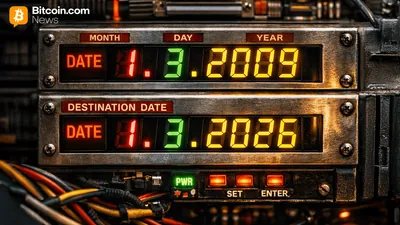
A miner active in Bitcoin’s earliest years broke a 15-year dormancy on March 18, 2025 by sending 2,000 BTC to Coinbase, a move valued at roughly $140 million at current prices. Blockchain analysis shows these coins originated from 40 separate Pay-to-Public-Key (P2PK) addresses, a technical pattern typical of 2009–2010 mining. The transfer immediately drew attention from market observers and analytics firms because coins this old are increasingly rare.
Satoshi-era miner breaks 15-year dormancy with massive BTC transfer
The on-chain record identifies the transfer as 2,000 BTC routed to Coinbase on March 18, 2025, with the originating outputs traced to 40 P2PK addresses associated with Bitcoin’s first mining period. Julio Moreno, senior analyst at CryptoQuant, highlighted the transaction’s historical significance and linked such moves to notable market inflection points: “Miners from this foundational period tend to move their Bitcoin holdings at significant market inflection points.” This single transaction quickly became a focal point for traders and researchers monitoring early-supply activity.
Technical and historical context of the transaction
Pay-to-Public-Key (P2PK) addresses predate many modern Bitcoin address formats and carry a clear technical signature that helps attribute outputs to Bitcoin’s earliest wallets. Because these scripts expose a public key directly in the spending script, they are recognizable markers of 2009–2010-era coins. Observers used that signature to confirm the age and provenance of the moved coins.
On a supply level, blockchain analytics firm Glassnode reports that about 1.8 million BTC have not moved in over a decade, and estimates show roughly 1.1 million BTC mined in 2009 remain unmoved. Each activation from this pool reduces the number of truly ancient, untouched coins and thus draws disproportionate attention relative to its share of circulating supply. For wider context on old-wallet activations in 2025, see this activation of old wallets summary.
Expert analysis of historical miner behavior patterns
Researchers note that movements from Satoshi-era addresses have occurred before notable market transitions, and the timing of such transfers often prompts debate over cause and effect. Some analysts emphasize correlation rather than causation, warning against assuming these transfers directly trigger market moves. Still, the psychological effect on traders and institutions can be significant, as long-dormant coins returning to circulation become focal points for sentiment and liquidity planning.
Market implications and institutional perspectives
Routing 2,000 BTC to Coinbase, a regulated U.S. exchange, suggests possible intentions to liquidate or reposition the assets, though on-chain routing alone does not prove a final intent. Market metrics recorded increased activity after the transfer: Bitcoin’s price showed a 3.2% fluctuation band in the 24 hours following the event versus a 1.8% average the week before, and trading volume on major venues rose noticeably. Institutional actors routinely watch such transfers closely to gauge potential selling pressure or shifts in supply availability; a nearby example of a large Coinbase inflow can be found in the 3,892 BTC transfer coverage.
The evolving landscape of Bitcoin’s early supply
Activations of early-mined coins show a gradual change in how Bitcoin’s initial supply is distributed and sometimes reintroduced to markets. The remaining pool of decade-old, unmoved BTC is shrinking incrementally, which increases the historical significance of each subsequent activation. While additional circulation can improve liquidity, large concentrated sell-offs could still affect short-term price dynamics, so market participants track these movements as part of broader supply analysis.
Technological and security considerations
Moving coins after 15 years requires overcoming practical challenges such as wallet compatibility with modern software, secure custody of long-stored private keys, and selecting appropriate fee levels for current network conditions. Successfully spending outputs from P2PK-era addresses demonstrates careful long-term key management and technical maintenance over more than a decade. Security lessons from such operations highlight the importance of tested backup procedures and cautious operational security.
Why this matters
If you run between one and a thousand mining devices in Russia, this transfer matters mainly for two reasons: market sentiment and attention to long-term supply. Movements of very old coins often increase short-term volatility and draw trader focus, which can widen intraday price swings even when the absolute share of circulating supply is small. At the same time, each activation narrows the pool of historically dormant coins, slightly changing the narrative around long-term holder behavior.
What to do?
- Monitor order books and intraday volatility before moving holdings; larger swings can affect liquidation prices.
- If you plan to sell mined BTC, consider splitting trades to reduce market impact and check exchange liquidity and withdrawal limits.
- Keep private keys and backups tested—this event underscores how long-term custody can remain viable with proper procedures.
- Avoid reacting solely to single on-chain events; combine supply signals with your operational costs and tax considerations when making decisions.
Short FAQ
What defines “Satoshi-era” coins? Satoshi-era refers to Bitcoin mined in 2009–2010, identifiable by early script types such as Pay-to-Public-Key (P2PK) that were common in the protocol’s first years.
How large was this transfer? The transaction moved 2,000 BTC to Coinbase on March 18, 2025, with an approximate value of $140 million at current prices.
Did the move affect market volatility? Yes — data show a widening to a 3.2% price fluctuation band in the 24 hours after the transfer versus a 1.8% prior-week average, and trading activity on major exchanges increased.