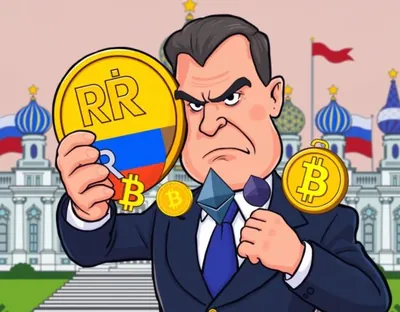
Russian authorities announced a ban on the WhiteBIT cryptocurrency exchange on March 15, 2025, designating the platform and its parent company as "Undesirable Organizations." The Prosecutor General’s Office declared transactions with WhiteBIT illegal inside Russia and flagged the exchange for alleged financial support to Ukrainian military forces. The action centers on accusations that WhiteBIT provided approximately $11 million in aid, including $1 million reportedly used to procure drones.
Russia Imposes Comprehensive Ban on WhiteBIT Exchange
The ban, announced by the Russian Prosecutor General’s Office, makes engagement with WhiteBIT unlawful for Russian users and opens the door to criminal prosecution for those who attempt to circumvent restrictions. Authorities describe the designation as comprehensive, targeting both the exchange and its parent company as "Undesirable Organizations," and linking this move to the platform’s reported support for Ukraine. This measure is part of broader state efforts to control financial flows tied to the conflict, and it sits alongside other legal changes affecting crypto payments domestically, such as a recent crypto payment ban announcement.
WhiteBIT’s Alleged Support for Ukrainian Military Forces
Russian authorities say WhiteBIT provided roughly $11 million in aid to Ukrainian forces, of which about $1 million financed drone procurement. The exchange previously ran a publicly documented fundraising effort named the "Army of Drones" in 2023, and blockchain records were cited as part of the tracing of those flows. Broader blockchain analytics show Ukrainian military forces have received more than $200 million in cryptocurrency donations since the conflict began, with WhiteBIT’s contribution presented by authorities as a notable share of that total.
Geopolitical and Regulatory Implications
The WhiteBIT designation raises questions about how states may use crypto rules during geopolitical conflicts, and it highlights legal tensions when exchanges operate across jurisdictions. Regulators and industry participants now face dilemmas over compliance, cross-border enforcement, and how to treat platforms implicated in conflict-related funding. For readers who want more on domestic rules and limits, see the overview of crypto regulation in Russia.
Market Impact and Exchange Responses
Following the announcement, WhiteBIT recorded about a 15% jump in withdrawals from Russian-based accounts within 48 hours, and the platform said it had been reducing Russian exposure since 2023 through voluntary migration measures. The exchange serves approximately 4 million users globally and has reported daily trading volumes that frequently exceed $500 million, figures authorities and the company have both referenced in public statements. Competitors and users have reacted by reassessing counterparty risk and, in some cases, moving assets or trading activity to alternative venues.
Enforcement Mechanisms and Future Outlook
Russian enforcement options described by officials include internet service provider blocking of WhiteBIT domains, mandatory transaction reporting by traditional financial institutions, possible asset freezes or seizures, and potential criminal prosecution of individuals who attempt to bypass restrictions. Authorities and monitoring agencies have also relied on transaction tracing and blockchain records to identify transfers linked to the alleged support efforts. The designation creates legal and operational uncertainty for exchanges that serve users across contested jurisdictions, and it may influence how other states approach similar cases.
Why this matters
For miners in Russia, the WhiteBIT ban illustrates that platform-level actions can have direct consequences for individual users and for the wider crypto infrastructure. Even if your operation is small, measures such as ISP blocking, mandatory reporting, and potential prosecutions mean that using a banned platform carries legal and operational risks. The exchange’s large global footprint and the scale of alleged transfers show that geopolitical disputes can quickly affect liquidity, withdrawal access, and market routing.
What to do?
If you mine in Russia and manage one to a thousand devices, take practical steps to protect funds and minimize legal exposure. Start by checking whether services you use are explicitly restricted and avoid interacting with platforms that have been designated as banned by Russian authorities. Consider increasing custody security for mined coins and maintain clear records of transactions to demonstrate legitimate origin and handling.
- Move funds from platforms that have been declared illegal to self-custody or compliant services, where feasible and lawful.
- Keep backups of wallet seed phrases and maintain transaction logs to document where funds came from and where they were sent.
- Monitor local enforcement updates and guidance; for miners worried about penalties or regulatory changes, reviewing recent mining penalties coverage can help clarify risks.
- Limit reliance on a single exchange for liquidity and consider technical and legal trade-offs before moving assets to decentralized venues.
These steps are practical precautions, not legal advice. If you are unsure how the ban affects your specific situation, consider consulting a qualified professional who understands both cryptocurrency operations and Russian regulations.