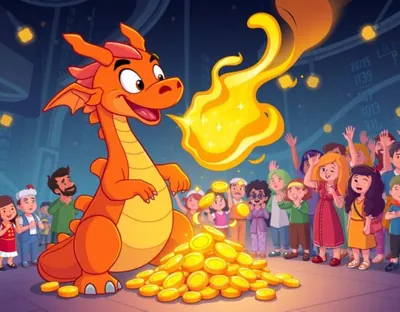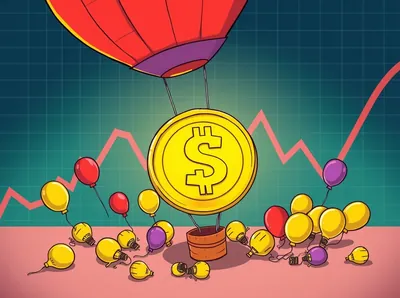
Ontology has performed a large-scale burn of its gas token, permanently removing 200 million Ontology Gas (ONG) tokens from circulation. This action reduces the total ONG supply from 1,000,000,000 to a new cap of 800,000,000, a 20% decrease in the token’s total supply, and was announced publicly by the project on its official channel.
Quick summary — what happened
The core fact: Ontology burned 200 million ONG and the team permanently removed 200 million ONG from circulation. Before the burn the total ONG supply was 1,000,000,000; afterward it is capped at 800,000,000, which represents a 20% reduction of the total supply. Ontology made the announcement via its official X account.
Details of the burn and how it was executed
Ontology made the announcement via its official X account and the source text states: "The team permanently removed 200 million ONG from circulation." This phrasing indicates the tokens were taken out of supply in a way the project describes as irreversible, changing the token’s maximum total supply.
In the source, tokenomics is described plainly: "Tokenomics refers to the economic design of a cryptocurrency. It covers distribution, supply, and utility." The update targets the supply component of ONG’s economics rather than immediate mechanics of fee calculation.
How does the 200M burn change supply?
The adjustment is a change to the token’s total supply cap, moving the maximum from 1,000,000,000 ONG to 800,000,000 ONG. This is a supply-side, deflationary action as presented in the announcement and does not, by itself, claim to alter circulating supply metrics beyond the permanent removal described.
Why Ontology says it implemented the burn
The source frames the burn as a strategic update to ONG tokenomics intended to increase scarcity and support long-term economic design. By burning a massive 20% of the total supply, Ontology is directly influencing key factors like scarcity and potential value accrual, and the project presents this as part of its longer-term planning for the ecosystem.
The announcement positions the move as a deflationary tactic within tokenomics — an approach projects use to change supply dynamics and align token utility with strategic goals.
Immediate and longer-term impacts for users and developers
The source notes that immediate effects on everyday transactions may be minimal; gas fees remain driven by network demand and congestion rather than total supply alone. Over the longer term, the update is described as creating a more predictable gas economy which could be more attractive to dApp developers if demand for network services grows.
It’s important to keep the token distinction clear: ONT is the main network token while ONG is the separate gas token used for transaction fees. That distinction matters for holders and developers because the burn only affects ONG, not ONT.
Will ONG burn affect ONT?
No. ONT is the main network token; ONG is the separate gas token used for transaction fees. The burn only affects the ONG supply, as stated in the announcement.
Risks and challenges highlighted in the source
- The burn’s positive effects depend on continued network adoption and organic demand; reduced supply alone may not increase value without usage growth.
- The source emphasizes that success requires the team’s ongoing communication so markets understand the long-term strategy behind the supply change.
- Token burns are described as a deflationary tactic whose impact varies by context; scale matters, but so does actual demand for blockchain services.
Why this matters (for miners in Russia with 1–1,000 devices)
For miners running a small farm, this update changes the supply dynamics of ONG but does not directly change how fees are set on the network; gas remains tied to demand and congestion. At the operational level you should not expect immediate changes to transaction costs solely because of the burn, according to the source’s framing.
That said, a smaller total supply shifts the long-term economic backdrop: if network usage grows, scarcity can become a supporting factor for token value. For miners this means watching actual on-chain activity and dApp adoption is more relevant to earnings than the supply cap change itself.
What to do? (practical steps)
- Verify the announcement on Ontology’s official X account and check the blockchain explorer for the burn transaction to confirm the removal, as advised by the source.
- Monitor network demand metrics (transaction volume, gas usage) rather than reacting only to the supply change; fee changes follow demand, not supply adjustments alone.
- Keep device and power strategies flexible: focus on operational costs and uptime while watching whether dApp activity on Ontology increases over time.
FAQ
Q: What exactly was burned in the Ontology announcement? A: Ontology burned 200 million Ontology Gas (ONG) tokens, reducing the total supply from 1 billion to 800 million.
Q: Does burning ONG affect my ONT (Ontology) tokens? A: No, ONT is the main network token. ONG is the separate gas token used for transaction fees. The burn only affects the ONG supply.
Q: Why do projects burn tokens? A: Token burns are a deflationary measure. By permanently removing tokens from circulation, projects aim to increase scarcity, which can support the token’s value if demand is present.
Q: Where can I see the official announcement? A: The announcement was made on Ontology’s official X (formerly Twitter) account. Always verify major news through official project channels.
Q: Will this make ONG transaction fees more expensive? A: Not directly. Gas fees are determined by network demand and congestion. The burn affects the overall supply of ONG, not the immediate fee mechanism.
Q: What is the difference between ONT and ONG? A: ONT is Ontology’s core staking and governance token. ONG is the utility token (“gas”) used to pay for transactions, deploy smart contracts, and use services on the blockchain.
Verification and sources
The primary announcement was published via Ontology’s official X account, as stated in the source. For independent verification, check the project’s official channels and inspect the relevant burn transaction on a blockchain explorer to confirm the token removal.
For broader context on token supply changes and similar governance actions, see a related token burn proposal and discussions about halving and emission mechanics in other projects.