Ethereum co-founder Vitalik Buterin declared the blockchain trilemma solved after the Fusaka upgrade in December 2025. The upgrade moved the protocol toward a distributed model and integrated PeerDAS into mainnet, producing significant performance gains. Proving times fell to approximately 16 seconds, and the network reached a point where 99% of blocks are provable in under 10 seconds. This article summarizes what changed, remaining technical challenges, and what miners should watch.
Ethereum's Fusaka Upgrade and the Blockchain Trilemma
The Fusaka upgrade implemented a shift from a replication-based design to a more distribution-oriented model, a change Vitalik framed as resolving the trilemma. A key element of that shift was the integration of PeerDAS, a data availability sampling method added to mainnet to improve data handling and proof times. Those improvements produced large performance gains: overall proving times dropped from minutes to roughly 16 seconds, and 99% of blocks are now provable in under 10 seconds. For technical background on PeerDAS and related scaling tech, see PeerDAS and zkEVMs.
Distributed Block Building and Censorship Resistance
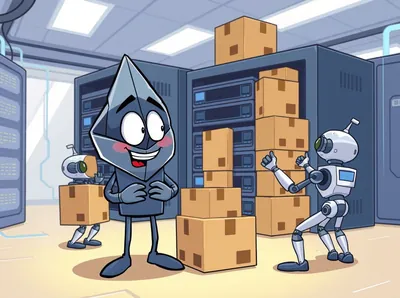
Following Fusaka, the protocol community is pushing toward distributed block building to avoid concentration of transaction inclusion power in a few builders. Vitalik’s vision is that full blocks should never be assembled in one place, reducing the risk of builder oligopolies controlling ordering decisions. However, distributed building changes the visibility of transactions before finalization, which complicates maximal extractable value (MEV) extraction and related economics.
Mo Dong, co-founder of Brevis, emphasized that the main remaining obstacle is incentive alignment rather than code. He outlined approaches that combine in-protocol rules with external markets — for example, mechanisms like FOCIL paired with distributed builder marketplaces — arguing that a mixed approach can progressively reduce centralization while research continues.
Layer 2 Interoperability and User Experience
Despite the protocol improvements, interoperability between rollups and layer 2s remains a user-facing challenge because each L2 can use different bridge contracts, message formats and finality assumptions. That fragmentation shows up as fractured liquidity and confusing UX for end users. Zero-knowledge proofs help by enabling cryptographic verification of L2 state transitions, which removes the need for long challenge periods or trusted validators and simplifies cross-chain communication.
Those coordination issues are seen as standardization problems rather than unsolvable technical limits; as standards and verification methods spread, moving assets between major L2s should become smoother. For more on Ethereum’s changing architecture and how it addresses the trilemma, see new architecture.
The Rise of the Machine-to-Machine Economy
The end‑of‑year reports noted finalization of ERC‑8004 and adoption of the x402 payment standard, developments that enable AI agents to operate as autonomous economic actors on Ethereum. As these agents move from testnets toward handling real value on mainnet, concerns arise about legal and systemic risks because existing legal frameworks assume human intent.
Account abstraction is already providing programmable guardrails — for example, spending limits, rate limiting and circuit breakers — that can be enforced cryptographically. Experts argue that agents handling meaningful capital will need verifiable proofs that they behave within defined constraints rather than mere promises.
Why this matters (for a miner in Russia with 1–1000 devices)
For most small to mid‑scale miners, Fusaka’s protocol changes do not directly alter how you run mining hardware or manage power. The upgrade improves how data and proofs are handled on chain, which affects overall network performance and block verification times, but it does not change device-level mining operations or equipment requirements.
Where you may notice indirect effects is in transaction ordering and tooling: greater censorship resistance and distributed builders can change how transactions are included and how builder markets function, and improved L2 interoperability affects where users move assets. It’s prudent to monitor those ecosystem shifts because they influence pool behavior, fee dynamics and service tooling you or your operators rely on.
What to do?
- Keep node and client software up to date to stay compatible with Fusaka and PeerDAS-related changes; this ensures you can validate blocks and proofs correctly.
- Monitor block builder decentralization and pool announcements so you understand whether transaction inclusion dynamics are changing for the blocks you see.
- Follow Layer 2 usability and bridge standardization news, since smoother L2 flows can affect transaction patterns and liquidity that influence fees.
- Review wallet and tool support for account abstraction if you use smart contract wallets or automation tools; account abstraction is the framework that enables many machine-to-machine interactions.
FAQ
What milestone did Ethereum reach? Vitalik Buterin declared the blockchain trilemma solved following the December 2025 Fusaka upgrade, which shifted the protocol toward a distribution model.
What did Fusaka change? Fusaka integrated PeerDAS into mainnet, cutting proving times to roughly 16 seconds and making 99% of blocks provable in under 10 seconds.
How do ERC‑8004 and x402 matter? Those standards enable AI agents to act as autonomous economic actors, with account abstraction supplying programmable guardrails to manage risks.