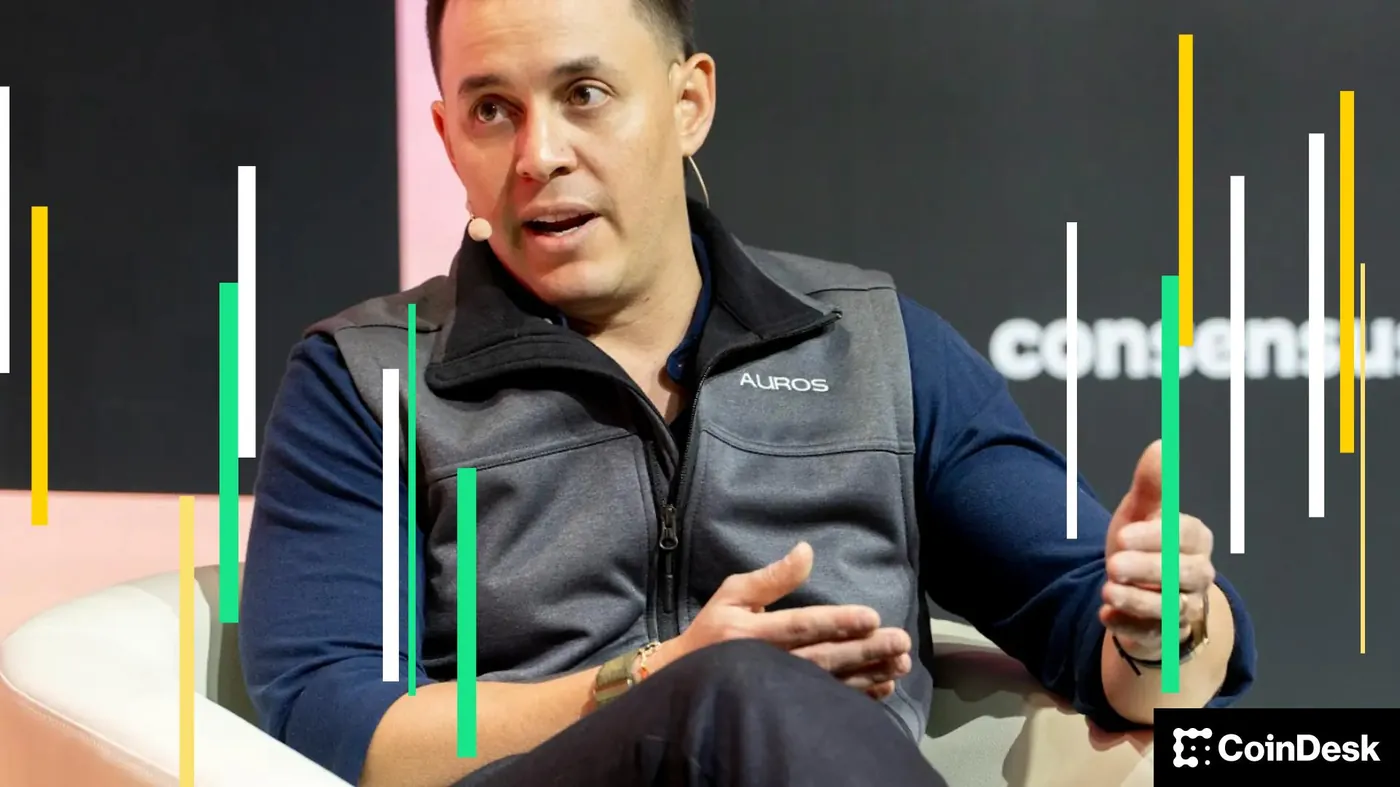
Jason Atkins, chief commercial officer at market maker Auros, said the primary structural issue in crypto today is illiquidity, not volatility. He argued that without sufficient trading depth, large institutional flows cannot enter the market at scale without destabilising prices. Major deleveraging events — notably the October 10 crash — have removed traders and leverage from the system faster than they have returned, leaving shallower markets.
The Liquidity Challenge in Crypto Markets
Atkins framed illiquidity as a structural constraint that limits institutional participation: markets must be able to absorb size for Wall Street to deploy capital without causing sharp price moves. He emphasised that liquidity providers respond to existing demand rather than creating it, so when trading activity thins, market makers tend to pull back risk and depth. That pullback further increases volatility and tightens risk controls, reinforcing a cycle of reduced liquidity.
For historical context, Atkins pointed to major deleveraging events as catalysts that accelerated the withdrawal of leverage and trading counterparties. The result is a market with fewer natural backstops when stress arrives, which in turn keeps many large allocators cautious about committing capital. This dynamic helps explain why market depth has not recovered simply because longer-term interest remains.
Institutional Participation and Market Stability
According to Atkins, institutions are structurally unable to step in as stabilisers while markets remain thin, because the necessary liquidity simply isn’t there to let large trades occur without moving prices. He described a self-reinforcing cycle: thin liquidity raises volatility, higher volatility triggers stricter risk limits, and stricter limits reduce liquidity further. That cycle leaves no obvious natural stabiliser when stress hits.
Large allocators operate under capital preservation mandates that change how they treat liquidity risk: their priority is protecting capital rather than maximising yield. In practice, this means institutions demand markets where positions can be hedged and exited cleanly; without that, they will remain cautious about allocating significant capital to crypto.
Volatility and Liquidity: A Complex Relationship
Atkins argued that volatility alone does not deter big allocators — the problem is volatility in thin markets, where price moves are hard to manage. In illiquid conditions, positions become difficult to hedge and even harder to exit, which raises the effective cost and risk of trading for large players. This distinction helps explain why volatility matters far more for institutional participants than for many retail traders.
The practical consequence is that conventional risk-management techniques are less effective when depth is low, so institutions are less willing to act as counterparty in stressful moments. That unwillingness further reduces depth and so the cycle continues, keeping markets fragile even if interest in crypto persists.
Crypto Market Consolidation and Innovation
Atkins said the industry is moving toward consolidation and no longer sees the same pace of financial innovation it once did. He noted that many core primitives, such as Uniswap and AMMs, are now established rather than novel, and the absence of new structures that attract sustained engagement contributes to slower liquidity recovery. He also pushed back on the notion that capital is simply rotating from crypto into artificial intelligence, arguing the two are at different points in their cycles and that the liquidity issue is structural.
The slowdown in liquidity, then, is less about money fleeing the asset and more about market structures not yet supporting sustained, large-scale participation. Until markets can absorb size, hedge risk and allow clean exits, substantial capital will remain cautious about deploying at scale.
Why this matters
If you run mining equipment in Russia — whether a few rigs or hundreds — illiquid markets affect how easily you can convert mined coins into cash without moving the price. Thinner depth can increase slippage on sales and make hedging positions more expensive or impractical, which matters if you rely on timely fiat conversion to cover costs. Even when overall interest in crypto exists, the market’s inability to absorb large or sudden sales can make short-term cash management riskier for operators of any size.
What to do?
- Stagger sales: sell in smaller tranches rather than one large block to reduce price impact and slippage.
- Use multiple exit routes: combine exchange orders with OTC or over-the-counter counterparties when possible to access deeper liquidity.
- Monitor order-book depth: track liquidity indicators and recent trading activity before executing large transfers or sales.
- Plan for exits: if you may need fiat quickly, keep a buffer of cash or stable assets to avoid forced selling in thin markets.
- Keep leverage low: avoid financing strategies that require rapid liquidation, since exits are harder in illiquid conditions.
For more on how low liquidity shows up in price and volume dynamics, see weak Bitcoin liquidity. To read about the deleveraging events that pushed traders out of the system, see coverage of the October 2025 crash.