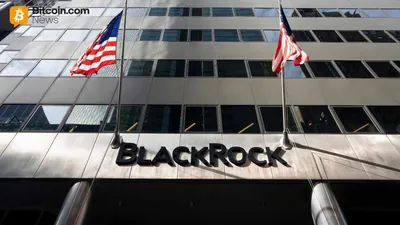
BlackRock has transferred $66.6 million in Bitcoin and Ethereum to Coinbase Prime, moving these assets into an institutional custody environment. The deposit consisted of 249.5 Bitcoin (about $22.25 million) and 15,112 Ethereum (about $44.38 million), according to on-chain reporting by The Data Nerd. Coinbase Prime functions as a prime brokerage for institutional clients and provides custody, trading tools and reporting for large holders.
BlackRock's $66.6M Bitcoin and Ethereum Deposit to Coinbase Prime
The firm’s deposit is a direct transfer of crypto into a regulated custodial venue rather than a retail exchange or a simple purchase. By placing 249.5 BTC and 15,112 ETH with Coinbase Prime, BlackRock used a platform designed for institutional workflows, compliance and security. Coinbase Prime’s custody solution reportedly holds over $300 billion in assets, combining cold-storage practices with institutional-grade controls to service large counterparties.
This specific allocation — more value-weighted toward Ethereum — was executed on-chain and identified by analytics, indicating careful operational handling. The Data Nerd reported the transaction and blockchain records show settlement of the transfer into a wallet associated with Coinbase Prime. Such transfers are distinct from ETF inflows: they represent the firm’s own assets being managed within a custodial infrastructure.
Strategic Implications for Institutional Crypto Adoption
BlackRock’s move continues a pattern of institutional firms combining client-facing products with direct operational exposure. The asset manager previously launched its iShares Bitcoin Trust (IBIT), a spot Bitcoin ETF, and this deposit signals a further step into managing crypto holdings on its balance sheet. Institutions increasingly use prime brokerage and custody services to meet compliance, reporting and security requirements.
Other traditional finance firms have also expanded services around digital assets, showing broader industry uptake of institutional infrastructure. For context on related large-scale custody movements, see BlackRock withdrawals, which discusses prior transfers into custody. These developments underline how operations beyond ETF launches are becoming routine for major asset managers.
Impact on Bitcoin and Ethereum Markets
The allocation to both Bitcoin and Ethereum reflects a diversified institutional approach, treating the two as different instruments within a corporate treasury. In dollar terms the deposit favored Ethereum, with a larger nominal allocation to ETH than BTC, but a single transaction does not by itself indicate a long-term shift in strategy. Institutional deposits of this kind can reduce exchange float and contribute to a firmer supply backdrop, though they do not necessarily move short-term market prices on their own.
By publicly routing assets into established custody, large managers provide another reference point for boards and auditors assessing digital-asset risk and controls. That practical example can make it easier for other institutions to justify holding on-chain assets within regulated custodial frameworks.
Execution and Security of the Transaction
Moving $66.6 million in BTC and ETH requires coordinated internal controls, counterparty due diligence and clear treasury processes. The transfer settled on-chain and was visible to analytics platforms, demonstrating the transparency of blockchain records and the audit trail available to regulated institutions. Coinbase Prime pairs custody with trading and execution services to minimize market impact during large moves.
Operationally, institutions choose prime custody to combine secure storage with execution capabilities and reporting. For more examples of large transfers to institutional venues, see Coinbase Institutional transfer, which covers a different significant movement into Coinbase’s institutional stack. Using a prime brokerage helps manage liquidity needs and provides standardized compliance documentation for auditors and regulators.
Почему это важно
Для майнера с 1–1000 устройств в России эта новость прежде всего подтверждает: крупные традиционные игроки действительно используют институциональные решения для хранения и работы с криптоактивами. Это повышает общую инфраструктурную надёжность рынка и облегчает интеграцию цифровых активов в формальные финансовые процессы.
При этом прямого и мгновенного влияния на вашу повседневную добычу или наличие электроэнергии ожидать не стоит. Такие депозиты скорее уменьшают объём ликвидных активов на биржах и повышают статус индустрии у контрагентов и регуляторов, что по мере времени может косвенно отразиться на стабильности рынка.
Что делать?
Рекомендации для майнера, у которого до 1000 устройств, чтобы учитывать смену институционального ландшафта:
- Проверить резервные планы: убедитесь, что у вас есть резервные копии ключей и инструкции по восстановлению, а также документированные процедуры на случай отключений.
- Оценить варианты хранения: если вы храните значимые суммы в обменниках, рассмотрите перевод части средств в проверенные кастодиальные решения или на аппаратные кошельки для снижения рисков.
- Следить за отчётностью и соответствием: сохраняйте транзакционные логи и квитанции для упрощения налоговой отчётности и возможных проверок.
- Мониторить ликвидность: держите часть доходов в ликвидных резервах, чтобы покрыть расходы при колебаниях цен или временных проблемах с продажей монет.