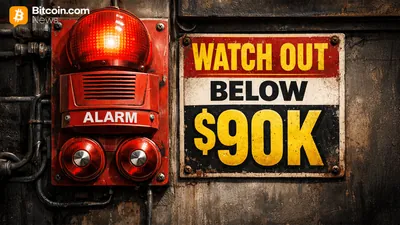
Bitcoin has broken a key short-term support around $83.4K and is now trading near $81,200, according to on-chain reporting. Glassnode warns that a sustained breakdown through that zone could open the way toward its True Market Mean at $80.7K, while derivatives and options flows point to heightened volatility risk if support continues to fail.
Bitcoin's Price Breakdown Below Key Support Level
The recent move pushed bitcoin below the $83.4K structural support that had been acting as the lower bound of short-term holder cost models, leaving price near $81,200. Glassnode’s analysis highlights $80.7K as the True Market Mean that could be tested if the breakdown deepens, and on-chain metrics show short-term holder supply held at a loss of 19.5% despite the downside pressure. Funding rates in derivatives markets remain muted and options pricing indicates more demand for downside protection, which can raise volatility if liquidity thins.
For additional context on how traders view key levels, see the recent price levels overview that tracks structural support and resistance. Taken together, the data describe a market that is fragile but not yet decisively broken, with liquidity the main near-term variable.
Market Sentiment at Extreme Fear
Market sentiment has swung sharply: the Crypto Fear & Greed Index dropped to “extreme fear” over the week, reflecting broad negative positioning. Santiment highlighted the rise in bearish commentary on social media and framed that extreme negativity as a contrarian indicator, noting such levels have historically preceded local recoveries in past cycles.
That crowd sentiment contrasts with some market participants' views and may limit the depth of selling, but it also underscores how sentiment and on-chain flows can interact to create rapid price moves in either direction. For more on index-based readings and risk measures, consult the risk index analysis.
Macro Factors Influencing Bitcoin
Macro headlines affected USD strength and liquidity conditions, which in turn influenced crypto prices as the dollar’s movements reversed recent trends. The surprise nomination of a new Fed chair candidate was among the drivers that boosted the dollar and contributed to the unwind of other risk assets, pressuring bitcoin below its structural support.
Derivatives flows reflect that caution: funding rates are subdued and options markets show elevated demand for downside protection, with dealer gamma turning negative below key strikes—conditions that can amplify moves if support levels fail. See coverage of broader policy uncertainty and market reaction in the Fed uncertainty note.
Long-Term Holder Behavior
On-chain data show long-term bitcoin holders are selling at the fastest pace since August, even as short-term holder supply at a loss remains relatively low at 19.5%, well under the 55% capitulation threshold. That split suggests some resilience among short-term holders but growing distribution from longer-term participants.
Some industry voices have described the market as being in late-stage bear-market bottoming phases, a view that sits alongside the on-chain signs of distribution and the sentiment indicators. This mix of selling, muted speculation, and crowd negativity is part of the current market picture.
Why this matters
If you run mining hardware in Russia — from a single rig to a few hundred machines — these developments affect revenue and operational risk. A lower bitcoin price directly reduces fiat receipts per payout, making electricity and maintenance costs a larger share of expenses, while weaker liquidity can widen spreads and slow fiat conversions.
Extreme fear in sentiment and signs of long-term selling increase the chance of short-lived volatility spikes, especially if on-chain support levels fail. At the same time, muted funding and greater options demand for downside protection mean speculative leverage is lower now, which can both limit and concentrate price moves depending on liquidity.
What to do?
Practical steps for small-to-medium miners: monitor your break-even in rubles and adjust operations when revenue no longer covers power and fixed costs, prioritizing uptime for the most efficient machines. Keep a cash buffer to handle payout delays or price dips, and avoid knee-jerk full liquidation during sharp drops — selling into extreme fear can lock in losses.
Operationally, review pool fees and payout terms, delay non-essential hardware purchases, and ensure wallet and key security. If you use derivatives or protection, recognize that options markets are pricing downside demand; consider professional advice before entering hedges. Regularly check on-chain metrics and sentiment indicators to gauge whether selling pressure or liquidity risk is increasing.