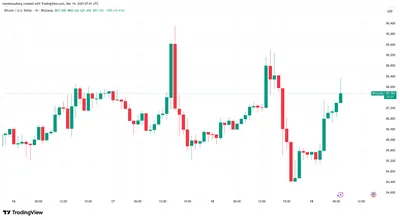
The cryptocurrency market traditionally focuses on decisions from the U.S. Federal Reserve, but the Bank of Japan's (BoJ) policy also significantly affects digital asset dynamics. Japan holds a unique position in the global liquidity distribution system, and changes in its monetary policy often reflect on Bitcoin's price. When funding conditions tighten domestically, Bitcoin's price frequently experiences sharp declines.
The Bank of Japan's Role in the Global Financial Market
For decades, the Japanese regulator has maintained near-zero or negative interest rates, making the yen one of the cheapest currencies to borrow worldwide. This policy ensured broad availability of yen funding, facilitating various investment strategies and influencing global capital flows.
The Carry Trade Mechanism and Its Connection to Bitcoin
Financial institutions, including hedge funds and banks, borrow yen through Japanese banks and currency swaps. These funds are then converted into dollars or euros and invested in higher-yielding assets such as stocks, emerging market bonds, and cryptocurrencies. Bitcoin receives substantial support as long as funding remains accessible and abundant. Its high volatility and 24/7 trading make it an attractive instrument for funds using leverage.
Impact of Bank of Japan Interest Rate Changes on the Crypto Market
Markets anticipate a BoJ rate hike of about 25 basis points to 0.75%. Although this level remains below rates in the U.S. or Eurozone, the key factor is not the absolute value but the structural shift. After decades of zero rates, even minimal increases alter market expectations. Investors may interpret this as the start of a tightening cycle and preemptively reduce positions in risky assets. Bitcoin reacts to such changes faster than traditional stock or bond markets due to the absence of trading pauses.
Risks of Cascade Liquidations and Bitcoin Price Drops
Deep Bitcoin declines are often linked not only to direct asset sales but also to forced closures of leveraged positions. BoJ tightening strengthens the yen and raises bond yields, creating simultaneous pressure on all risky asset classes. The crypto market heavily depends on perpetual futures and margin trading. When prices fall, traders' positions hit liquidation thresholds, and exchanges automatically sell collateral to cover losses. This process triggers new waves of declines and liquidations, turning the initial shock from rate changes into a broad market crash.
Monitoring and Forecasting Bank of Japan Actions
Risks related to BoJ decisions intensify before official announcements. Professional market participants closely watch the regulator's statement tone, as dovish comments can calm markets, while hawkish signals about further tightening increase pressure on prices. The Bank of Japan remains a key source of global liquidity, and reductions in its supply primarily impact Bitcoin's price.
Why This Matters to Miners in Russia
Even if you operate a small pool with a few devices, BoJ policy influences overall crypto market trends and Bitcoin price. Rate tightening can cause sharp price swings and cascade liquidations, increasing volatility and risk. Understanding these processes helps respond timely to changes and minimize losses.
What Miners Should Do
- Follow news and statements from the Bank of Japan, paying attention to tone and potential tightening signals.
- Assess margin trading risks and avoid excessive leverage to reduce forced liquidation chances.
- Use hedging tools and diversify your portfolio to lessen the impact of sharp Bitcoin price fluctuations.
- Prepare for increased volatility and plan operations considering possible market shocks.